*A disparaging term used by (some) Scottish people to describe people originating from England
Marigold Says…
Places we visited today.
Gretna Green.
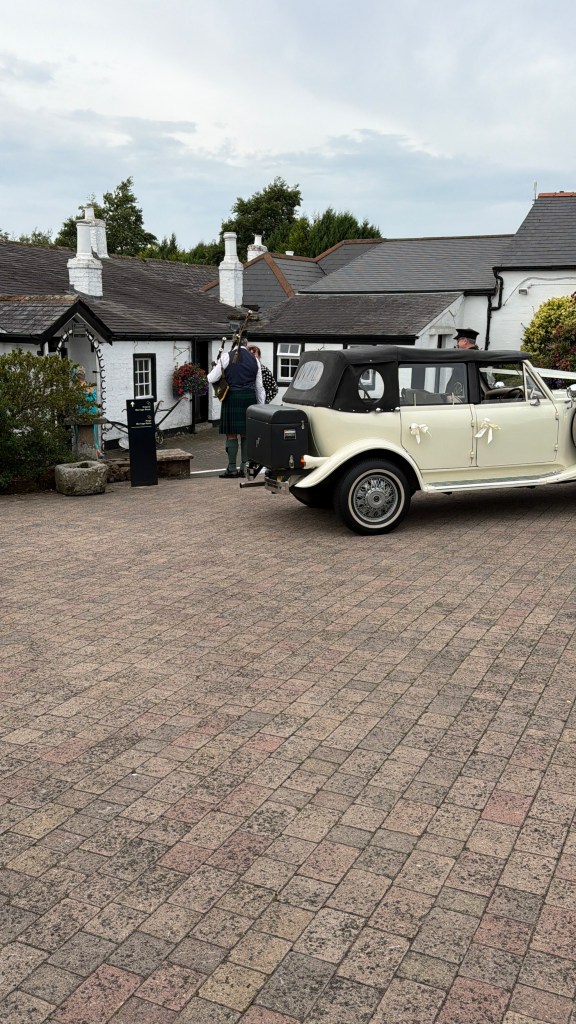
Of course we had to go for a nosey with no intention of renewing our vows, just wanted to have a quick gander and be on our merry way. First thing we saw was a wedding car delivering bride and groom who were both Chinese. The best man, again Chinese, was wearing a green and red kilt. The guests applauded and the bride got out the car with her back to us so no more to report. A lone piper accompanied the wedding guests and came out 5 minutes later for a fag. He was sucking on his cigarette with much gusto getting ready for next wedding.
Then we went into the tourist shop. Such a surprise, not, Tins of biccies with pictures of Scottie dogs on. Lots of shortbread, tartan gloves, purses and key rings. Just about to leave when a free tasting of jams came out and must admit we had rather a lot and then started on the free tastings for shortbread. Although neither of us particularly like it we still had a good go and declared the lemon one a winner. Got back to the car and I felt rather sick. Oh, G bought some dark chocolate peppermint creams, made in Birmingham, but you never know it might have been Scottish Mint grown by Mr MacTavish and his lovely wife Bonnie on their allotment in The Gorbals.
Loch Lomond
What a huge loch. Loved it. I personally think it has a monster in it as I stood looking at the waves I saw a monstrous shape with a huge head wearing a Tam O Shanter. Unfortunately I didn’t take a photo, maybe next time.
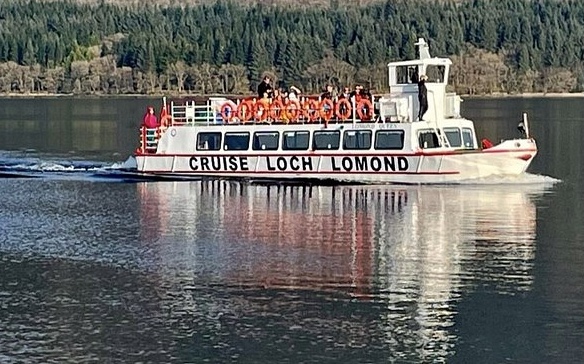
The hotel was fab, and lots of things to do on the Loch. We had a trip on a boat called Archie’s Tours. Very pleasant and he offered everybody a pear drop which he said would stop any feeling of sickness as it was a bit choppy. He was very informative and said there was a toilet and must only be used if needed desperately, and not to flush your paper down.
When we got off his son held out his hat for tips.
The carpet in our bedroom was tartan and the cleaner who was from Romford, married to a Scot, said they were the worst carpets for showing up dog hairs and she was very relieved she had a Henry Hoover. I was very relieved there were complimentary slippers.
Breakfast was square sausages and a slice of fried haggis with bacon, eggs and everything else. We both needed a Rennie half an hour into the journey next day.
G Says…
It was a nice day, we had nothing planned so we said, ‘let’s go to Scotland.’ Packing the car took half an hour and we were off on the road again. It’s a fair old way to Scotland and we weren’t going to settle for a brief glimpse of Border Country, no it was going to be The Highlands. Just about the first place a visitor encounters as they leave England is a village whose name has been widely known for many a long year: Gretna Green.
Couples under 21 couldn’t marry without the permission of their parents in England in the 17th century. Couples also couldn’t marry in places other than a church under the 1754 Marriage Act.
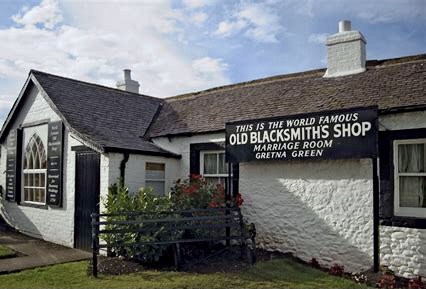
Only a few miles up the road from Carlisle, which is still in England, not a tartan bonnet to be seen, Gretna Green was an obvious choice for those defying the conventions and laws of England. Less obvious was the choice of a blacksmith’s forge as a wedding venue. The village blacksmith,Joseph Paisley, realised he could make more money by marrying people than from his regular job and a tradition began.
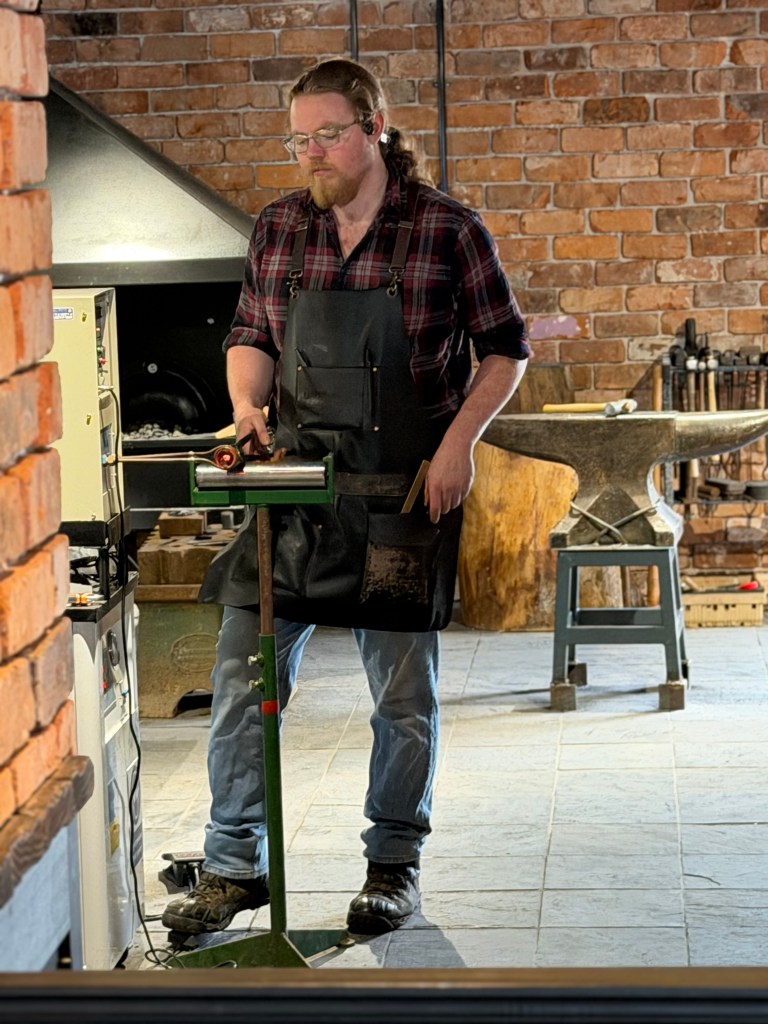
There’s still a blacksmith, toiling away in his forge. He looked slightly grumpy, but when I asked him if it was okay to take his photograph he actually smiled and nodded. It seems he prefers being a blacksmith, hard at work, to being regarded as a zoo animal by hordes of tourists. I imagine my request for a photo was not a regular occurrence. His job must be similar to being a guardsman on duty outside Buckingham Palace, an easy target for passers by.
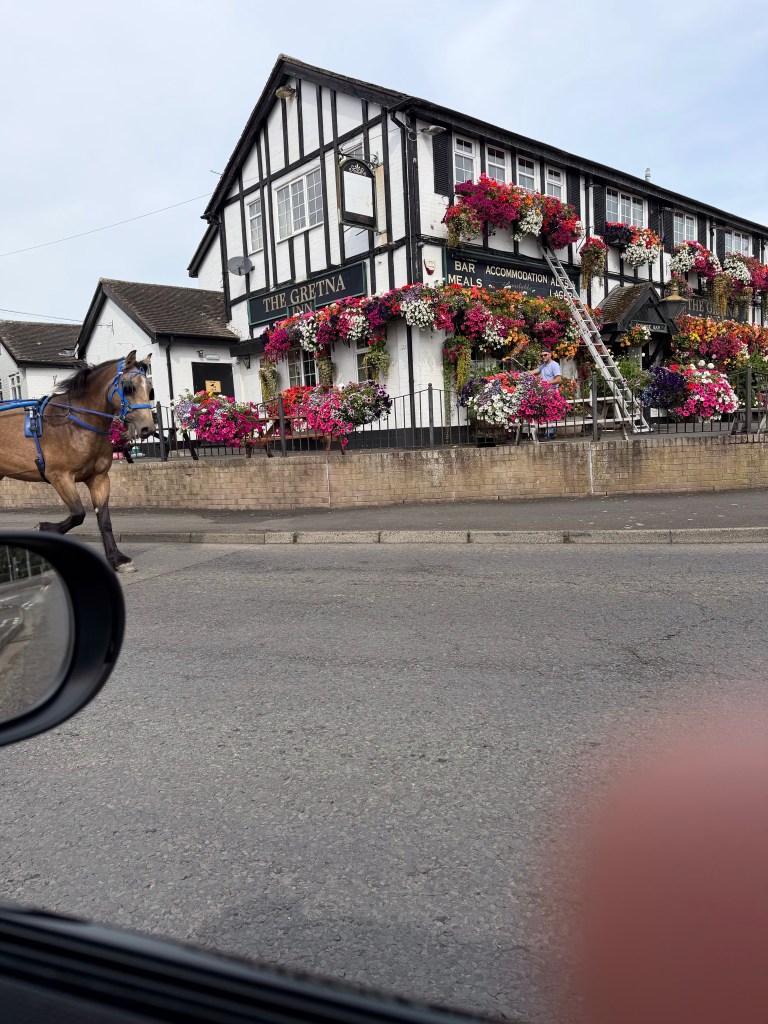
I was about to take a photo of this flower covered inn when a runaway horse, pursued by a very agitated man, appeared right in front of me.
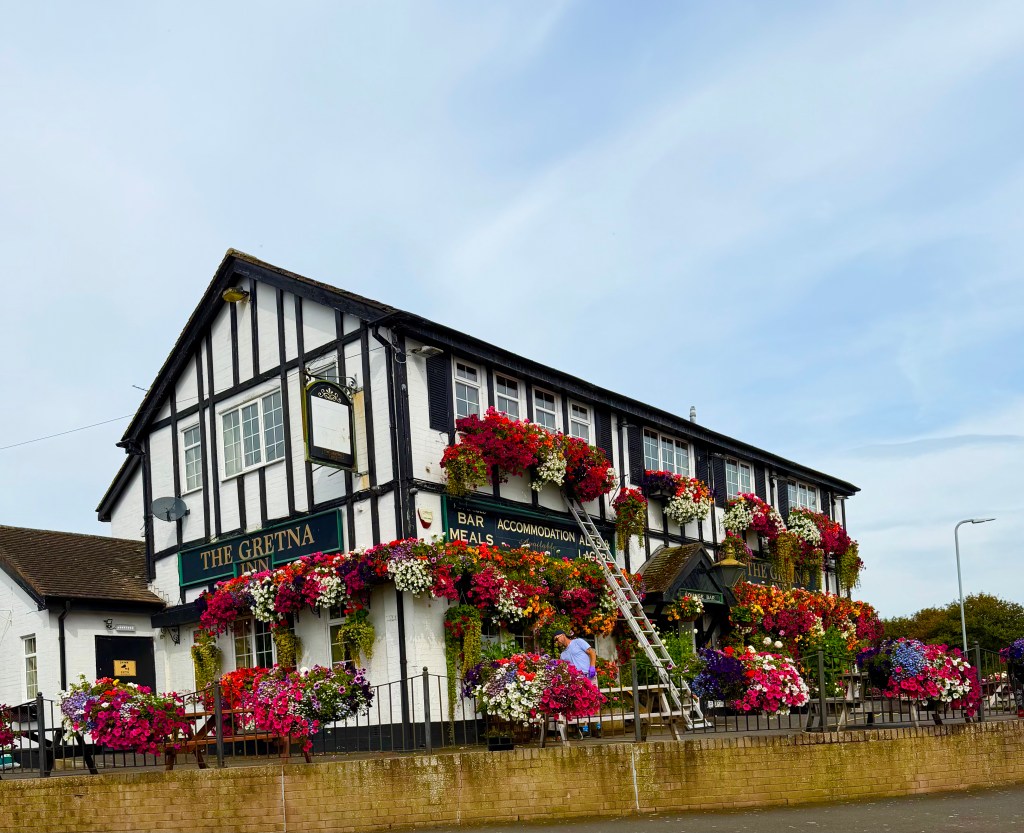
Two minutes later, horse and owner reunited, all was well
We popped, briefly, into the Blacksmith Shop Museum, where there are marriage certificates on display dating back to 1754.
When Gretna Green first became an option for eloping couples to marry, in the 17th century, girls of 12 and boys of 14 were legally allowed to marry. This sounds extreme, but of course the average life expectancy at that time was far, far lower than now. Middle aged at 25!
In fairness, I went to school with many people whom I classified as ‘middle aged’ at the age of 14.
The gift shop was dominated by tartan, reminding non Scottish customers they were now in a foreign country. We devoured several free samples of jam and biscuits, but didn’t actually buy any. I apologised to the lady at the cash point who told me I should have been in yesterday when haggis was a prominent free sample. She added, ‘bad idea as after they taste it they decide not to buy it.’ She wasn’t even Scottish so her haggis related slur was understandable.
As for weddings, we saw two take place, ten minutes apart. The routine seemed to be the couples arrive in a vintage car, accompanied by a stout man wearing a kilt playing what was presumably a stirring rendition, but sounded more like a lament to me. The first couple were Chinese, fully kitted out in wedding regalia, and the bride to be covered her ears as she left the car as the piper was standing very close and giving it his all. The groom just looked bewildered.
After they went in for the ceremony the jolly piper and the chauffeur huddled together, lighting cigarettes and guffawing. They seemed to be having fun.
The next arrivals stopped to clap the piper and looked as if their decision to go and get married had been made over breakfast. The groom’s trousers were very wrinkled and his ‘intended’ appeared to have spent the last hour deciding on a suitable dress and finally settling on the one she usually wore to weed the garden.
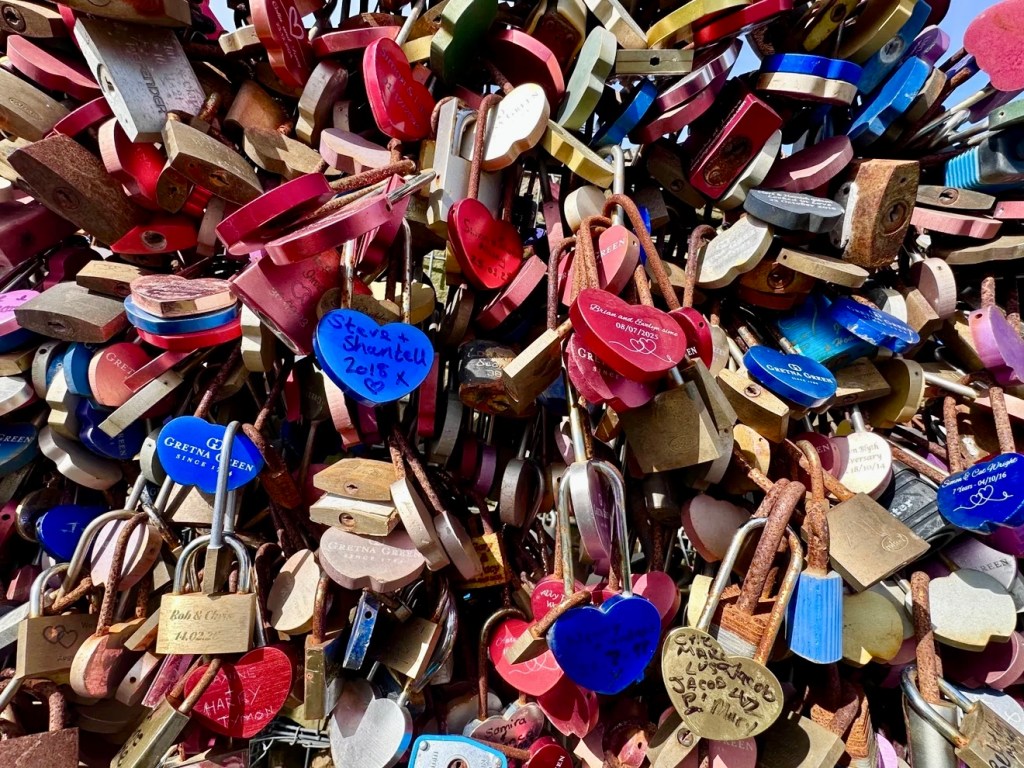
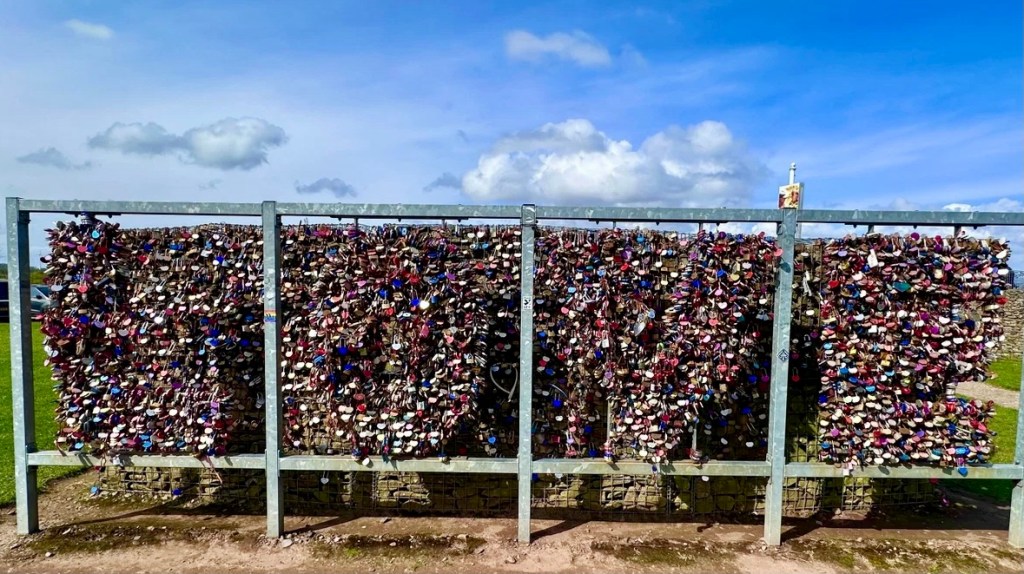
Later on, we marvelled at people thronging the Love Wall, a massively underwhelming feature in our view, but some people seemed to like adding a padlock to one of the hundreds (thousands?) already adorning a sheet of pierced metal that we could just about discern spelled out the word ‘LOVE.’ We have seen this idea all over the world, but even in Gretna Green, the ultimate symbol of two souls linked for eternity by marriage, this example failed to inspire. Even so, the nearby souvenir shop was doing a roaring trade in padlocks so what do I know? Maybe my status as Britain’s Biggest Romantic is on the wane.
Setting off again we decided to head for Loch Lomond, the largest fresh-water body of water in the United Kingdom. We found a hotel right on the loch shore in Luss and the views from the lounge were stunning. The weather was very un-Scottish, warm and sunny, so we could identify many of the hills surrounding the loch which we had absolutely no intention of climbing.
We were forced to converse between ourselves as nobody else appeared to speak English. A fairly well padded local girl brought us drinks and was simply delightful. She told us she liked a chat, but as ‘the place is full of foreigners today’ we would have to make an effort. Whatever the hotel are paying that young woman, it’s not enough.
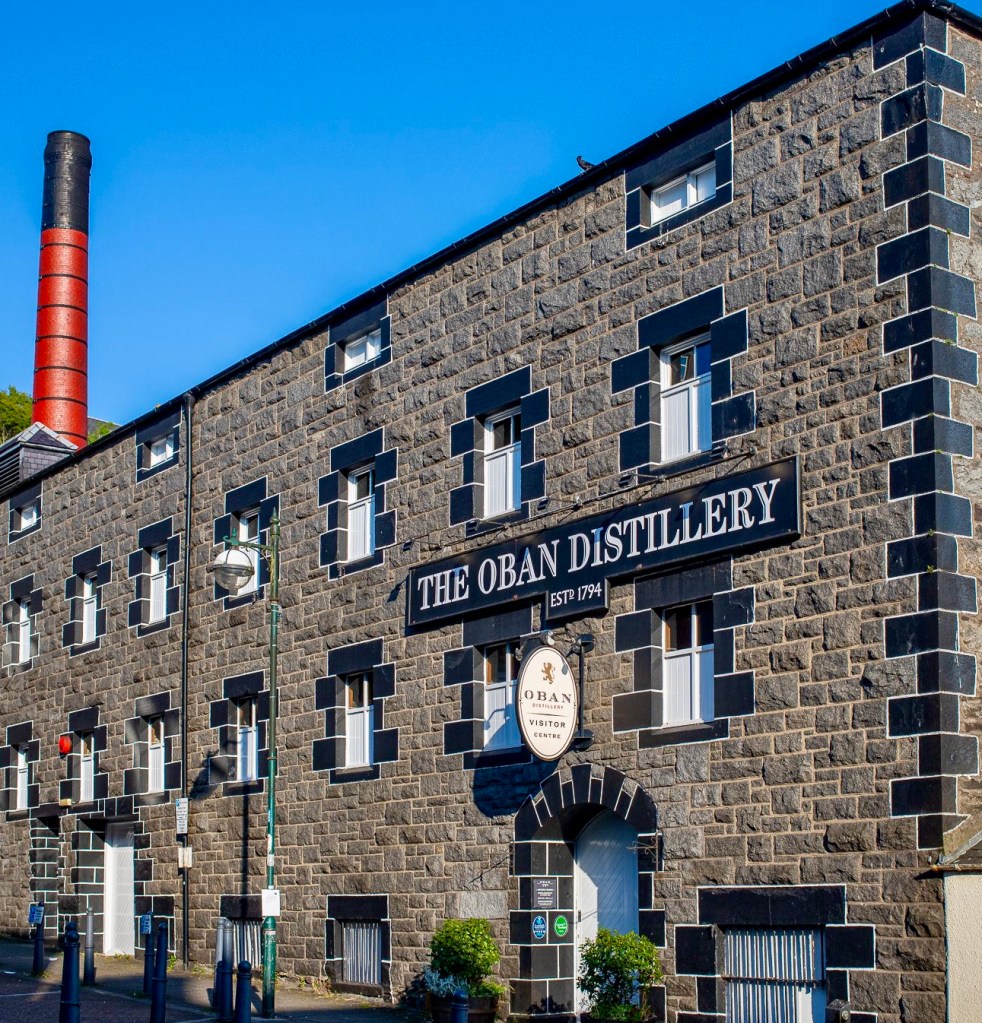
Where next, we mused after breakfast. Well, I mused and Marigold didn’t as she just settled for saying ‘anywhere in Scotland.’ We were heading for The Highlands, but decided a detour to Oban would be a good idea on such a warm day. Many years ago we picked up a ferry in Oban to visit Isla, one of the off shore islands where whisky production is the chief economy. We sailed away in a blizzard, it was March, and spent an entire week in a tiny cottage on the seashore with seals right outside the door and unrelenting snowfall from morning to night.
Weirdly, we loved it, especially our two dogs who ignored the seals, it was mutual, but were fascinated by the thousands of Canadian Geese who arrived en masse and set up camp in a field behind the cottage. We found a pub, there were only two on the island, where the chef’s signature dish was egg and chips, which we ate every day in front of a log fire while chatting to a pub ‘regular’ who lapsed into English from his usual Gaelic only on very rare occasions.
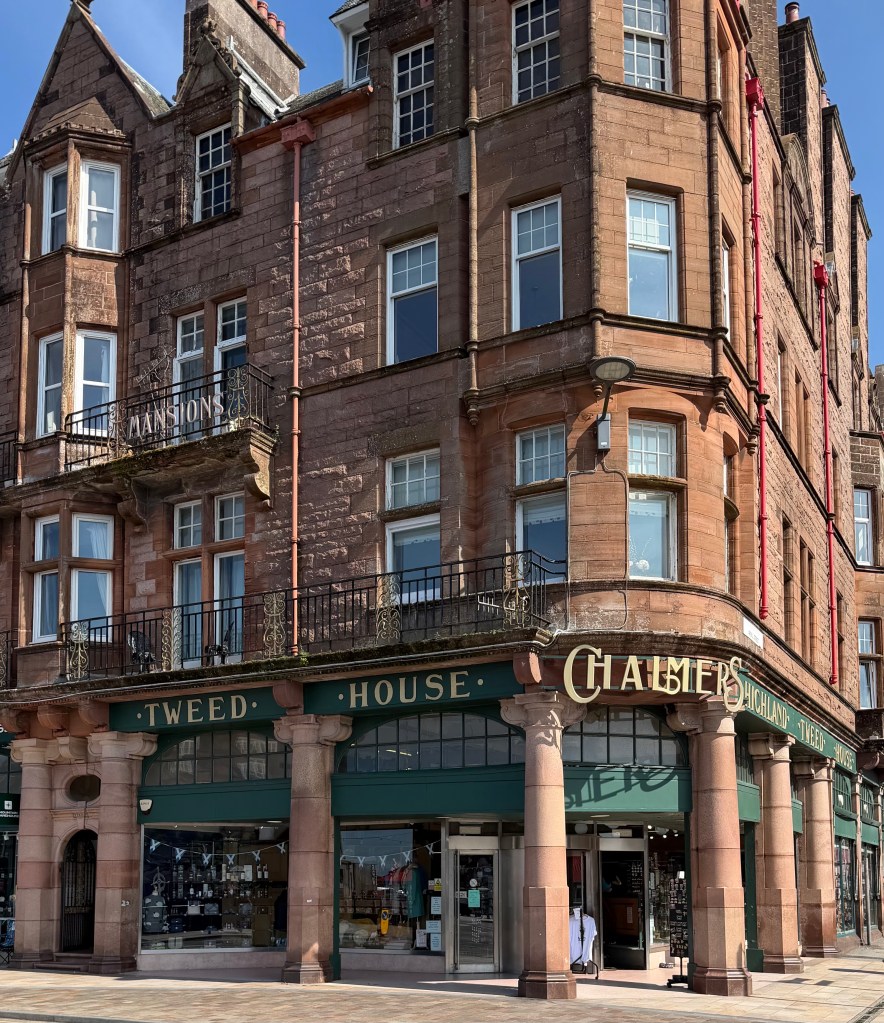
Oban today was packed with visitors, probably due to the unexplained phenomenon of a bright light in the sky that gave out heat. A very refined elderly lady sitting outside a cafe – elderly meaning older than me so ‘ancient’ may have been a more appropriate description – told us she was sweating cobs. ‘It’s rained almost every day this summer,’ she said, ‘and I’m sick of the English television people telling me it’s all down to global warming, there’s a drought and temperature records are being broken.’ Far be it from me to defend the ‘English’ media on that subject so I just nodded.
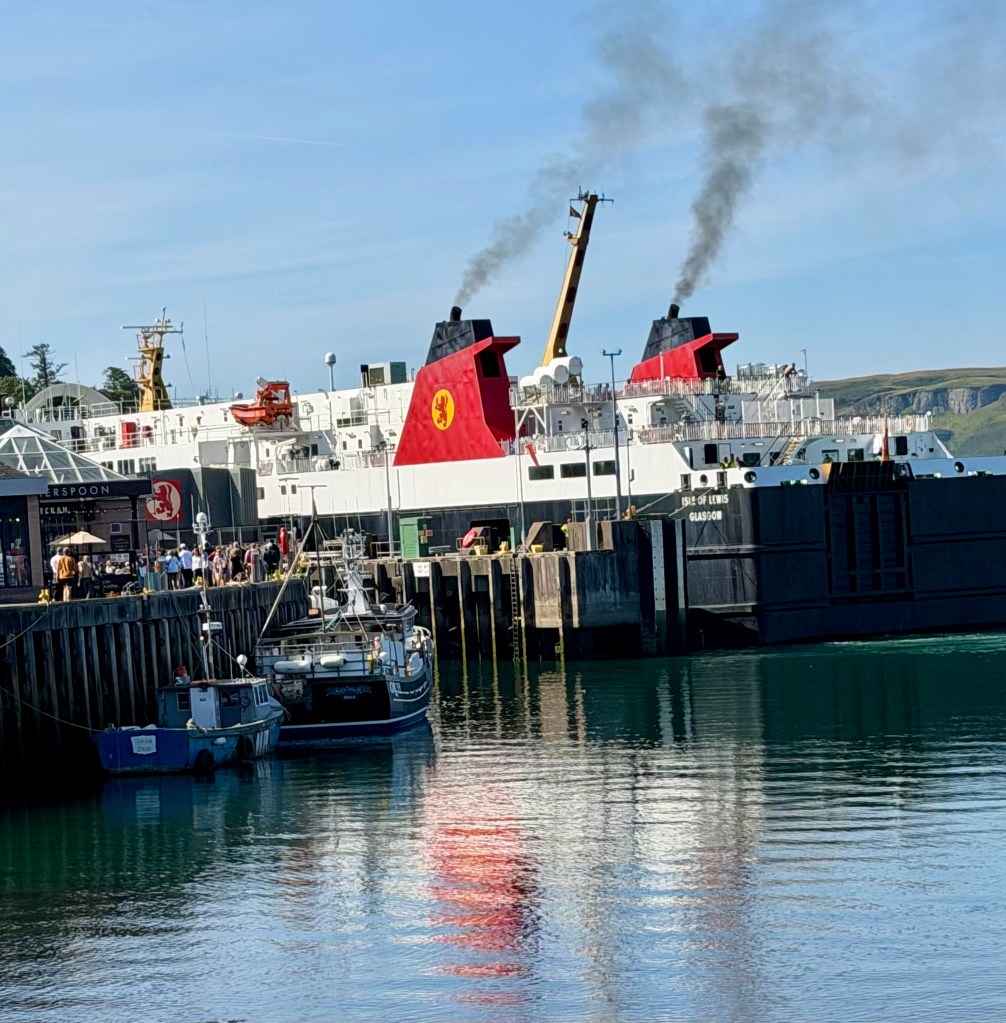
We walked to the ferry terminal to admire (!) the black smoke belching out if both the ferries in port at the moment, the herring gulls had bronchitis, and walked back again, forgot where we had parked the car so had to trudge back another few hundred yards and by then we were – as Marigold said, ‘done in.’
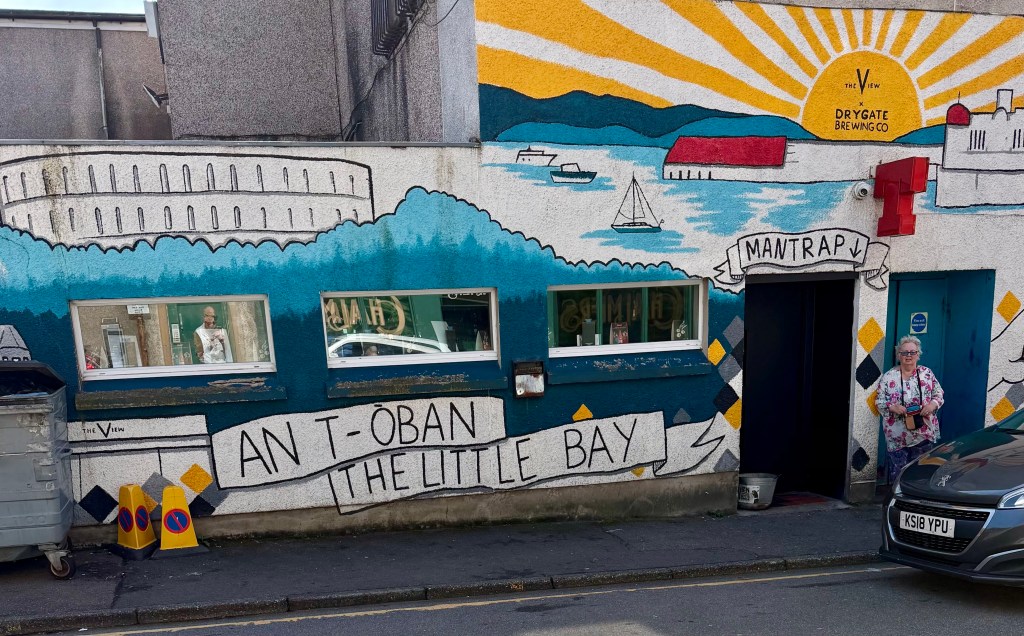
Marigold standing by The Mantrap door in Oban
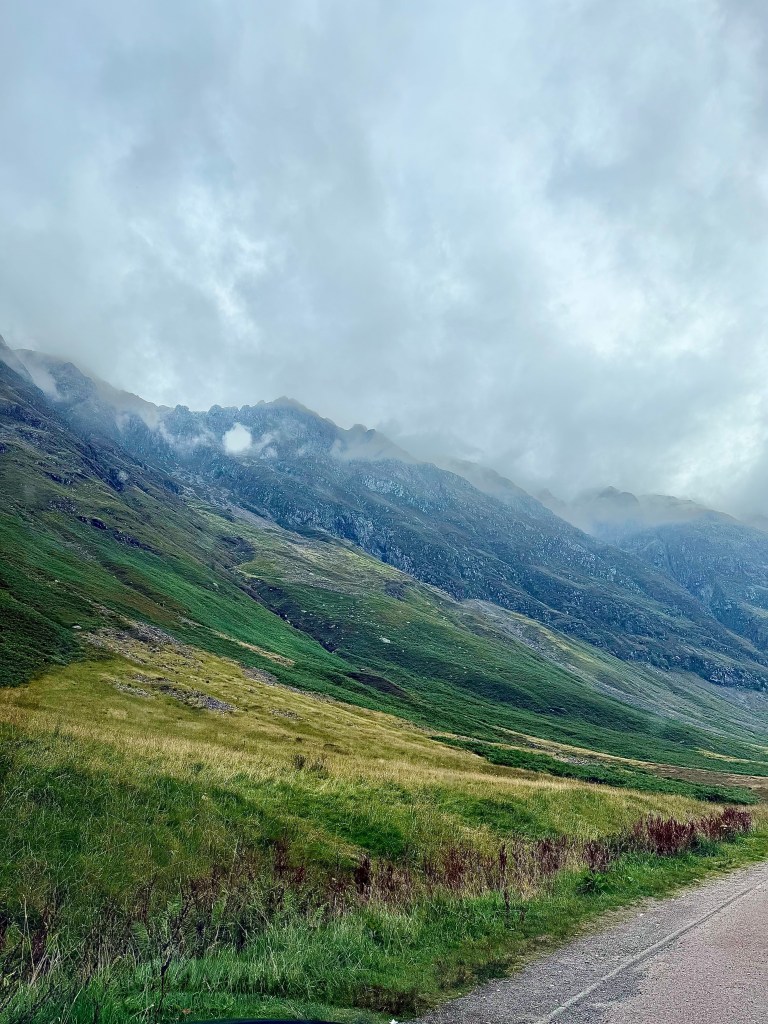
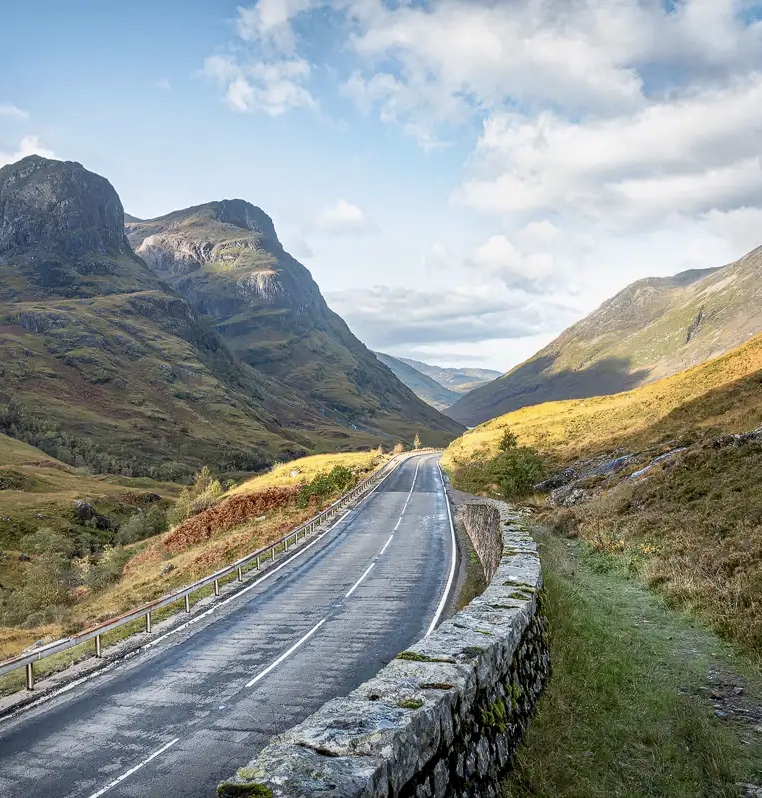
We drove up the coast and then detoured inland to go through the Pass of Glencoe. Last time we came to Glencoe the weather was foul: misty, wet and dismal, but that made the trip between the encircling hills very special. As Marigold said, ‘this is a proper setting for a massacre.’ It’s a narrow, although well maintained road with frequent stopping off points and we got a vivid impression of what life was like here before the first road through the glen arrived in 1785.
Today brought bright sunshine, but the Pass was just as spectacular. The Three Sisters, a notable landmark, had been hidden in the mists on our last visit, but not today. We watched numerous hikers and well equipped climbers setting forth to seek out the joys of nature on these heather clad hills and took a unilateral decision not to join them.
We made a brief stop in the village itself – is it a town or a village? Let’s settle for a big village. Glencoe was given to the MacDonald Clan in the 14th century by Robert the Bruce, as a reward for the locals’ loyalty during the Scottish Wars of Independence. In the 16th century the MacDonalds of Glencoe got involved in a territory dispute with Clan Campbell. Basically, the Campbells wanted some of the MacDonalds’ land and the MacDonalds retaliated by cattle rustling ‘over the border’ in Campbell territory. The two clans had been enemies for many years as a result of previous wars involving the English Kings.
King William III of England offered a pardon to all Highland clans who had fought against him or raided their neighbours. In return the Clans had to pledge an oath of allegiance or be sentenced to death.
The MacDonald Clan reluctantly agreed to take the oath. The Clan Head now believed because he swore allegiance, that he and his clan were pardoned and could resume normal life, but the King had taken umbrage at the MacDonalds being the last to make their pledge of allegiance and asked the Campbells to ‘deal with them.’
A fighting force from Clan Campbell had gathered at Glencoe and the leaders of Clan MacDonald were asked to stay there to discuss Clan related issues. Ten days of feasting ensued, Clan Campbell pulling out all the stops to wine and dine their guests. On the 11th day the order went out to the Campbell military: kill every MacDonald under the age of 70 years and a notorious massacre ensued. Even the few that escaped death fled into the highlands, many of them dying of exposure due to the harsh winter conditions.
The treachery of Clan Campbell, slaughtering invited guests, has meant the name Campbell has been associated with that heinous crime even to this day.
We carried on to Fort William and once again failed to appreciate the alleged majesty of Ben Nevis. No disputing it’s the highest mountain in Britain, but is it really a mountain or just a fairly sizeable and completely unremarkable hill? We’re familiar with The Rockies, Mont Blanc and The Eiger in the Alps, we even went to the top of the Jungfrau, next to the Eiger, by train. They’re proper mountains with jagged peaking reaching way up into the sky. Sorry, Ben Nevis, you don’t stir my soul like the Eiger did.
We stayed overnight near Inverness. Occasionally we end up in a hotel or B and B we remember long after we have departed. Occasionally this us because they were dreadful, but there are some that bring joy. Our hosts once won an episode of Four in a Bed, which we don’t actually watch but know what’s involved. We now know that the action of rubbing fingers across high surfaces to check for dust is a prescribed act as the producers of the show insist on this to add realism.
The weather forecast was dire and our intention to ‘do the 500’ – a route of just over 500 miles around the far north of Scotland, the North Coast 500 is a road trip to set alongside Route 66. Obviously, not on the same epic scale!
Friends of ours spent a week at Cape Wrath a few years ago and when they sent us photos we said it looked like living in a Russian gulag. Obviously, this meant we had to visit, but despite best intentions we didn’t get to the most North-Westerly point in Britain. We got as far as Durness, 95% of the way there, but when we established that the final leg involving a ferry boat which was little more than a glorified rowing boat followed by a lengthy slog in a minibus was our only option we did the sensible thing and gave up.
The County of Sutherland is majestic. A virtually unpopulated wilderness. We saw eagles, deer, in fact all sorts of wildlife and absolutely loved the area. What a splendid, unspoilt region, one of the most remote but most impressive examples of a world as it used to be, preserved by its location. We shall return.
We had planned to be busy on arrival in Durness, but the weather let us down. We didn’t even manage to visit the Smoo Cave which we had put on our ‘essentials’ list, or would have done if we believed in making lists, which we don’t.
We’re off to Cornwall next week, that’s 800 miles away from where I am when writing this, so decided we needed to head south. The west coast, more or less, follows the North Coast 500 route and we stopped off at places along the way. No itinerary, no plan, just serendipity, the way we like it.
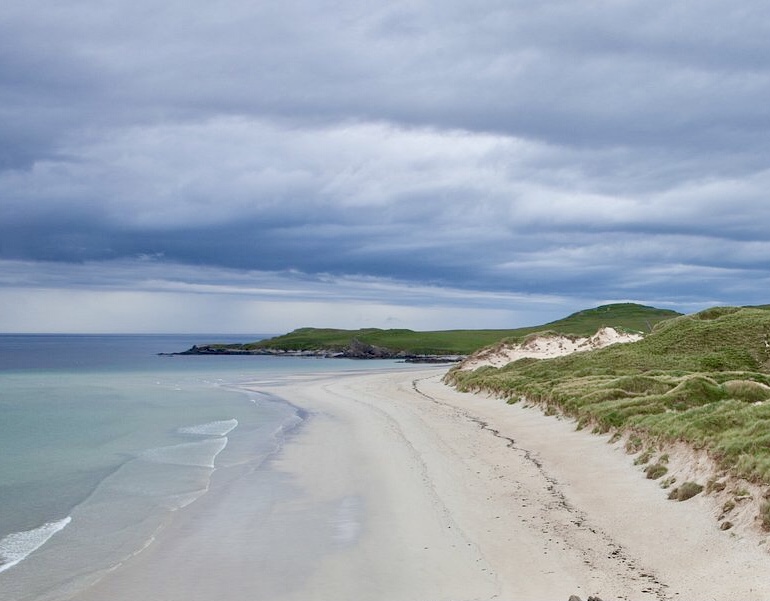
The beach at Balnakeil, near Durness was a slice of the Mediterranean dropped down on the far tip of Scotland. Turquoise water, white sand, sea shells underfoot and dunes to provide shelter it was delightful. Best of all, at ten o’clock in the morning with the sun shining, we were the only people on it.
I need to mention Ullapool. We’ve been before and it’s an ideal staging post if you’re heading North or returning home as was the case today. It’s situation on Loch Broom is lovely, and it’s secured a hospitality niche with travellers on the 500. Loch Broom is a sea loch so it’s possible to sail to Stornaway on the Isle of Lewis from here.
We liked the beach at Admair, which was mostly flat pebbles so ideal for ‘skimming’ until yet another dark cloud turned up and we set off for our home country, England. I managed to get a photo of the lovely little museum and a splendid clock before we left. We did the reverse trip through Glencoe, even more enthralling in mist and drizzle and were back on the road to the Deep South in next to no time.
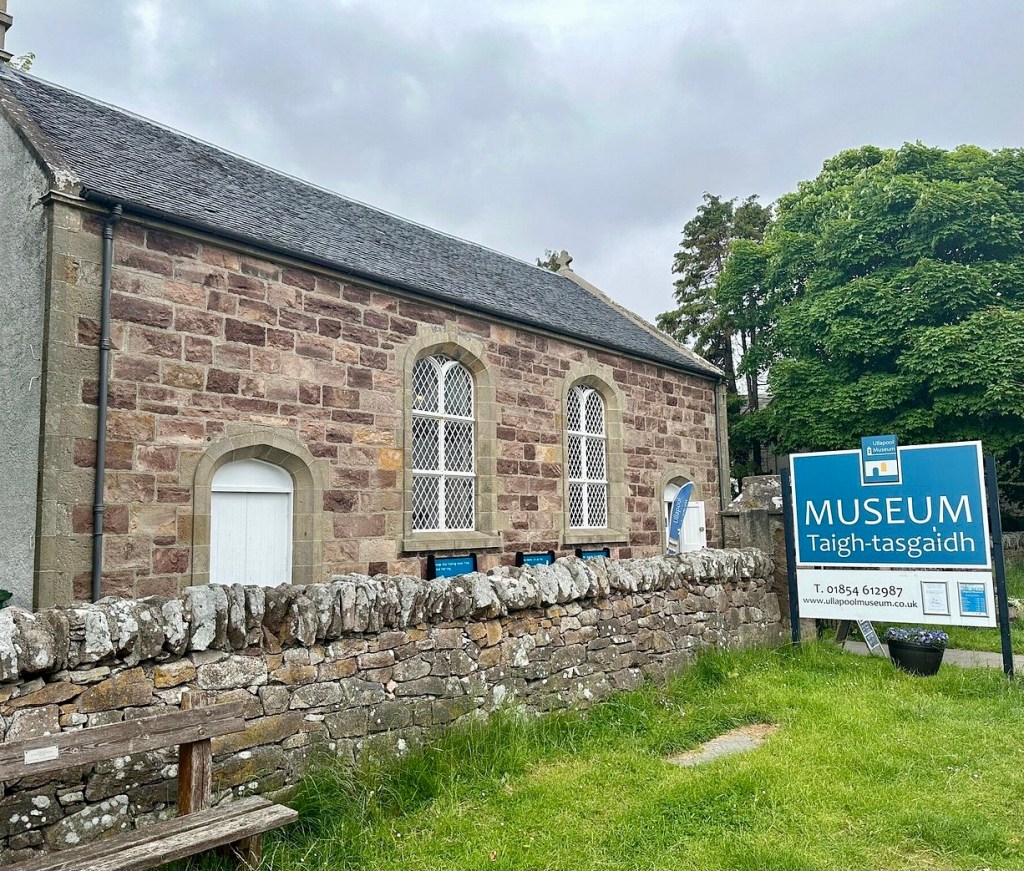
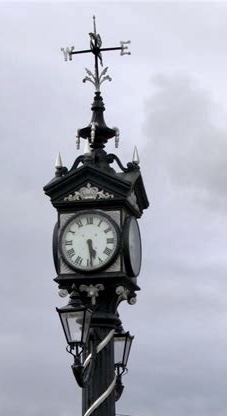
Terrible photo of clock, it was a dull day, but here’s Marigold to raise the tone…
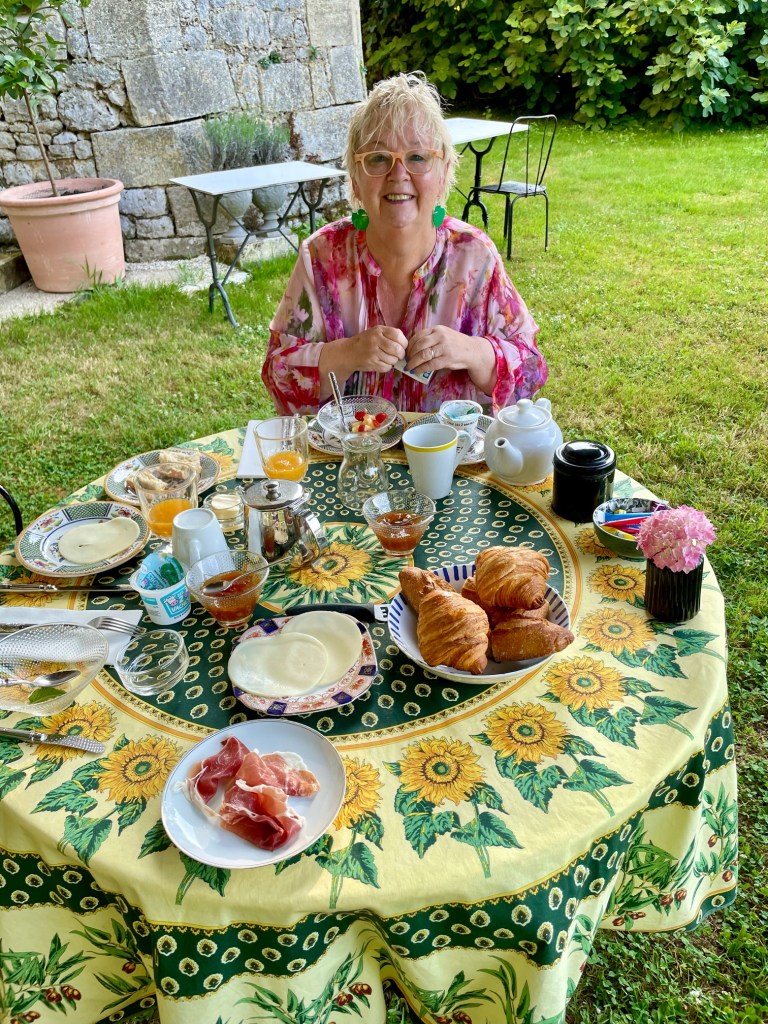
 Marigold on Tour