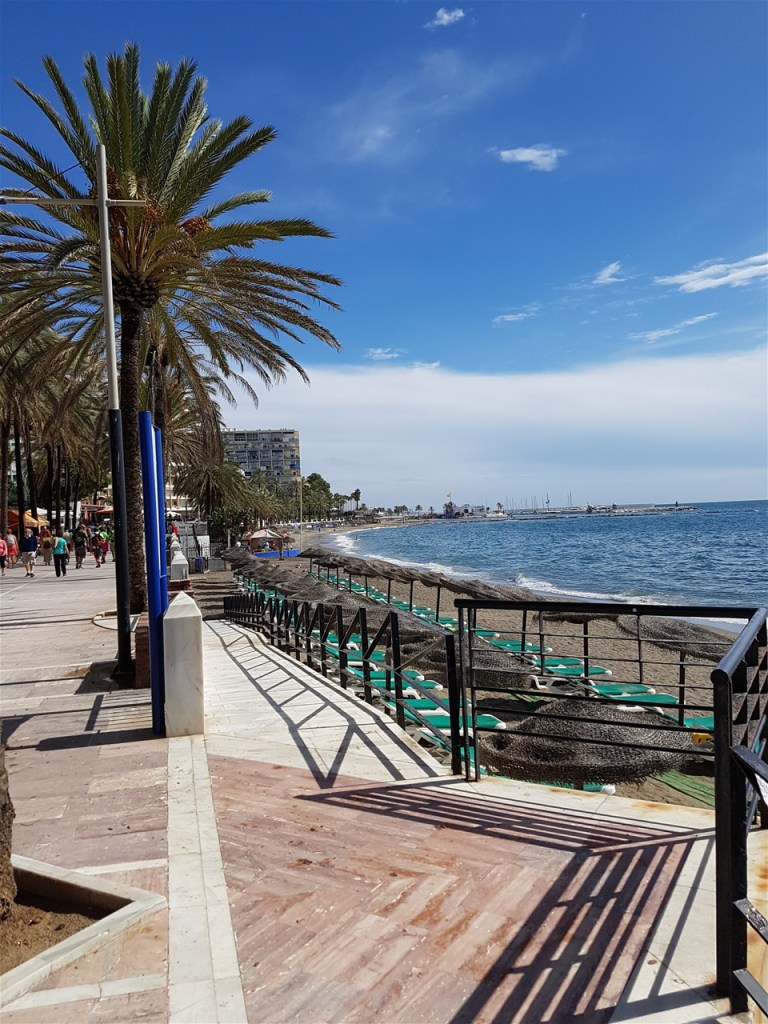
Marbella, home of well-heeled, jet-set lifestyle, beautiful people. Even so, they let us in.
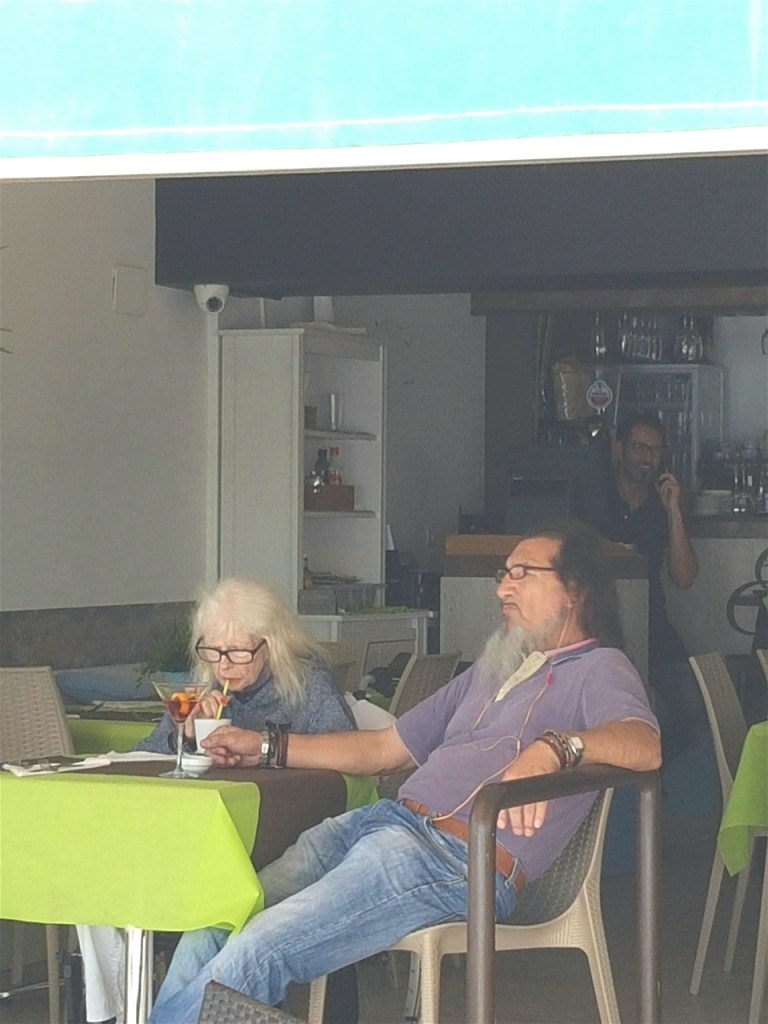
Two A-Listers, avoiding the paparazzi
G Says…
As usual, lots of photos at the end…
Responding to questions on why the blog has become seemingly moribund for a fair few days the answer is simple: we’ve been laying low, keeping a low profile and ‘chillaxing’ if you’ll forgive my usage of the present participle tense of the verb ‘to chillax.’ Look, if David Cameron can claim to be ‘chillaxed,’ (nice usage of the simple past participle there Dave) then the word is fair game.
Marbella, Golden Mile et al, has glamour aplenty. Even more so with the arrival of Marigold and myself. We stayed here for six weeks, many years ago, in a hotel owned by Hapimag, the Swiss owned timeshare company. No dogs allowed which made it a fraught six weeks. Smuggling a not particularly well behaved Labrador up and down lifts and out to the patch of waste ground next door several times a day was stressful.
Just the two of us this time and many changes to note. The old town is still all narrow streets, orange trees and charming, much as it used to be. We got lost. Twice. That too had more than a hint of the familiar. We walked the marble promenades of the beach area in the company of a horde of walkers. Collective noun for walkers? No idea. A perspiration of walkers? Maybe. It would certainly be appropriate today.
There’s some sort of walk-fest going on at the moment – it’s not compulsory – and everybody but us was striding out valiantly. A couple of triple Fs – formidably fit females – passed us and stopped at a cafe for a drink. We pressed on, swept along with the tide, and in no time at all, the same FFFs passed us again having ordered drinks, drunk them and continued their walk. Oh, the shame of it. Worse was to come as a pair of distinctly rotund men, bustling along as if late for opening time at the pub, passed us as well.
Time to get our excuses out perhaps. Marigold glides, or so she claims, while I hobble. Despite daily applications of Poundland’s finest adhesive strapping my recalcitrant Achilles’ tendon refuses to repair itself. Also, these purposeful walkers are cut from very different cloth to ourselves. Where they bustle along, we take in the sights. We don’t hustle, we don’t power-walk, we stroll we saunter, we amble. Tortoise and the hare, except that unlike in Aesop’s fable, in reality the hare always wins. Whatever, there are far worse places for a stroll than along Marbella’s luxurious marble promenade.
Marbella hasn’t always been so grand. After the war, a German Prince, Maximilian de Hohenlohe-Langenburg and his son, Alfonso, were driving past a shabby fishing village when their Rolls-Royce broke down. Alfonso, the son, liked the look of the place, so he bought a piece of land and built a house on part of it. Nothing unusual there, but what Alonso did next was to change that sleepy fishing village for ever. He sold off plots of land to his friends and they built houses as well. His friends were named Rothschild and Thyssen. Alonso’s own humble abode, Finca Santa Margarita, became so popular with visitors that he turned it into the Marbella Club.
A luxury hotel owned by European nobility attracts wealthy visitors and the likes of Ava Gardner, Grace Kelly, Audrey Hepburn, Cary Grant and Laurence Olivier were soon spotted around town. Sleepy fishing village? Not any more.
Marbella was already established as a place where the well heeled came to relax when a more contemporary and substantially updated rival to German minor royalty appeared on the scene.
The late King Fahd of Saudi Arabia took a liking to Marbella because it was “was a land blessed by Allah,’ presumably a reference to its Moorish architecture and over seven hundred years of Islamic rule. Fahd bin Abdul Aziz al-Saud was the king and prime minister of Saudi Arabia and leader of the House of Saud. His personal wealth made him a billionaire many times over and an awestruck correspondent from the Financial Times reported ‘He earned more in a minute that any monarch in history did in a year.
King Fahd built a house in Marbella, Mar-Mar Palace, modelled on the White House and spent many summers there. Saudi Kings don’t travel light. An entourage of over 3,000 required hundreds of hotel rooms and at least 500 cars; in every month of the King’s stay Marbella’s economy boomed as countless millions of euros were spent. Hence the marble pavements, the mosque on the Golden Mile and the fond memories of local shopkeepers and hotel staff. He once left a tip of over 30,000 euros to reward the efforts of the staff at a single hotel. No wonder they came from far and wide to seek work as gardeners, maids or chauffeurs whenever the Royal yacht hove into sight.
Marbella held three days of mourning when the King died in 2005; a public garden and a street are named in his honour and he was decreed an honoured son of Marbella. King Fahd may well have been the last of the big spenders as his successor, Fahd’s half-brother and chosen heir, King Abdullah, has yet to follow his predecessor’s extravagant lifestyle, although he stills visits Marbella regularly.
Not that the legacy has died off completely. One of Fahd’s four surviving widows and 14 princesses stayed at Mar-Mar for a month in 2006 but only managed to spend a paltry 12 million euros. Impressive, but nowhere near the excesses of the recent past.
Our rather more prosaic lifestyle has had negligible effect on the local economy, but we did our best. We passed the splendidly named Happy Beach resort today. While in Italy, somewhere in the Dolomites, we passed through a village called Sunnova. I remarked at the time, in an Italian accent obviously, it was a pity the village was not next to the sea as it could then be called Sunnova Beach. Even with the cod Italian accent marigold didn’t find it amusing either. Oh well, can’t win ’em all.
Tonight we’re strolling on a glorious stretch of white sand. The sea is rolling in, waves tipped with foam, for this is where the Atlantic meets the Mediterranean and we’re in one of our favourite places: Tarifa. It’s laidback, Bohemian, packed with fresh-faced young surfers with bleached hair and can-do attitudes and one of our favourite places in Spain.
We were hoping to be heading back to Morocco next with all it has to offer. The ancient cities, Fez and Marrakesh, ageless and magnificent; still largely unchanged over a thousand years. The Rif Mountains and the High Atlas where time paused in the Middle Ages and has yet to move on. The vast and ageless expanse of the Sahara, along with so much else, would be outside the scope of this trip, but we still treasure the memories of still, silent nights under the stars with only the whisper of sand dunes teased by a breeze to disturb the absolute tranquility of a desert landscape.
We’ve both been fascinated by North Africa since our very first visit some twenty years back. The remote areas are, almost literally, another world. The people are friendly with none of the pestering that afflicts visitors to places on the package tour trail. I can still speak a version of the French language , even allowing for rustiness as it’s been a while since I lived in France and also hearing loss taking its toll, but certainly enough to get by in Morocco. For someone fascinated by history, the architecture alone is reason to get excited as we move on to each new town, each different region.
The South of France may have made ‘shabby chic’ into an art form, but it’s in Morocco that we see the true magnificence of the concept, especially away from the ‘tourist’ areas. Ragged urchins living in buildings seemingly on the point of imminent collapse would engender pity if almost every face we see didn’t have a smile on it. This isn’t the Third World poverty we read about in articles written by well meaning, but naive virtue signalling apologists for Western prosperity. The people may not be rich by Western standards, but there’s a determination to make the best of what they have without any visible sign of complaint that is laudable.
This would be a short trip as we have commitments elsewhere very soon, but any visit to Morocco is to be savoured as it’s an opportunity to indulge our shared fascination with one of the most tumultuous eras in all history, the so-called Moorish invasion and subsequent conquest of Europe and the friendships we’ve made on previous visits.
A few years ago, we met a young man, a Berber, in a village called Imlil in the High Atlas, very close to the summit of Jebel Toubkal, the highest peak in North Africa. Imlil is where the road ends. No more tarmac. Only mules are suited to travel beyond this point. The village has a little tourism as it’s a centre for trekking in the High Atlas and it was as a mountain guide that my young friend, Zinedine, was employed. He spoke French, at about my level, and we formed one of those oddly incompatible friendships that I’ve often made when travelling.
Before the trekkers arrived, the Imlil area subsisted on its walnuts, apples and cherry production. I deliberately said ‘subsisted’ as having met Zinedine’s extended family, the expression ‘dirt poor’ is the only one that comes to mind. The Film ‘Seven years in Tibet’ was partly filmed in the village and Zinedine’s father still wears a shirt given to him by one of the actors. I asked if the actor had been Brad Pitt, but he had no idea of the identity of any of these strange visitors who were ferried up the mountain roads every day from their luxury hotel on the plains.
Zinedine wasn’t my friend’s real name. He told me his name, but I can’t recall it and certainly won’t attempt to spell it. He’d adopted the name of his hero, the great French footballer Zinedine Zedan, who was of Berber descent.
Berber history dates back to prehistoric times, at least 4,000 years. They fought against Roman, Arab, and French invaders. Many attempts have been made to colonise the Berber people, but up in these high mountains, they have managed to preserve their own language and culture. The people of the High Atlas were never conquered and their identity lives on.
Zinedine is the only member of his family able to read or write. He went to school, another first, by virtue of being the youngest of nine sons, his mother being his father’s third wife, and the only one who has ever left the immediate locality. Nine sons was a proud boast, but although we wondered about daughters we didn’t ask. In this culture sons are valued, daughters are mere chattels and barely get a mention. It’s still the Middle Ages in the High Atlas and female emancipation is a subject best avoided.
The language spoken in the village dates back thousands of years. Arabic was imposed elsewhere in Morocco but in the mountains the Berber language remained the only form of expression. Things are not very much different even today. The Berber language is purely spoken and does not exist in written form at all.
Zinedine’s family do not own a car, or even a motorbike. They live in low single-story buildings, topped with flat stones in the shelter of the hills where the climate varies between snow and bitter cold in winter to baking heat in summer. The family own two mules and a donkey and scratch a subsistence living from the earth, working twelve-hour days, every day.
Zinedine was the spoilt boy, in his own words, who was encouraged to break away, to earn a living outside the family, and we have somehow managed to keep in touch. It’s odd how some friendships endure, even those of such a brief tenure, while others fade away in time. He has a house of his own now as well as a qualification from a French university and is very much a success story. In the U.K the first child in the known history of a family to gain a university place is rightly celebrated. How does one quantify the first child to even attend school, in a family whose history dates back hundreds of years, obtaining a university degree?
We wouldn’t have been able to go into the High Atlas as our present car is not ideally suited to travelling up goat tracks, but Zinedine is a ‘townie’ these days, still studying hard to become a doctor, eventually.
We’d been very much looking forward to visiting in the next few days or so, but on arrival in Tarifa, close enough to see Morocco just eight miles across the water, we discovered our insurance, both car and travel insurance, will be void if we visit North Africa. Yes, of course I could and should have realised this may be an issue and organised a means of rectifying the problem, but as we have travelled to Morocco many times in the past and briefly lived there at one time, it’s never been a problem until now. Ah well, we move on, relatively undaunted.
On the road to Tarifa we found time for a quick coffee in a bar with a good view of Gibraltar. The coffee wasn’t wonderful (Marigold likened it to tepid gravy), but the views were quite some compensation.
The Rock of Gibraltar, in ancient times, was one of the two pillars of Hercules and the Romans called it Mons Calpe, the other pillar being Mons Abyla on the Moroccan coast. Both are clearly visible today. Yesterday evening, in our finca style hotel, I ended up talking to a Frenchman who obviously wished to practise his English. He spoke English about as well as I speak French so with some switching around we were able to communicate. He went off and fetched a second wine glass so I could share the bottle by his side. I expected sophistication, he was French after all, but the wine was very far removed from sophistication. The last time I had wine as rough as this was in Algeria. He seemed to like it though, even praising its tannin levels.
He taught history at the Sorbonne for thirty years, he said, and did indeed appear very knowledgeable on the history of this area. He told me the twin pillars marked the end of the known world, which I already knew, but added a personal opinion that this myth had been propagated by two other ancient seafaring civilisations, namely Greeks and Phoenicians, as a means of dissuading future ventures into the vast expanse of the Atlantic Ocean which they had already explored and visited. Interesting idea.
Marigold had long since taken herself off to our room at about the same time the former history teacher stopped ‘chatting’ and began ‘lecturing.’ Shame as she missed out on the wine! Given a free choice Marigold would choose Vimto over wine anyway.
‘Marigold, you missed a treat,’ I said as I got back to our room. ‘As you know, the strip of land joining Gibraltar to the mainland is called an isthmus, but historians call it a tombolo, from the Latin word tumulus which means a mound.’
Marigold didn’t appear too impressed with this for some reason.
‘Over an hour talking about Latin rubbish. He was awful and I bet his wine was awful too.’
‘Yes,’ I admitted, ‘he was and it was.’
We stop at the viewpoint next to a tiny and rather dingy cafe overlooking the Straits of Gibraltar. We’ve stopped here many times and at certain times of the year the place is packed with ‘twitchers,’ (bird watchers), drawn by the sight of thousands of birds migrating across the narrow stretch of water separating Europe and Africa. Good views across the Straits of Gibraltar today, a calm sea and not as much wind as usual, but no flocks of birds. Plenty of bikers here, as there always are.
There was a three masted tall ship far out to sea, like a galleon, which reminded us we must visit Cape Trafalgar later today. Unusual, us having a plan, but as it turned out the rest of our day’s travels were as amorphous as ever and we didn’t get to Cape Trafalgar today!
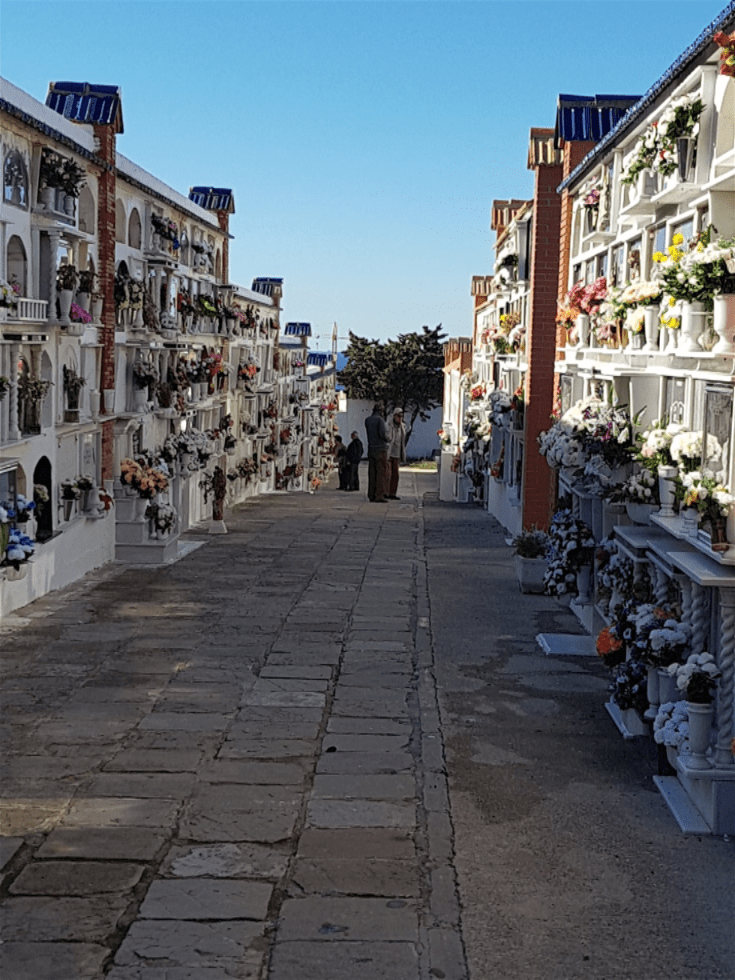
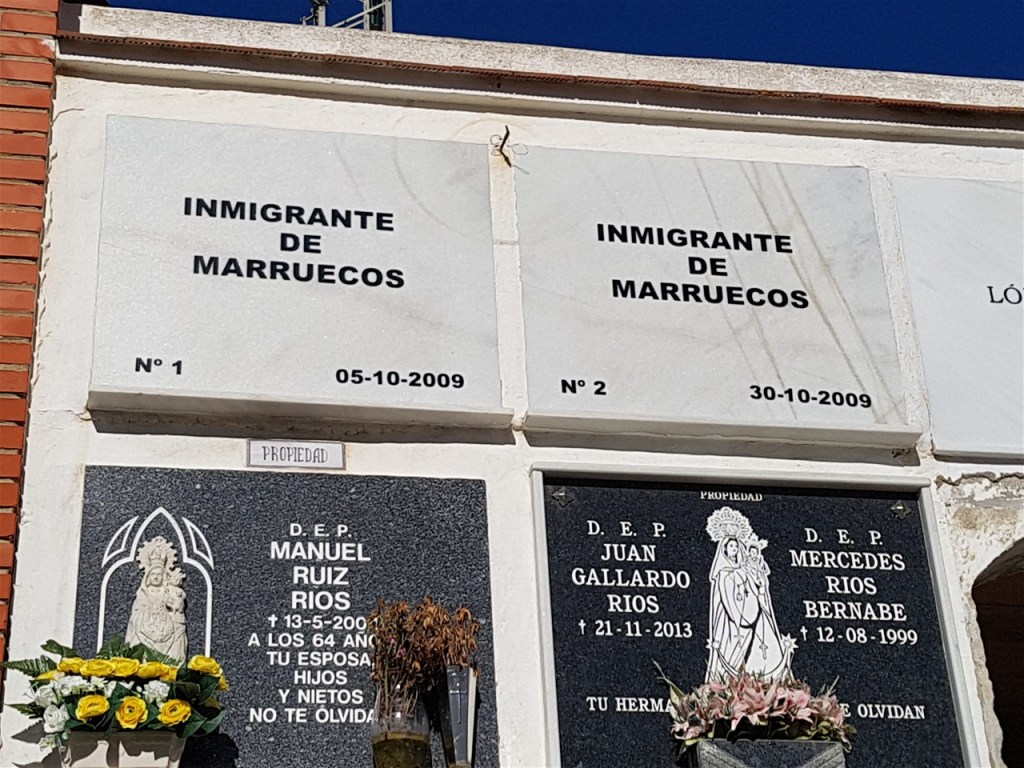
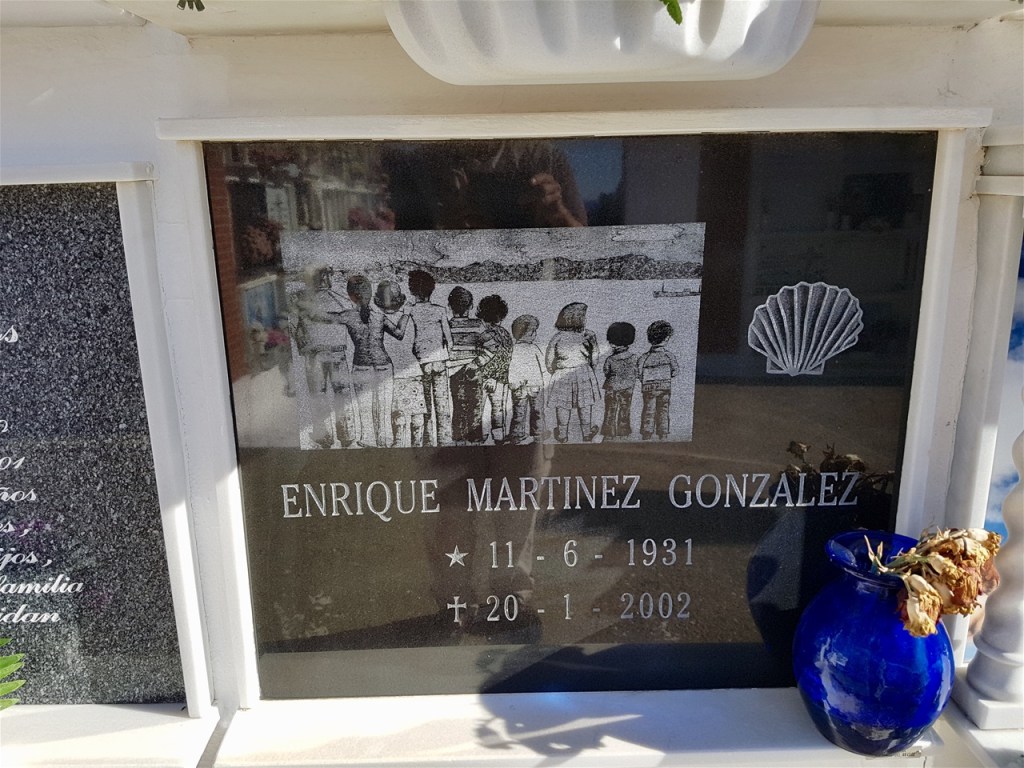
Our first stop, as ever in Tarifa, is the cemetery. Yes, an odd choice maybe, but this is a very special place. Apart from a few conventional graves, one hosting a couple of imitators of Greyfriars Bobby – two black cats whereas Greyfriars Bobby was a Skye Terrier – there is a sort of horizontal locker system in place, stacked five or six ‘boxes’ high and extending along numerous rows.
It’s Sunday so mourners are out in force. Virtually every last resting place is festooned with flowers, the whole area is immaculate and there’s a palpable air of respect for others in the air.
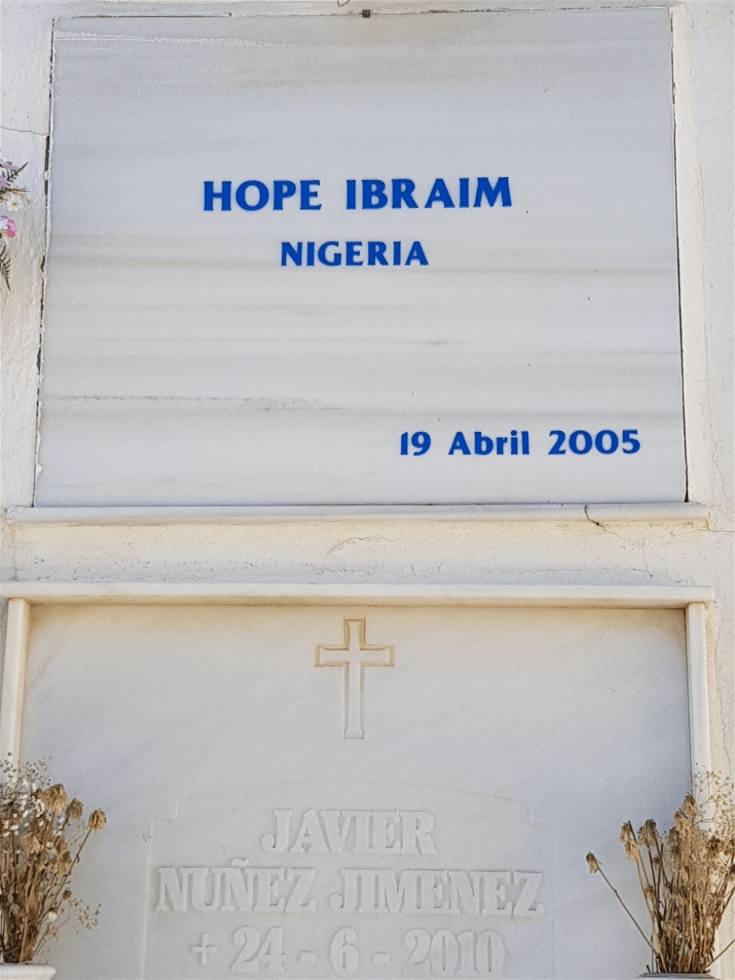
On our last visit here we saw many graves bearing the legend ‘unknown African,’ each accorded exactly the same respect and care as the other ‘residents.’ Today, we saw only references to ‘Immigrante de Marruecos.’ Adding to the pathos, many of these victims washed ashore after unsuccessful attempts to cross illegally from Morocco to Spain bear the same date of death. Equally sad was the sign on the grave of an identified victim of drowning, that a mourner directed our attention towards – ‘Hope Ibriam, Nigeria.’ Hope died in 2005, the poignant irony of that name must surely strike everyone who sees it here.
I was fascinated by the concomitant accoutrements to the grave of Professor Wolfgang W Wurster; one dead flower and two empty wine bottles. A not exactly cryptic suggestion the late Professor was a bit of a lush, perhaps?
The graffiti/street art paintings on the end walls of houses just up the road from the cemetery have been repainted as we noticed last time we visited they were getting a bit shabby. The residents of this small estate, by no means a prosperous area, are very proud of their art work and rightly so.
Down by the port we saw the creamy wake of one of the hydrofoil ferries racing across to Tangiers. We’ve been on one of these many times, and also used the larger, slower, ferry from Algeciras to Ceuta. Incidentally, as we passed Gibraltar we saw the long queues for vehicles entering and leaving. Spanish officialdom takes a dim view of Gibraltar remaining British and often makes life difficult for those entering or leaving the entry point between the Rock and mainland Spain. It invariably strikes me as somewhat irrational when we’re travelling to Morocco from Algeciras that we arrive in North Africa at the Spanish enclave of Ceuta, a tiny area of Morocco that somehow still remains Spanish territory. I asked a Spanish friend once about this paradoxical and apparently hypocritical situation and he merely muttered, ‘that’s different.’
Different, in what way?
We love beach bars and Wet Cafe, just off the N340 road, is a special favourite, but today we went for a long walk on Tarifa’s virtually deserted beach and had a smoothie at Cafe Aqua right on the beach. The smoothies weren’t very good, in truth, but it’s such a laid back place we didn’t mind.
Much.
There’s a slack rope, ie not a tightrope, for those who like showing off. I felt adventurous and was about to try it when a group of kite surfers arrived, most sporting beards and tattoos, so I sat down again, fearing ridicule. One of the girls, no beard but many tattoos, hopped onto the rope and instantly fell off again. She tried again, same result. I almost wished I hadn’t abandoned my plan as I couldn’t have been any worse, but the moment had passed.
One of the girls said, ‘they shouldn’t let fat people go on beaches, not without a shirt on anyway. It’s gross.’ Her friend agreed. (They had American accents. Disparaging the overweight, oh, the irony) I stood up to look at who had offended them, hoping it wasn’t me, and saw a middle aged couple walking along minding their own business. Yes, they were slightly on the plump side, but even so. I hope those girls realise, the couple in question probably were just as skinny as them in their youth.
All along the beach here are camper vans, large and small, expensive and falling apart, there’s every type.
We saw several from very far afield: Estonia, Moldova, Lithuania, Finland, but very few Brits. Distance travelled appears to have no correlation to quality of vehicle, there was one with a Belarus number plate which we wondered how it even got the hundred yards from the road to the beach in one piece. We stayed here in our van owning days, but one of our favourite places is just up the coast.
As we were leaving the beach we detoured to admire a separate group of vehicles, the wildest of wild campers living year round in old vans and converted buses. We occasionally come across old friends in groups like this, but didn’t know anyone here today. On one previous visit we did a ‘van swap’ with a man from Lithuania we had only met an hour before. Many years ago we had turned up in our fairly undistinguished van – I’m being kind – and Marigold liked the look of a van I suspected was even older and less well equipped than our own. As we drove off in our new acquisition we decided the tedious matter of obtaining official ownership could wait until we returned to England and gave three cheers at a job well done.
I like to think we still have that excess of spontaneity, but if it’s no longer at its former levels we can blame the Pandemic. Absolutely no reason to attribute blame in that way, but that doesn’t seem to stop people blaming Covid for all the failings of their lives and of society in general.
A sign in one van warned potential intruders, ‘beware, Staffies on guard,’ in several languages. I met the Staffies, apart from the likely prospect of being licked to death I found them very far from dangerous.
A couple having a (very well organised) picnic in the woods waved at us and invited us over for a drink, but we have, unusually and somewhat irrationally, booked a hotel for tonight and it is many hours away from here so we had to move on.
Our next stop was Bolonia, another place we return to often. There’s a great beach here, with many camper vans ‘wild camping.’ We’ve been here many times and it’s a delightful place. The main draw for visitors is the ruined Roman city in a perfect location, right next to the beach.
There’s an entry charge, only small amount, but if you can prove you are entitled to call yourself ‘European’ by showing an EU passport, it’s free. After Brexit, we were expecting to have to pay and had searched in the depths of Marigold’s capacious handbag for the loose coins she keeps in there rather than in her purse for reasons I don’t fully understand.
It turned out to unnecessary as nobody asked to see our passports. As we went through the unguarded entrance we saw the attendant having a ciggie break in the sunshine. She waved to us to carry on. We both obviously looked sufficiently ‘European.’
It’s all gone a bit more upmarket since our last visit with a humongous museum complex being added, but the main attraction remains the ruined forum and other remnants of Ancient Rome. This was once a prized asset of the Roman Empire. Then, it was known as Baelo Claudia and its importance came from the fishing industry, much as this area does today. Baelo Claudia supplied the popular Roman delicacy Garuda, a sort of fish paste, to the whole Roman Empire. It was thriving at the time of Emperor Claudius who was so impressed with the produce he gave the town his name.
By the second century AD the town was in decline and was nearly destroyed by an earthquake. By the sixth century AD, Baelo Claudia was abandoned.
In its heyday as a fishing centre, the fish-salting factory – located in the lowest part of the town, right on the beach – allowed the prized Garuda to be preserved and sent throughout the Empire. The salting vats have been excavated and the stone columns of the forum and basilica are remarkably well preserved. The weather was great and we enjoyed wandering around for well over an hour.
The white sandy beach looked stunning in the sunshine. There are several sand dunes, one of which is now a National Monument. Many people climb to the top of the biggest one, as we have in the past, but not today! Marigold decided those struggling up the slope were show offs and declined to be associated with them. Very wise.
Moving on, we diverted again to the coast to Zahara de los Atunas. This is at heart a fishing village, but is rapidly approaching ‘resort’ status and is now, apparently, probably one of the Costa de la Luz’s most upmarket areas where house prices have soared in recent times.
There’s a good beach, of course, as there is almost everywhere else along the ‘coast of light,’ which remains largely unspoilt, and empty, but the town itself has definitely gone upmarket since our last visit. Designer shops and gourmet restaurants, we hardly recognised the place.
At the side the of the road we saw numerous reddish coloured Retinto cows, many with calves alongside. Very often we’ve seen them on the beach at Bolonia and they’re the ultimate free range grazers, wandering at will between beaches and forests. They survive, apparently happily enough, on hay and acorns from the woods throughout the year. In mild Cadiz Province winter isn’t really a problem for livestock, but the summer heat and drought is when the herds are at risk. They’re placid creatures, even the bulls seem friendly, despite those scary looking horns, and the meat is highly prized, very lean and low in saturated fats, with a big festival every year in Zahara to celebrate the breed.
A few more miles along the coast road and we’ll be in Barbate. Known throughout Europe as the epicentre of tuna fishing it may be, but to us, as whenever we see the sign for Barbate we say in unison, ‘Kenneth Noye.’ That’s the next place on the list. If we had a list. Which we don’t. May just to settle for it being the next blog post.
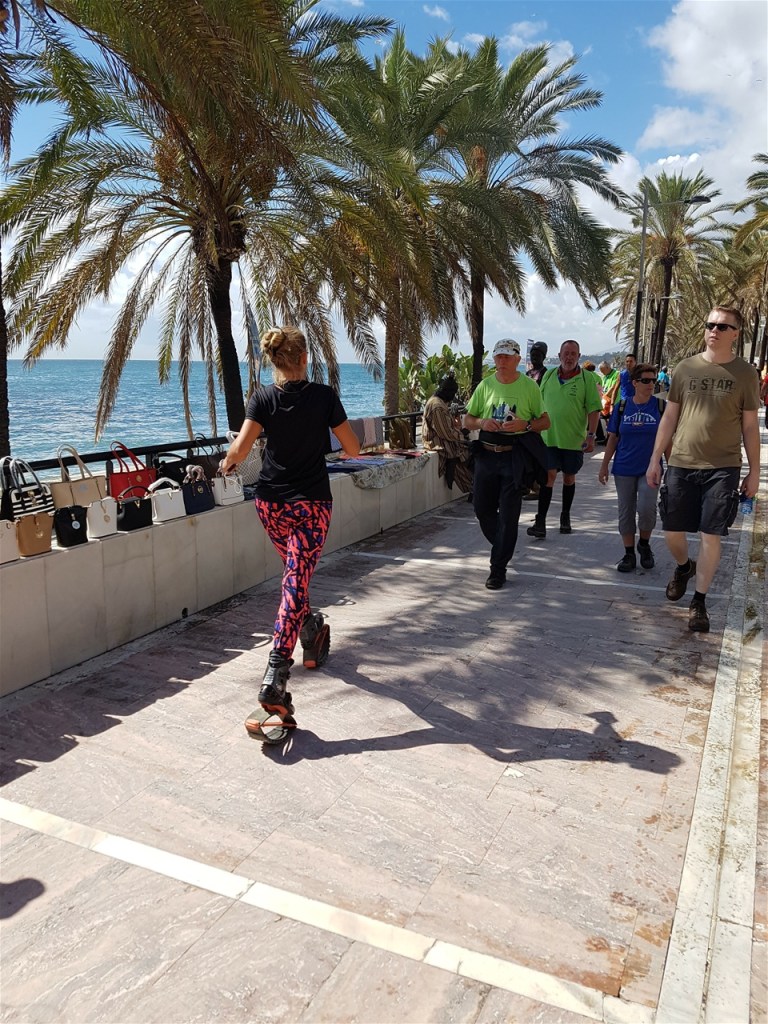
Springy boots
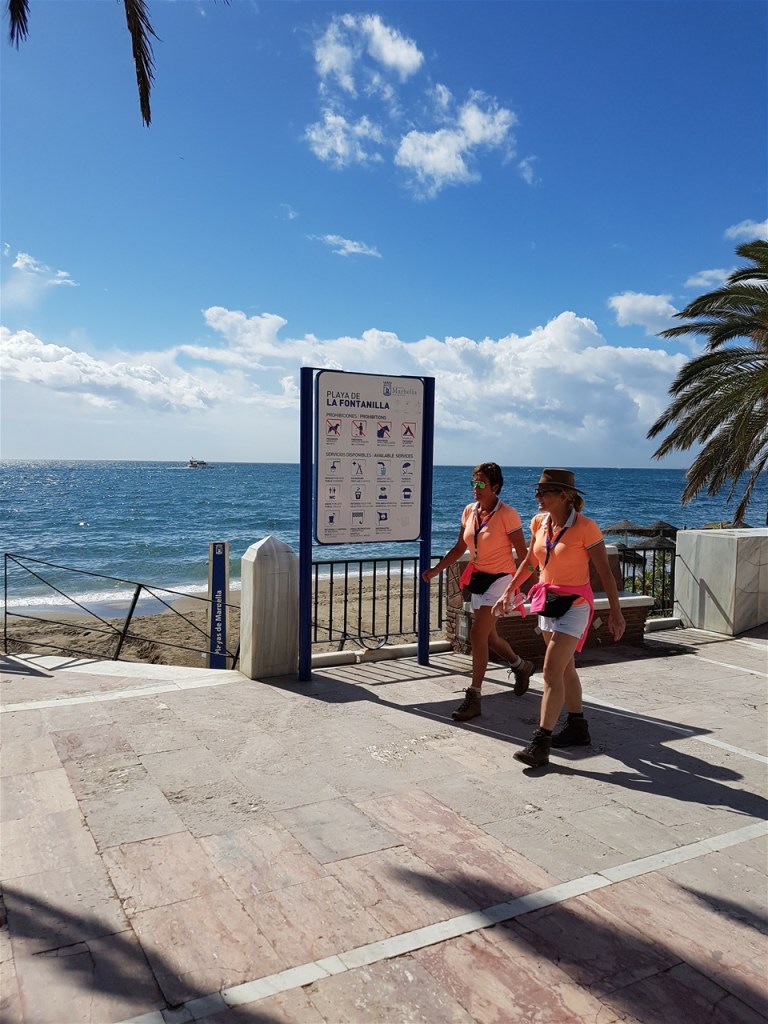
Formidably Fit Females. Passed us, stopped for a drink and a chat, passed us again.
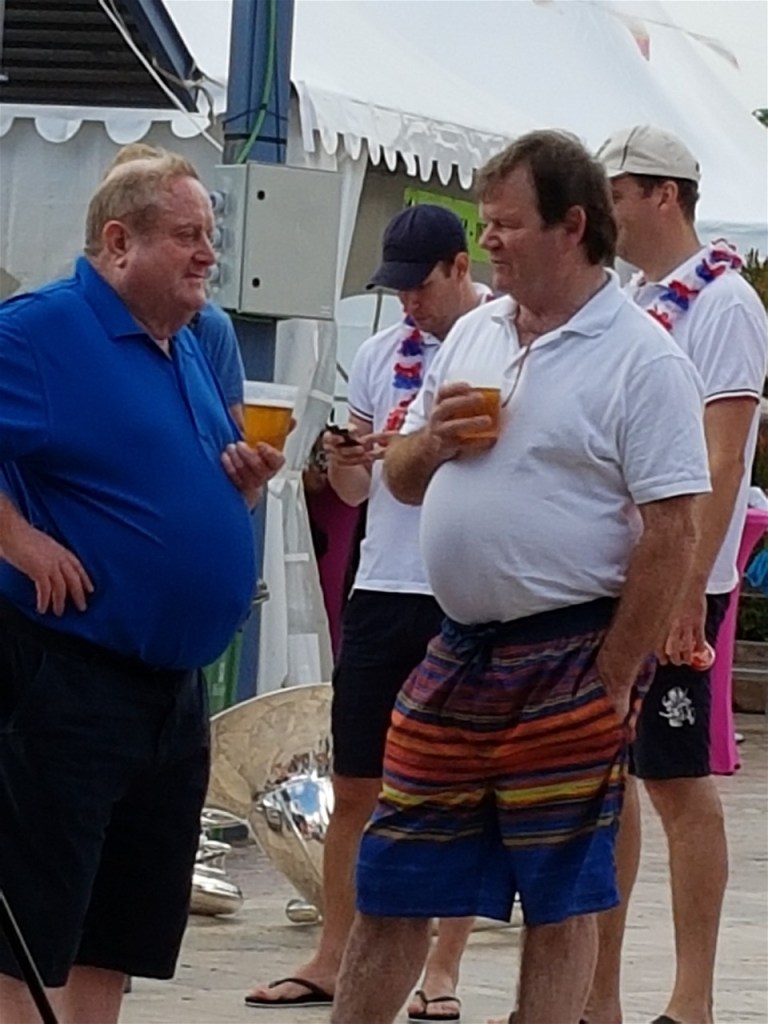
These two big lads whizzed past us as well
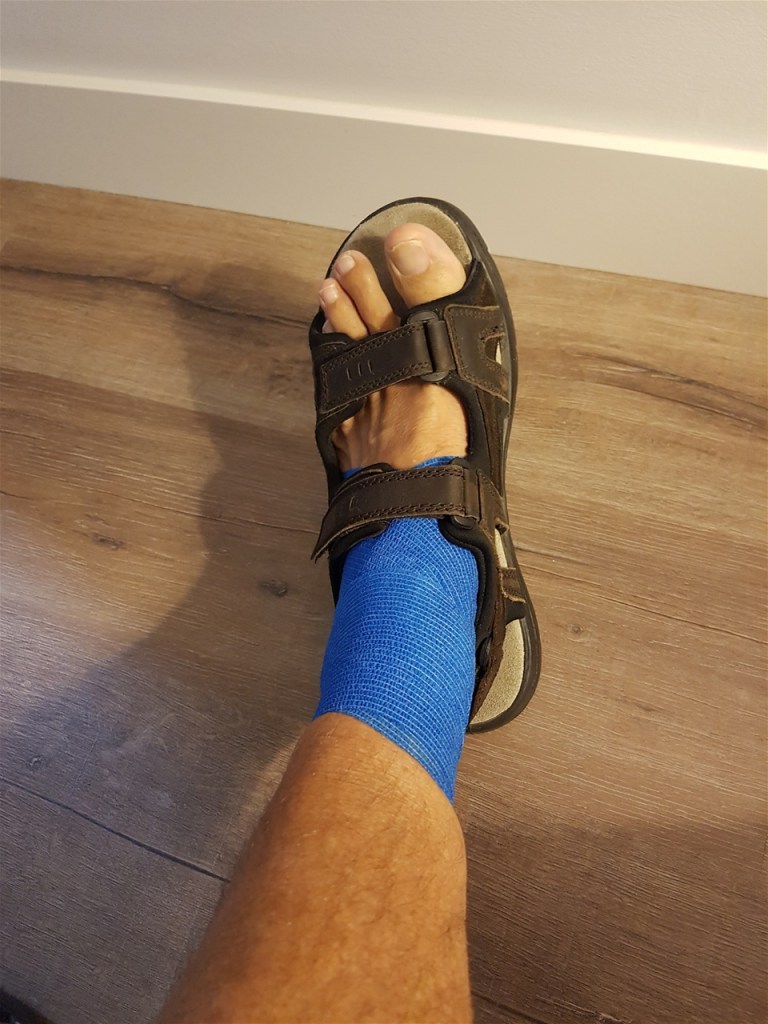
One of us has an excuse, That wretched Achilles tendon doesn’t seem to appreciate the efforts I make to avoid annoying it.
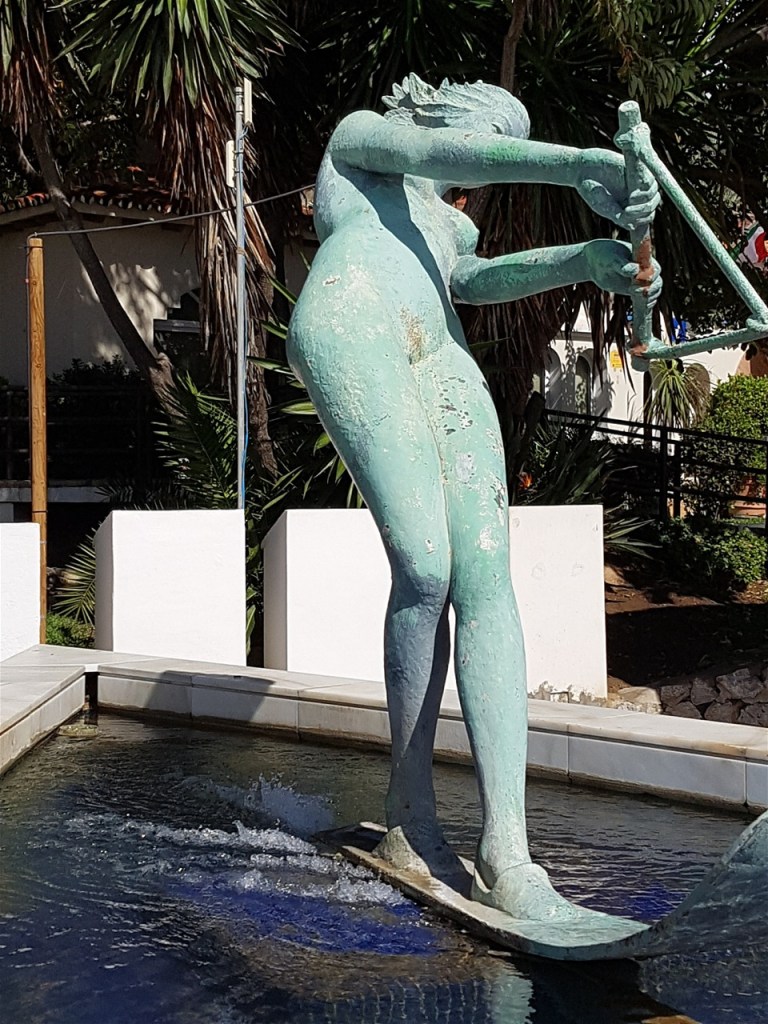
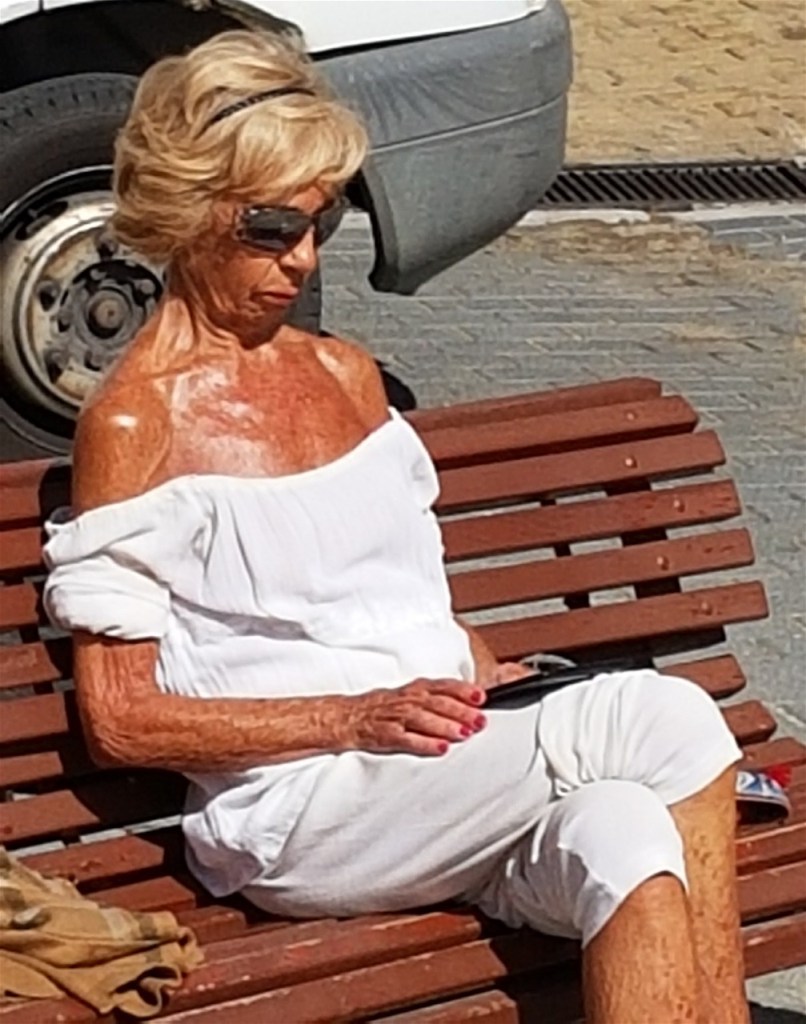
Want a fashionable tan? Just sit in full sun every day for seventy years. Job done.
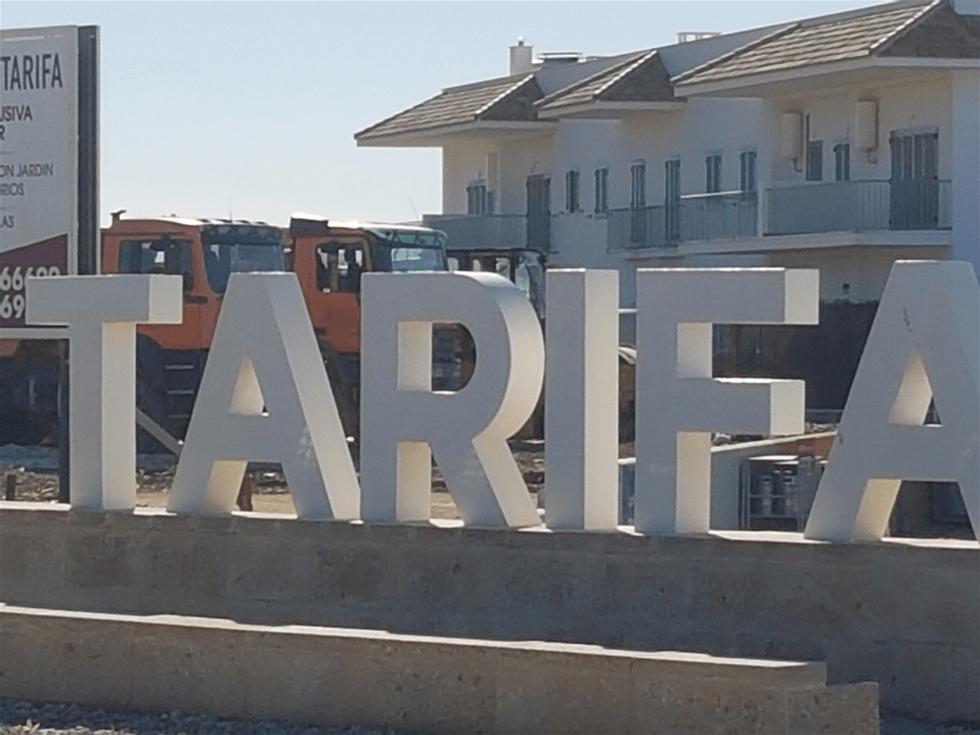
Tarifa. Incredibly unnecessary caption
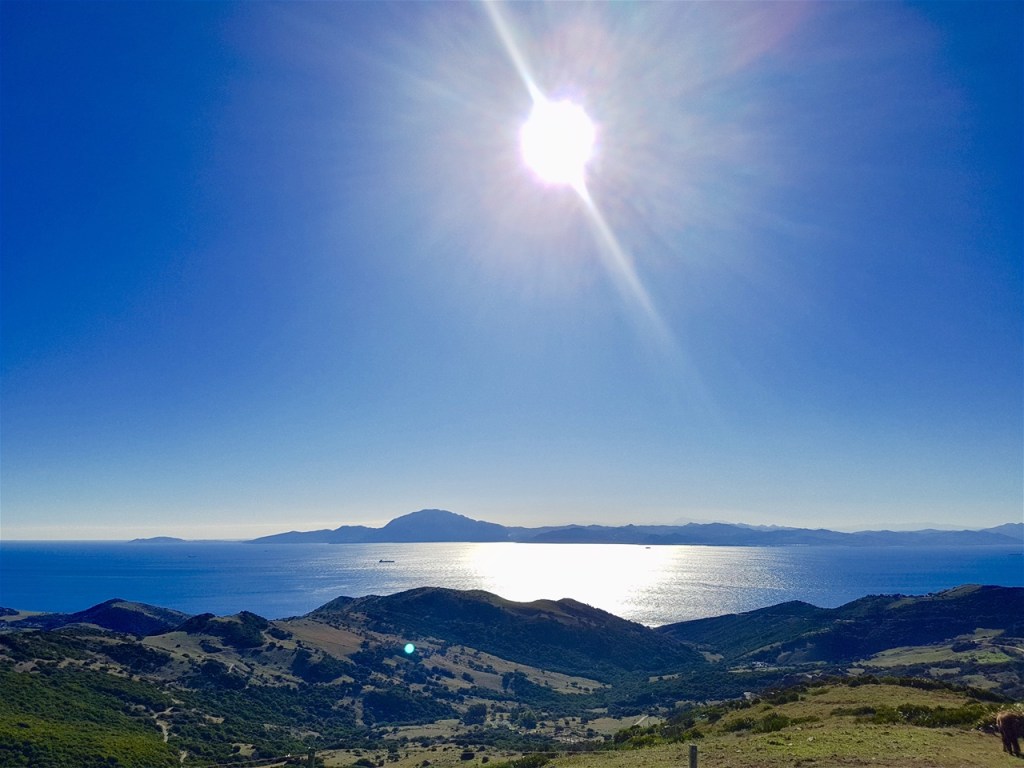
We’re in Spain, that’s Morocco over there
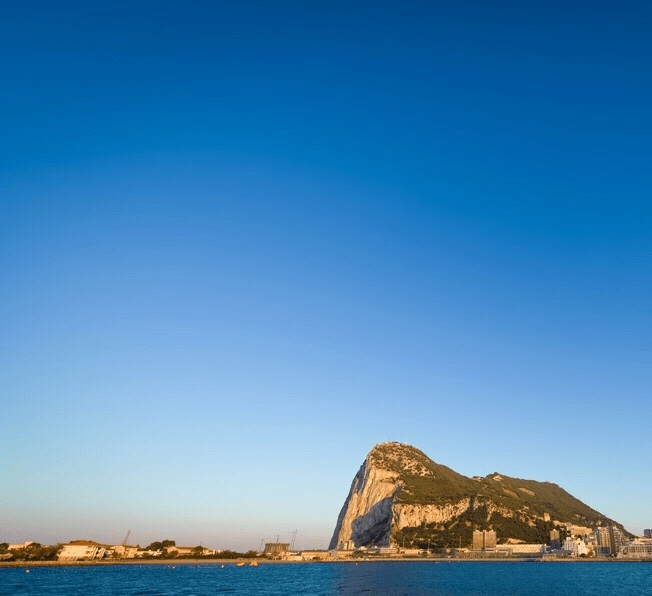
We just passed Gibraltar
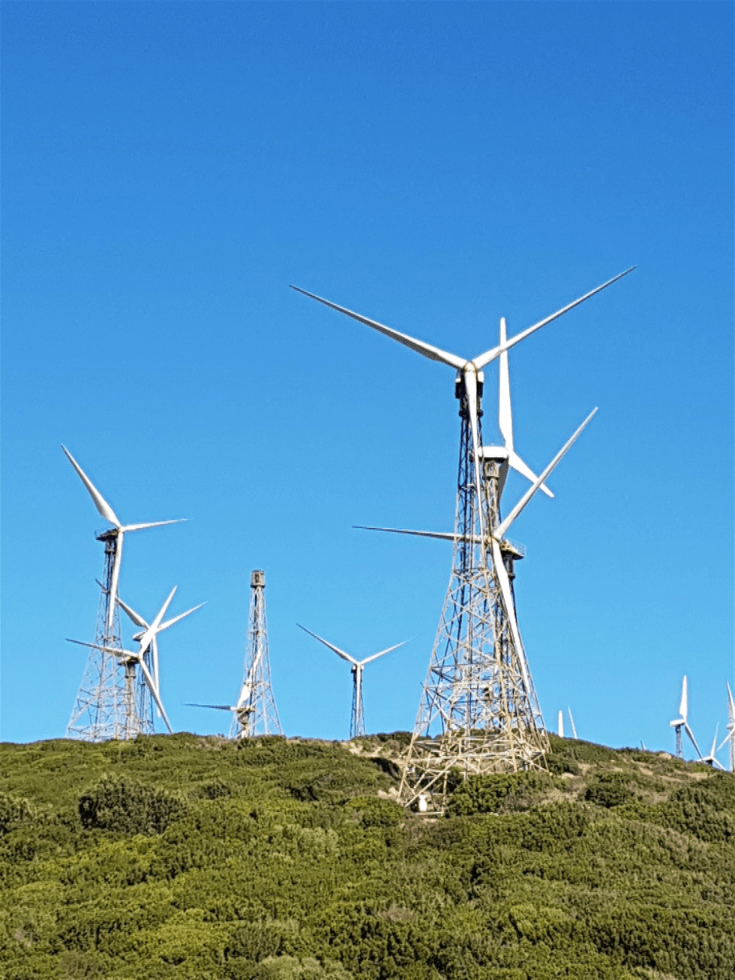
Rather a lot of these on the hillside
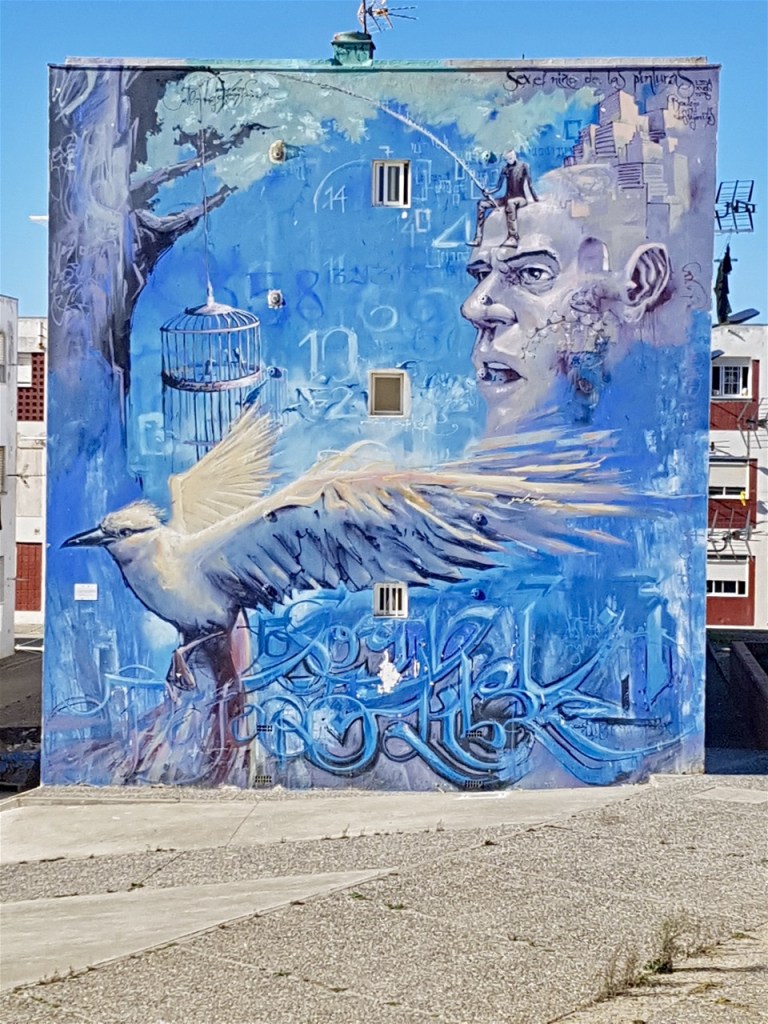
This is a block of flats
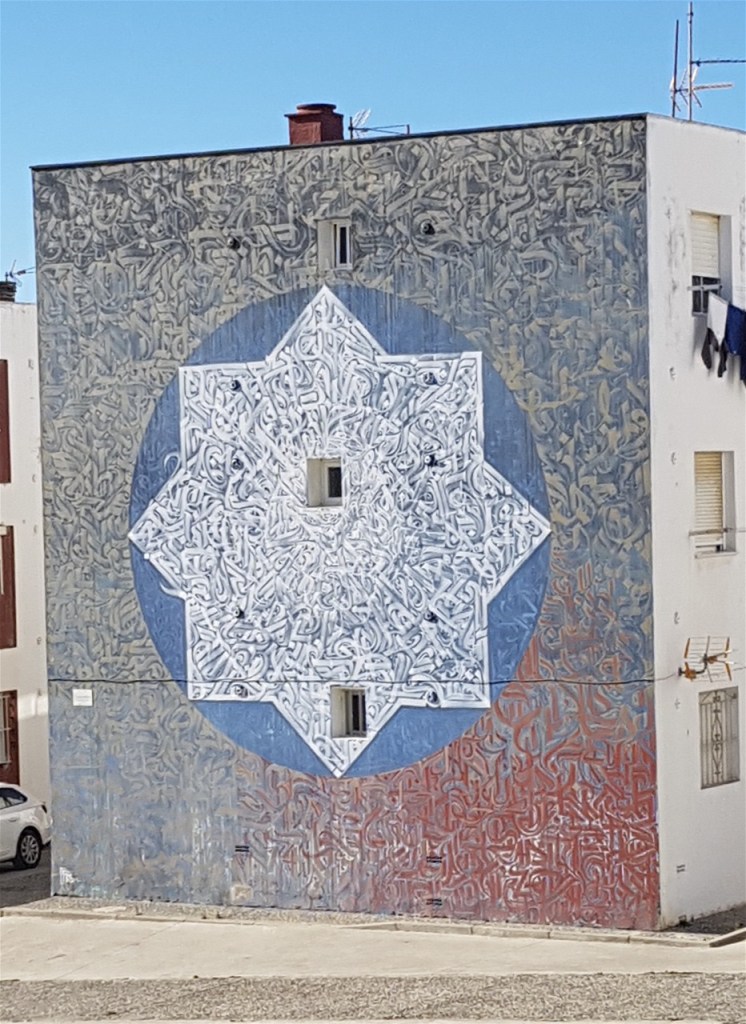
Another one
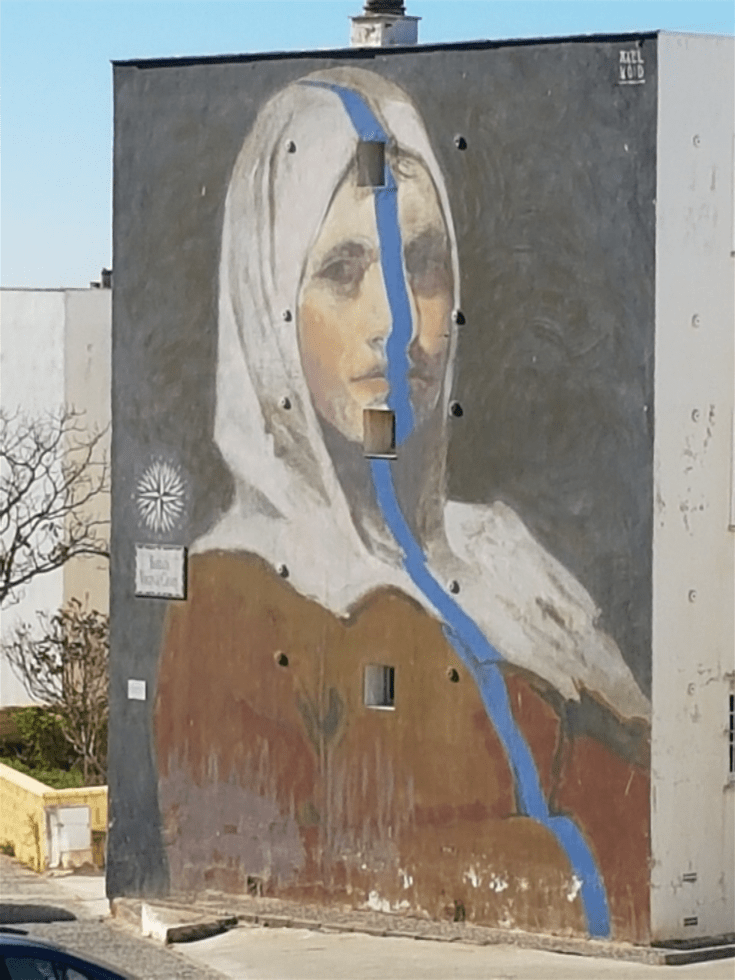
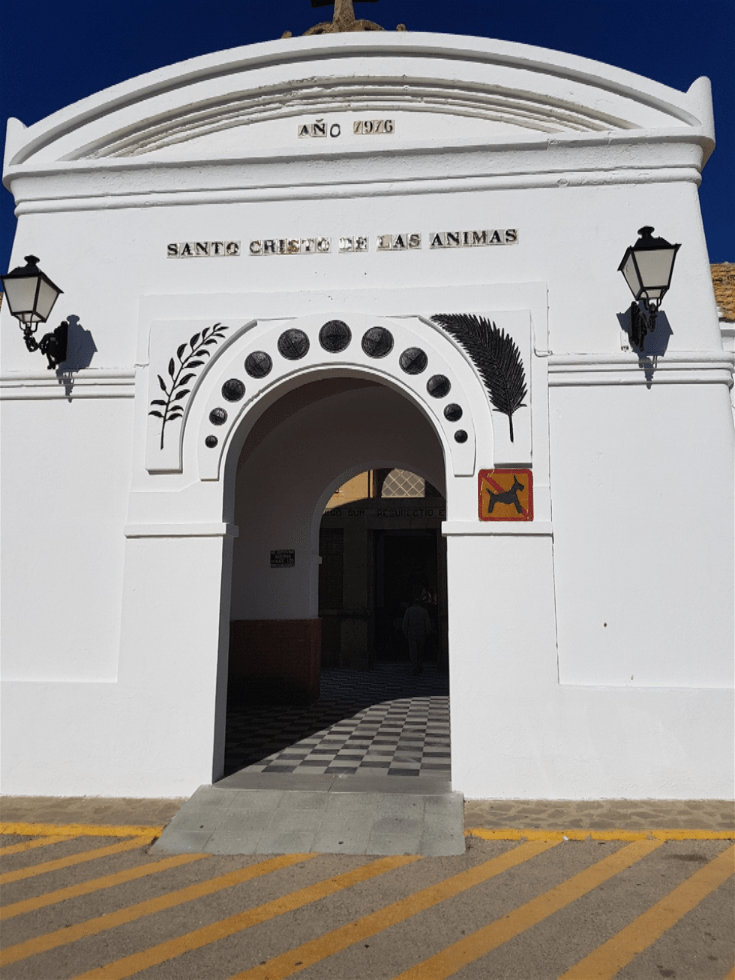
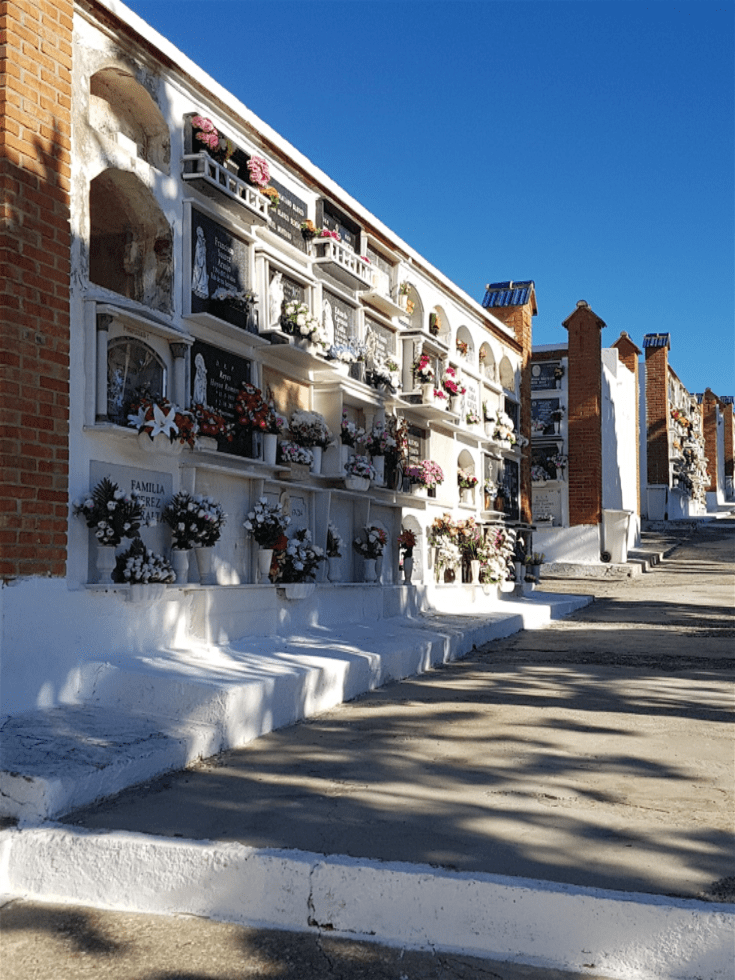
Graves in stacks
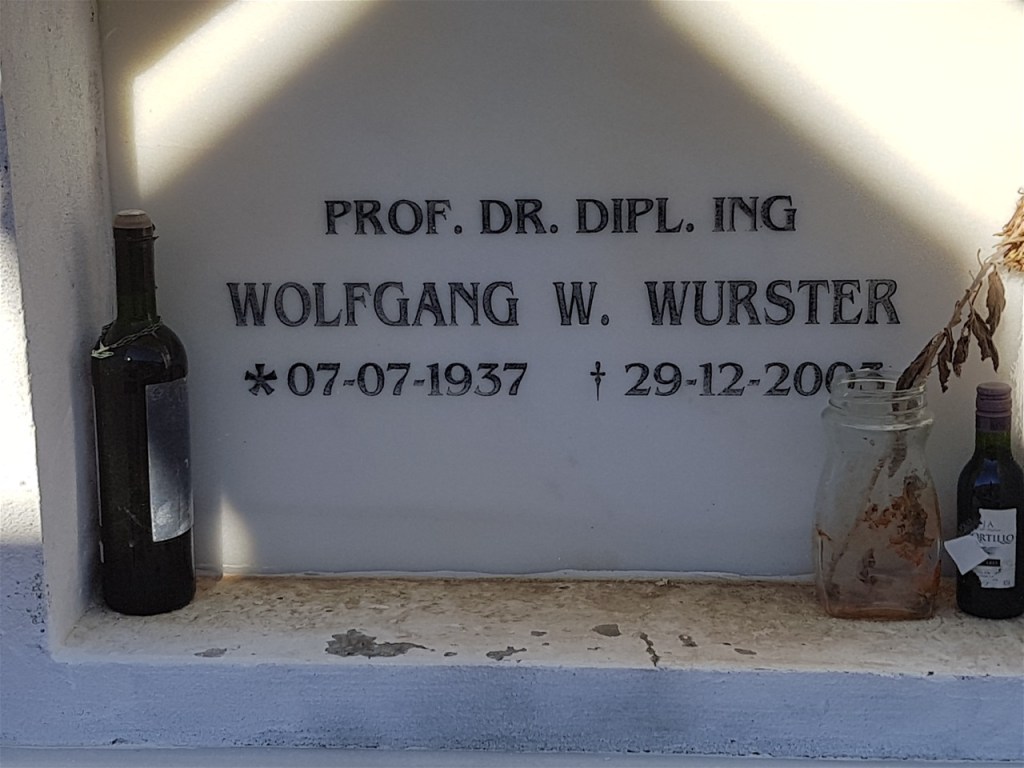
It’s rumoured Herr Wurster liked the occasional libation
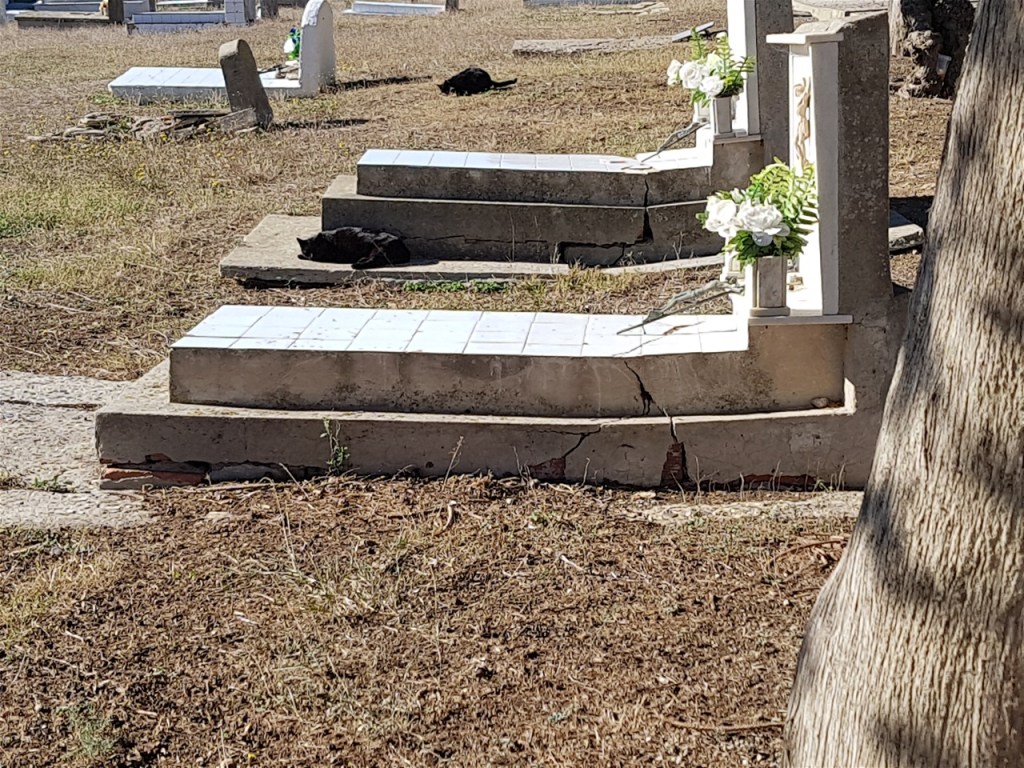
Greyfriars Bobby, feline version
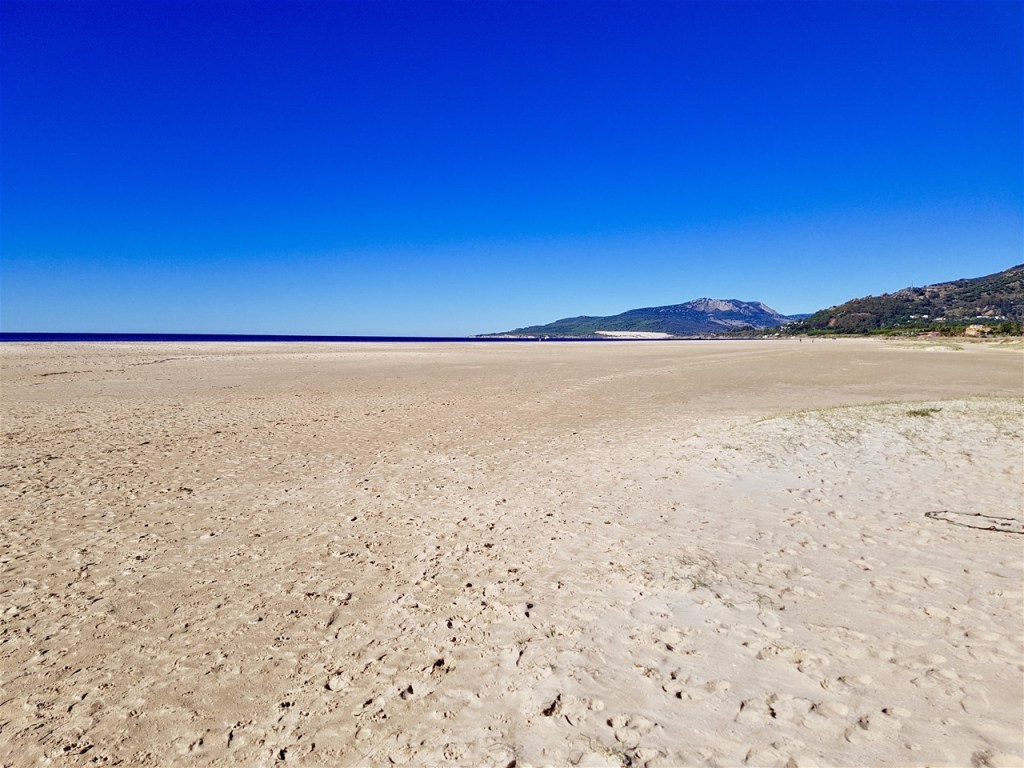
A section of Tarifa’s beach
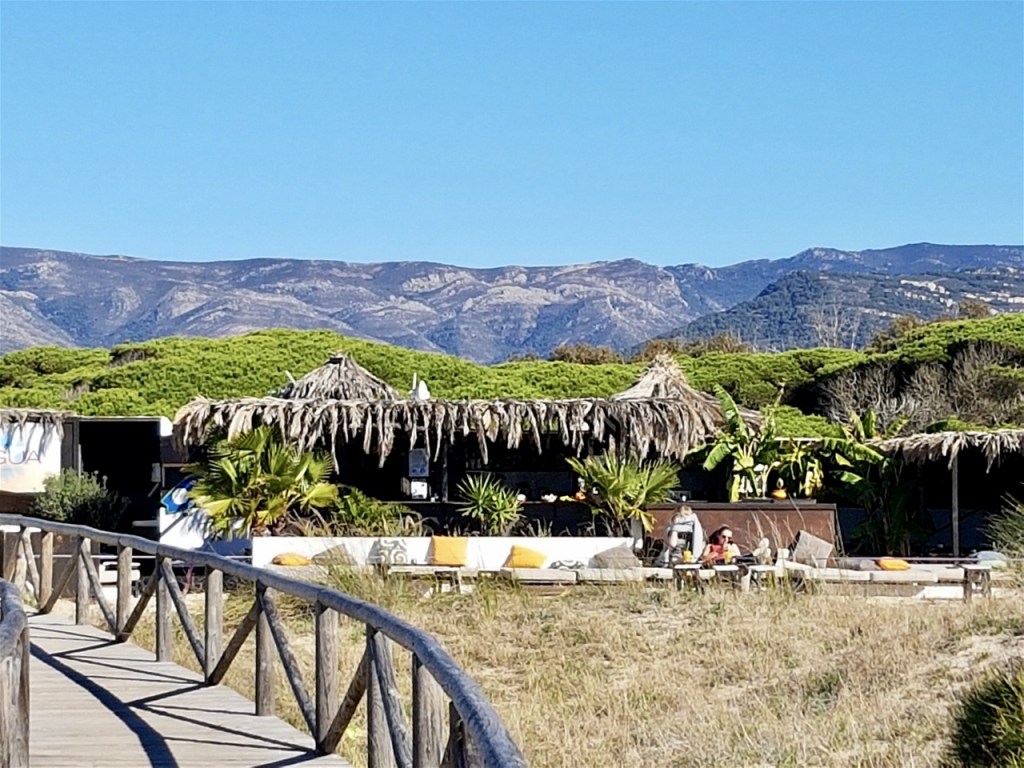
That’s a beach bar. Rather unfussy
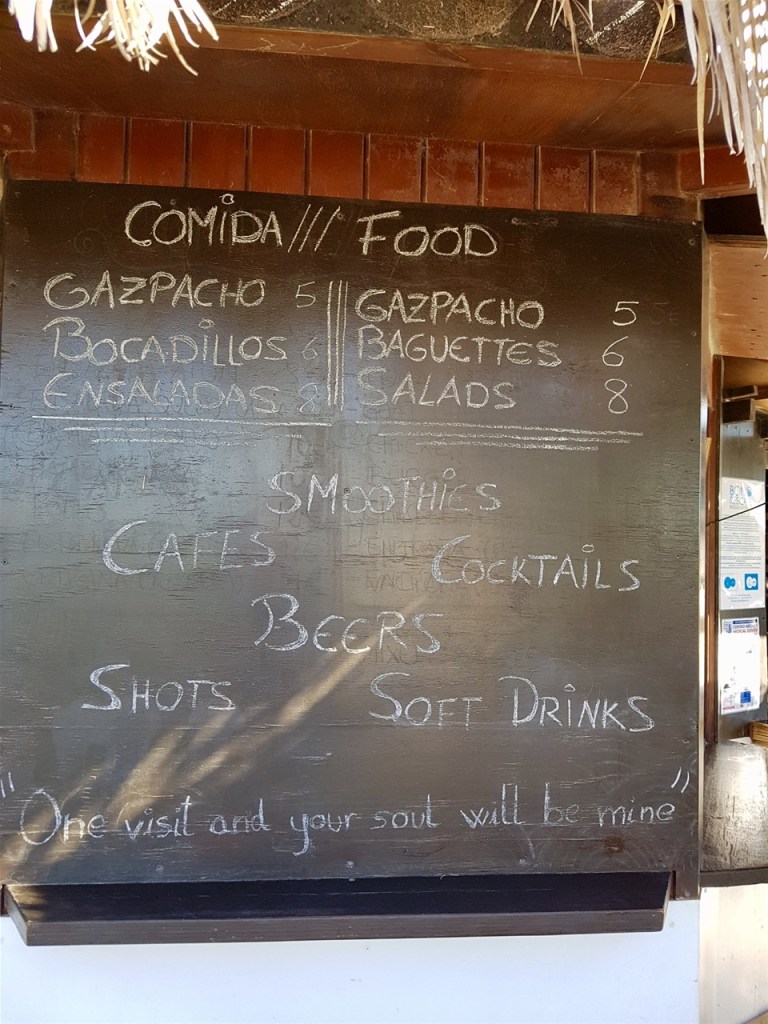
’one visit and your soul will be mine.’ Okay, we will risk a smoothie.
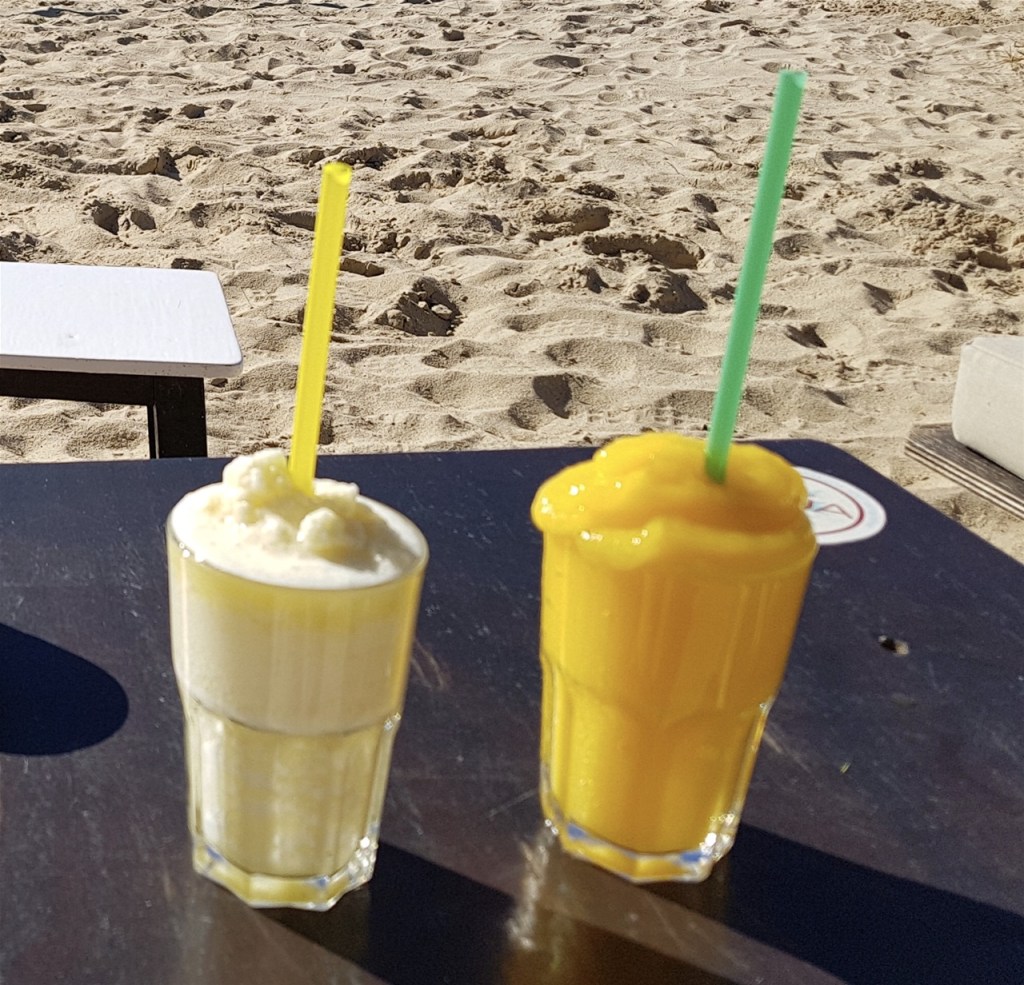
Not the best decision we ever made. Marigold’s verdict, ‘yuk’
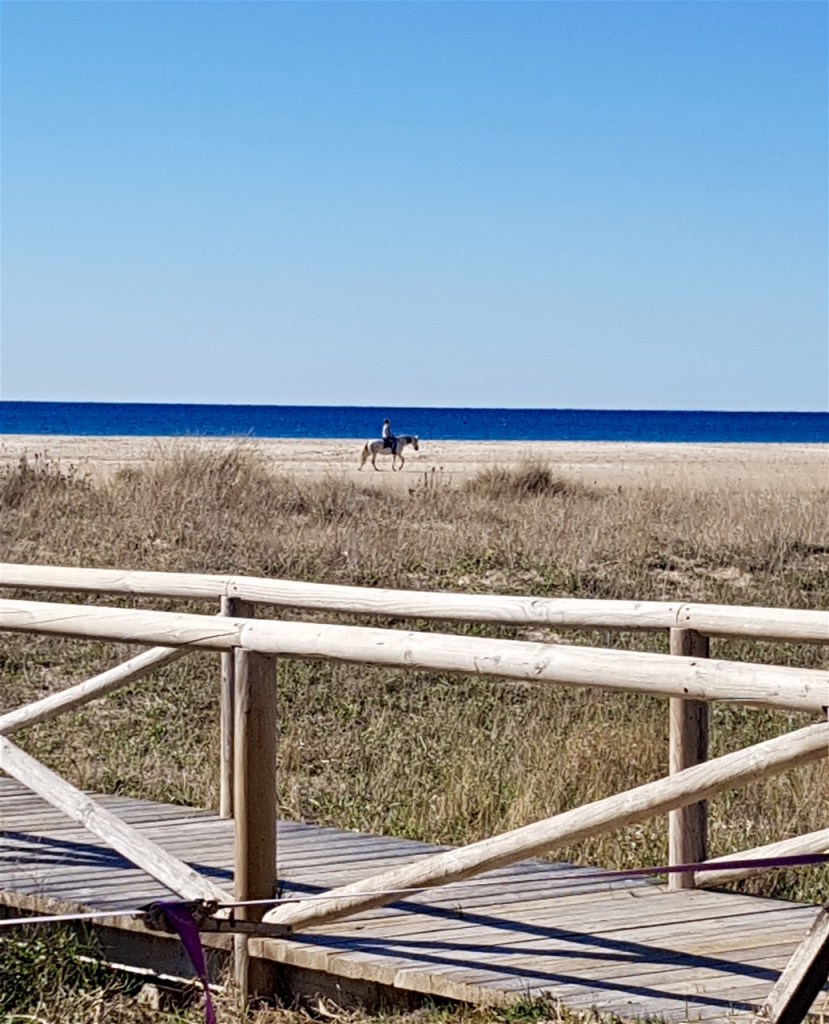
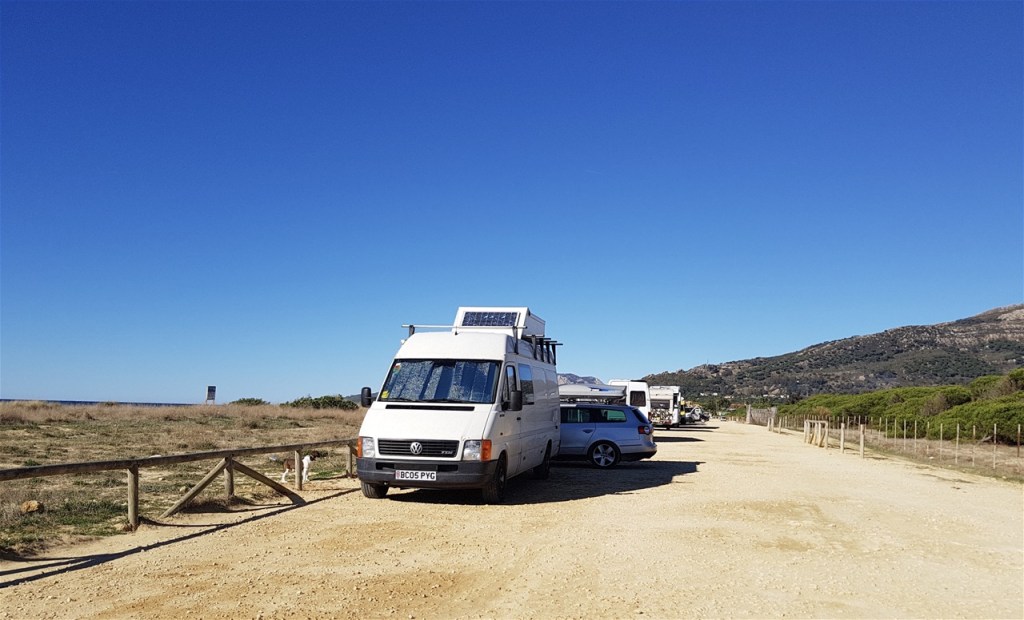
Favourite spot for camper vans
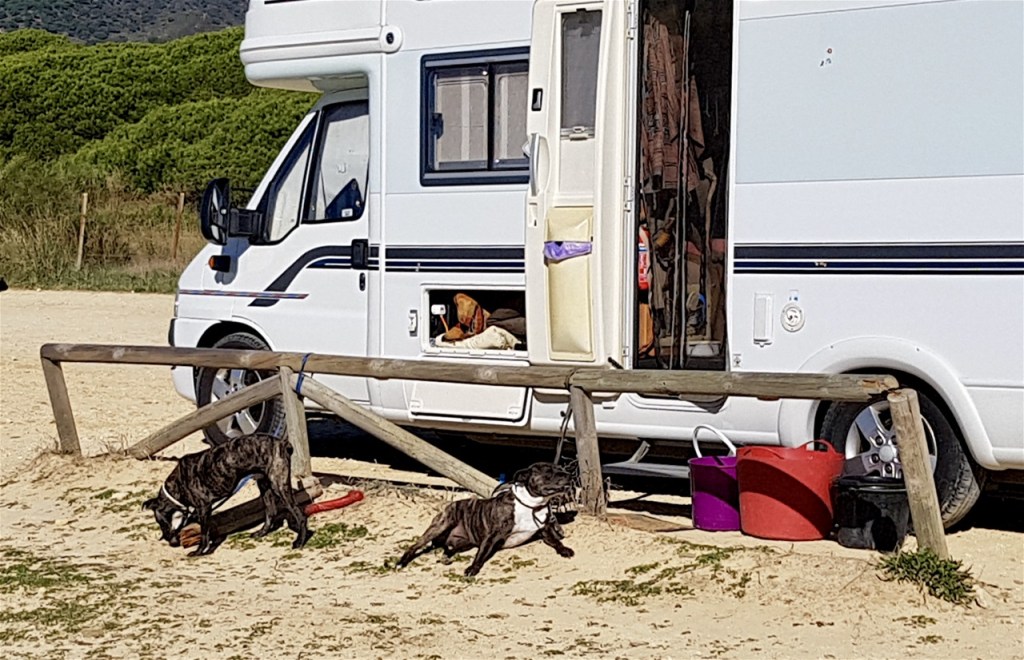
A pair of dangerous dogs. A person could be licked to death, but that’s about it
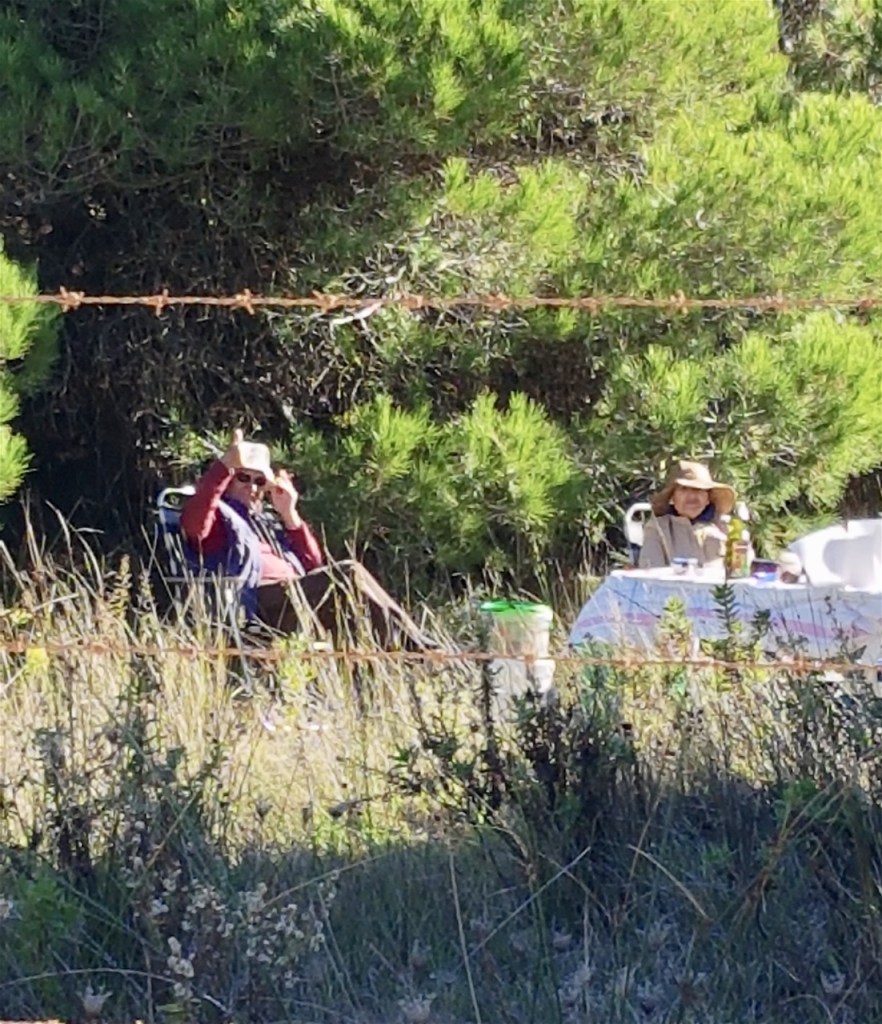
A picnic in the woods
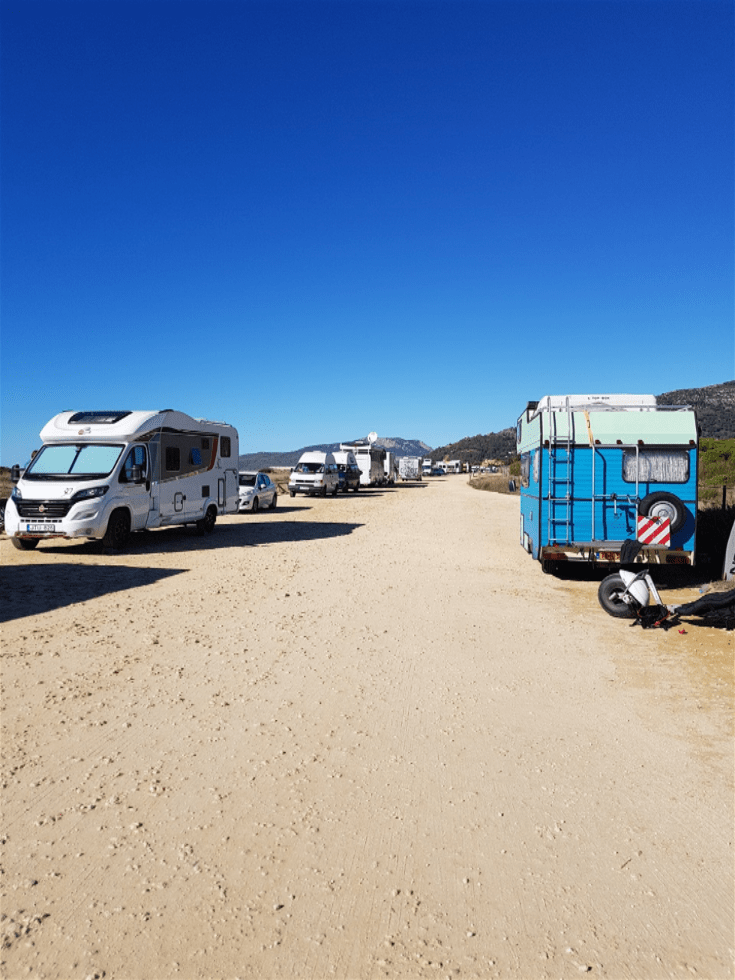
The blue van on the right is very like the one we swapped our van for very close to here a few years ago. Other than the colour scheme it had few virtues
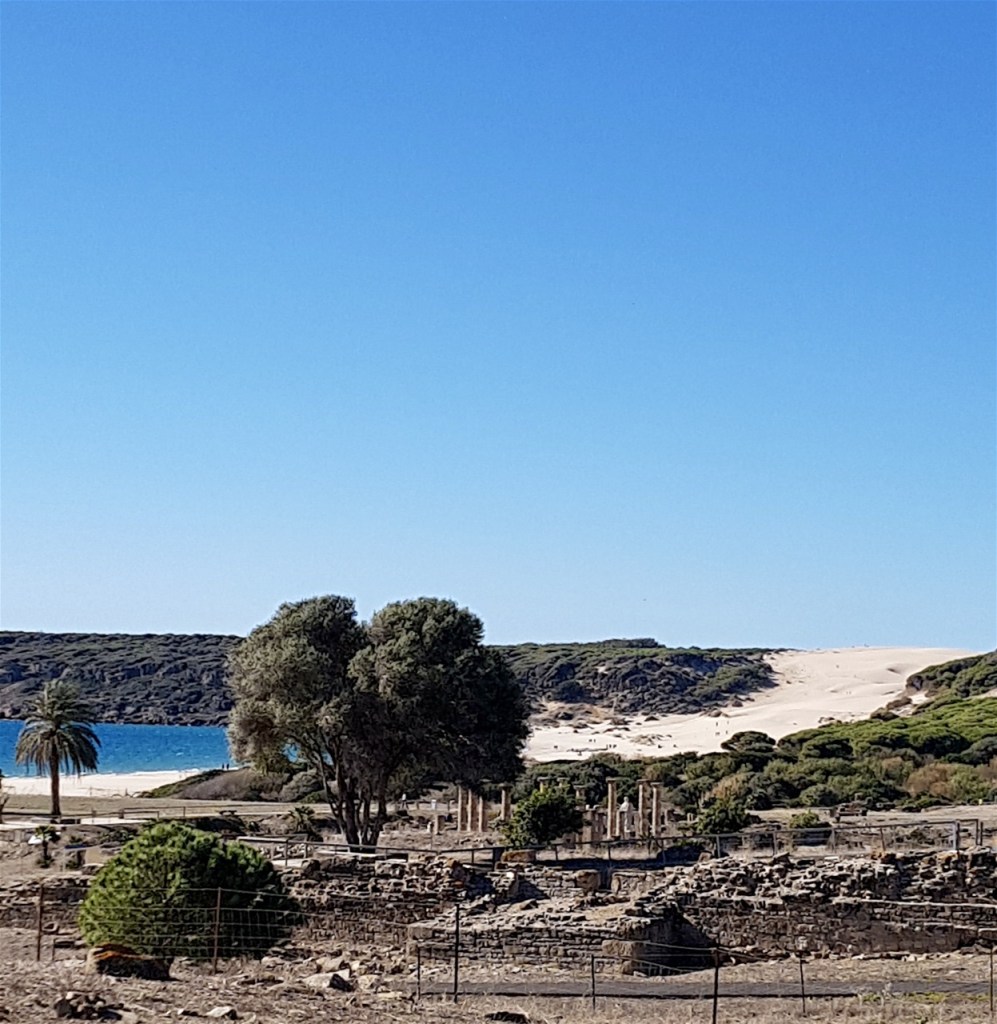
Our next unmissable destination, a Roman settlement on a beach
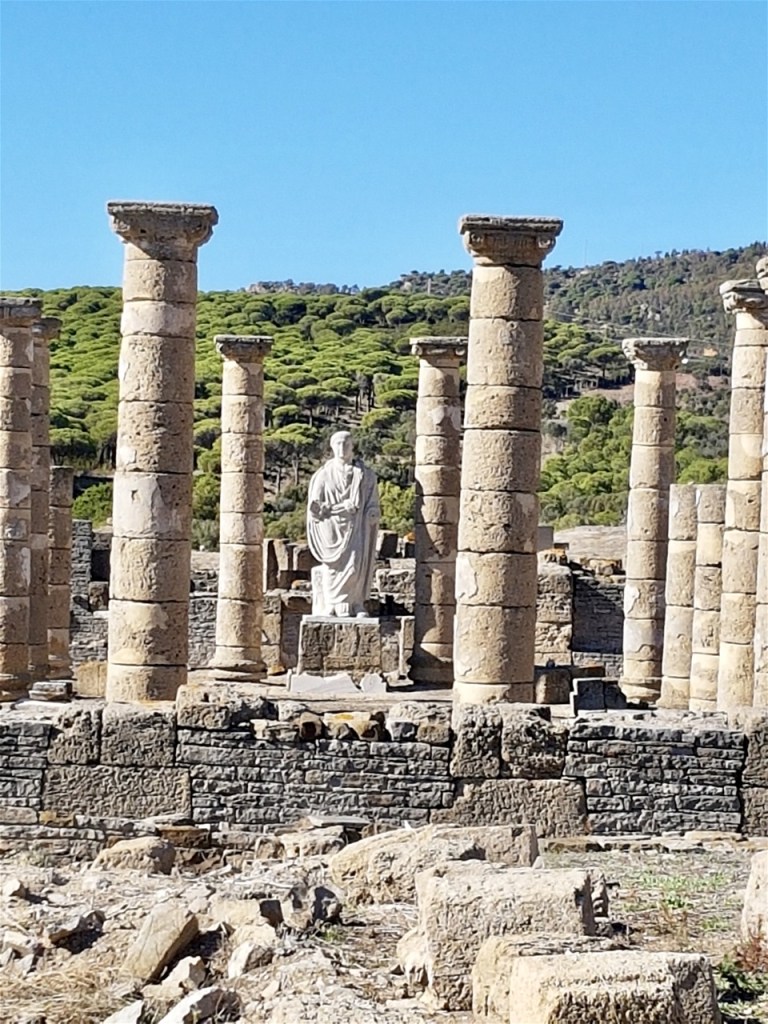
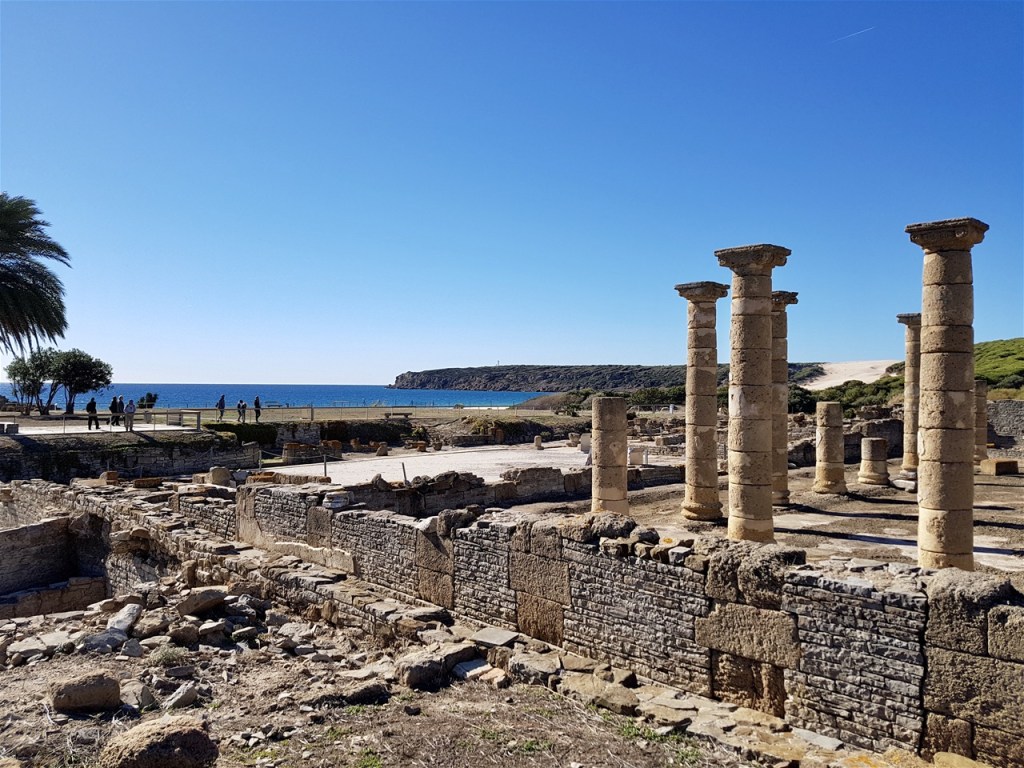
An idyllic setting
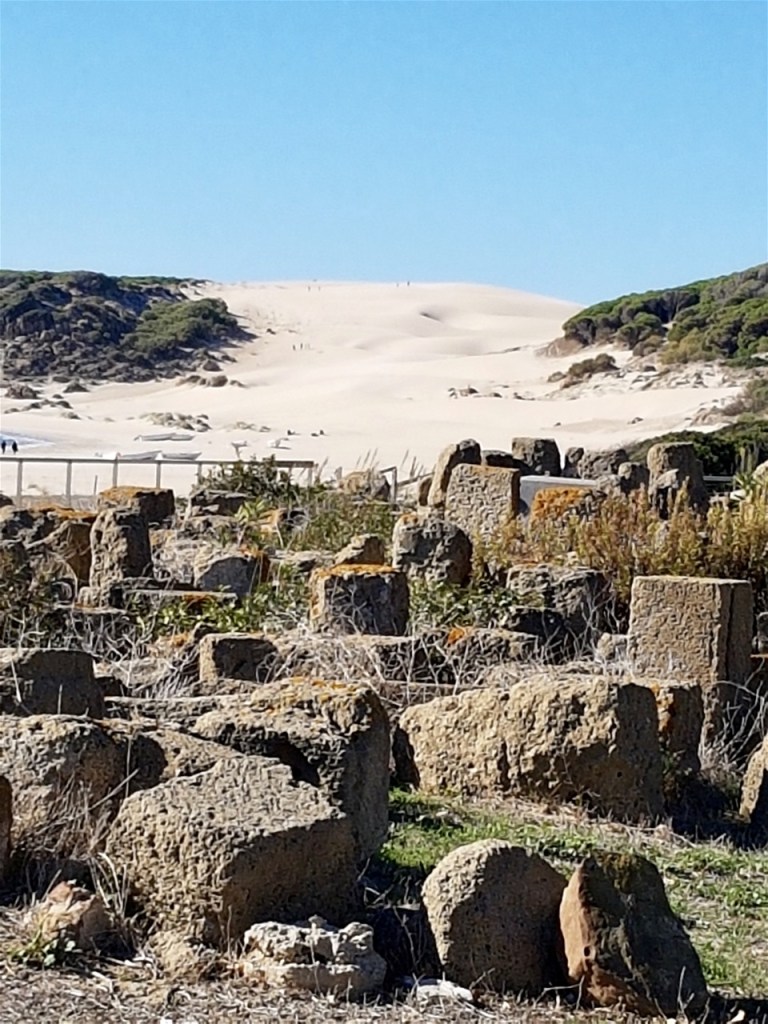
One of the many sand dunes we didn’t climb up today
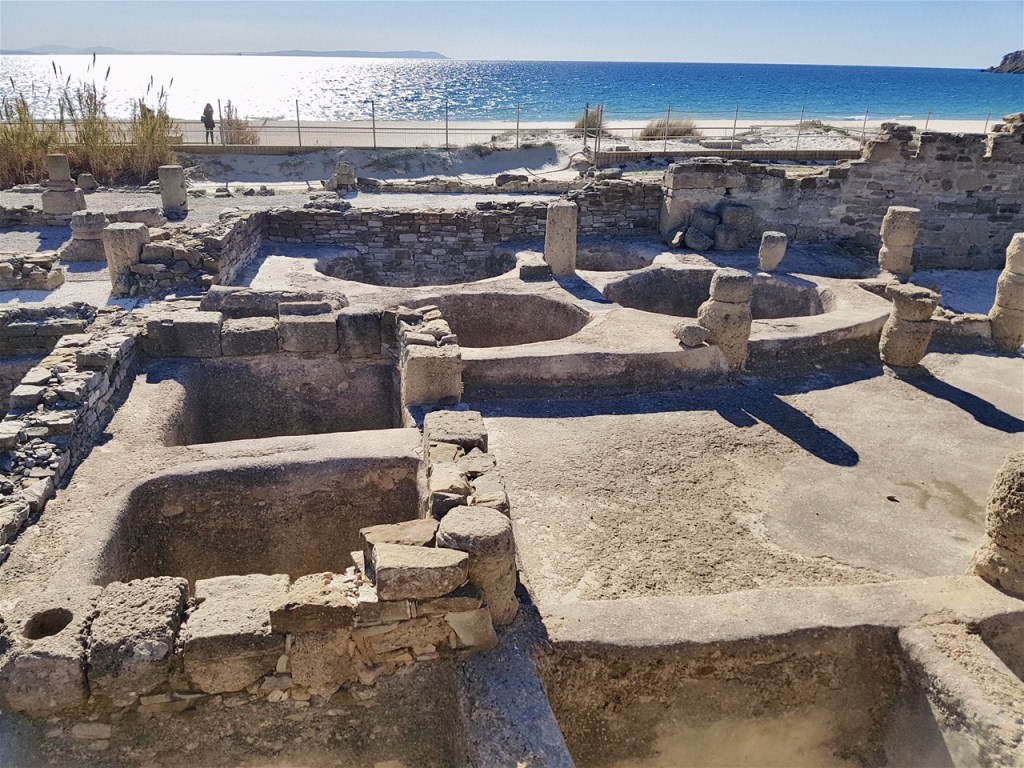
The salting vats that supplied Rome with a prized delicacy
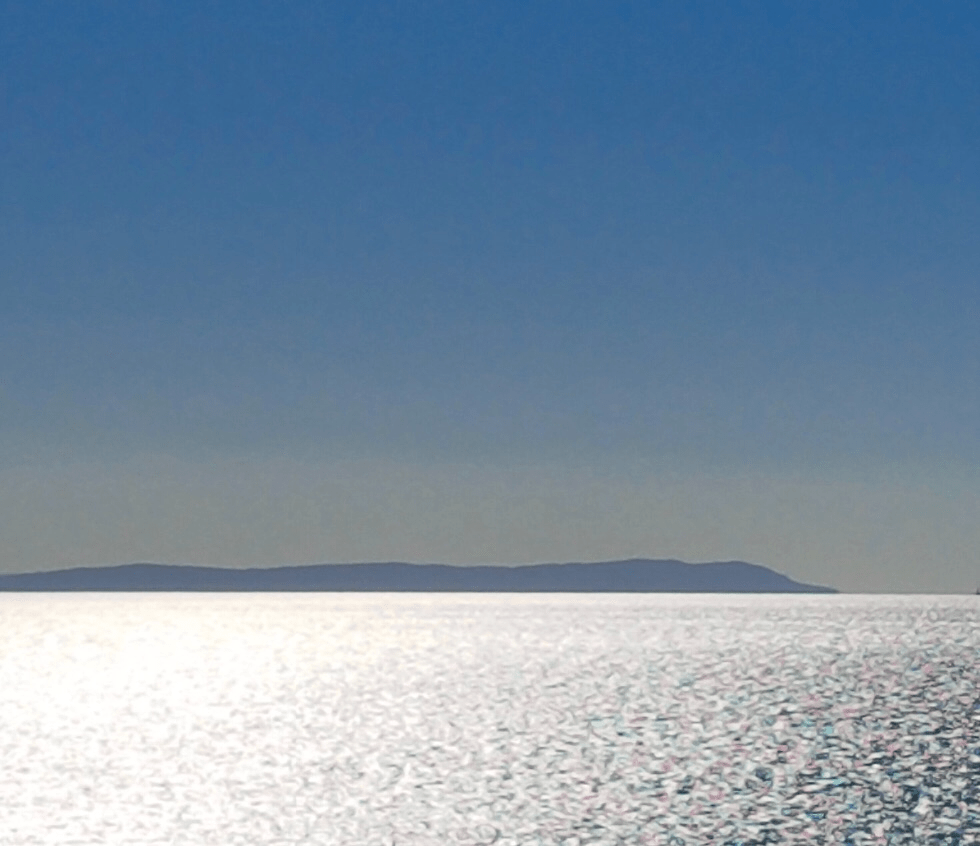
Morocco, so near and yet so far away
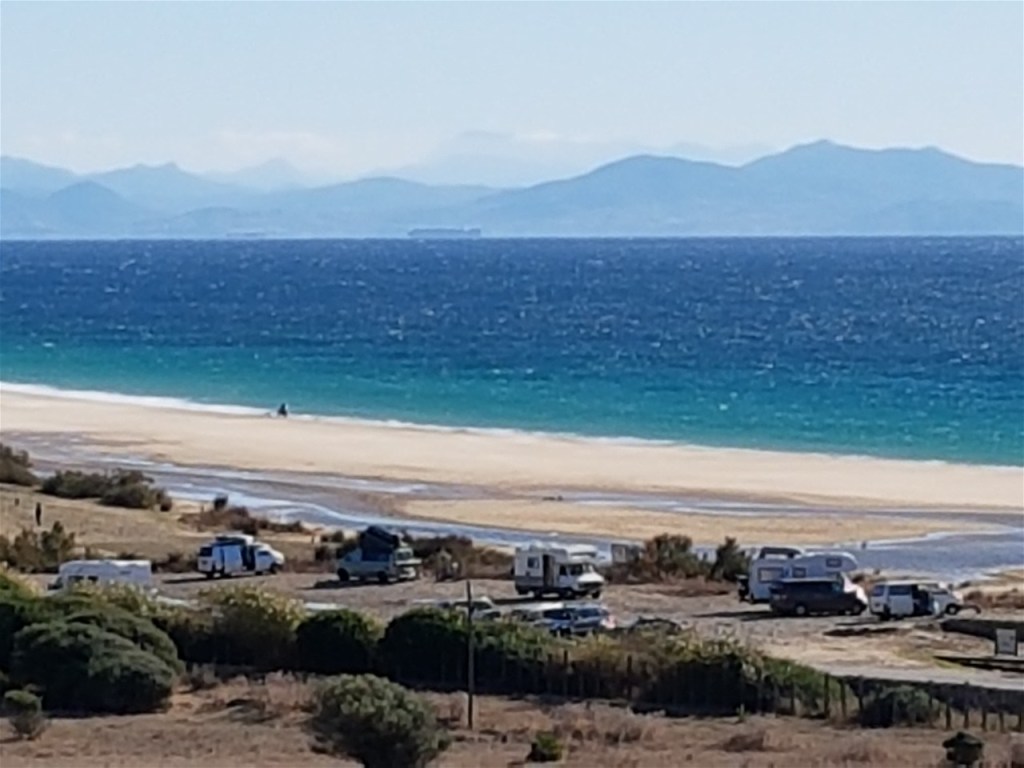
A favourite free camping area we have stayed in many times
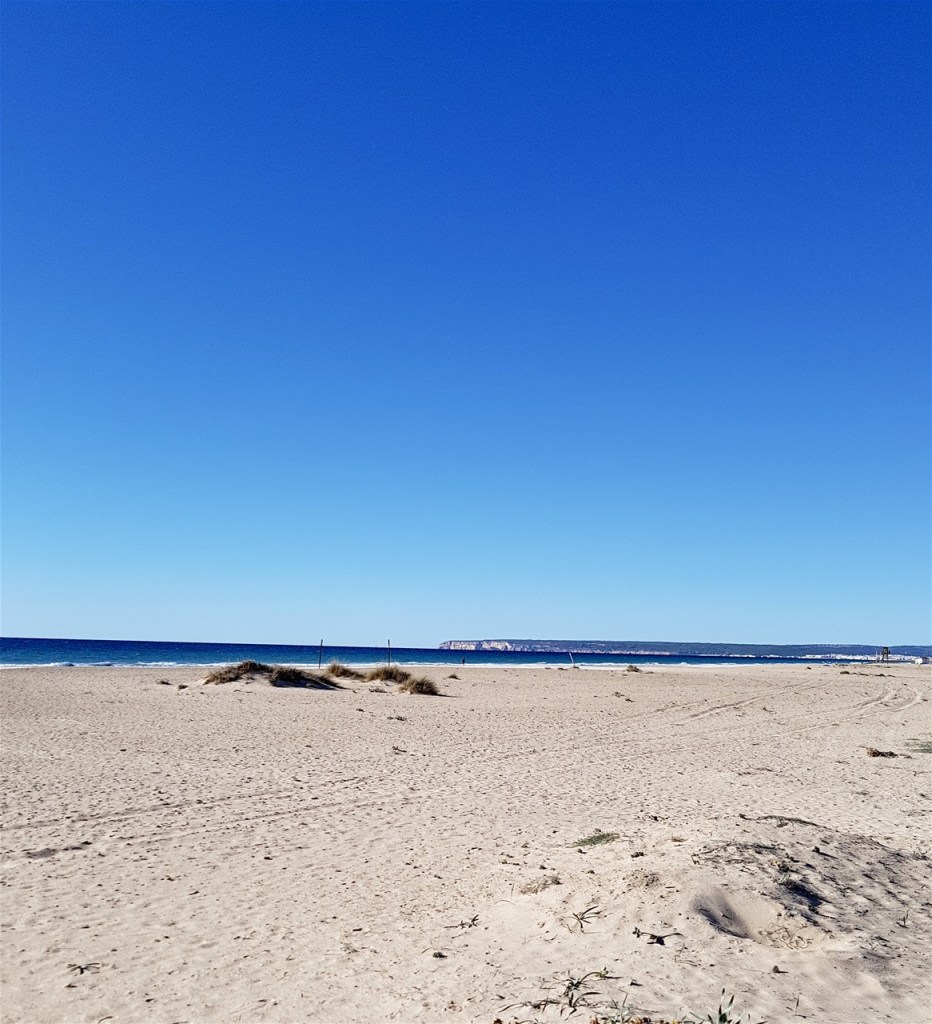
That’s Cape Trafalgar in the distance. We won’t get to it today.
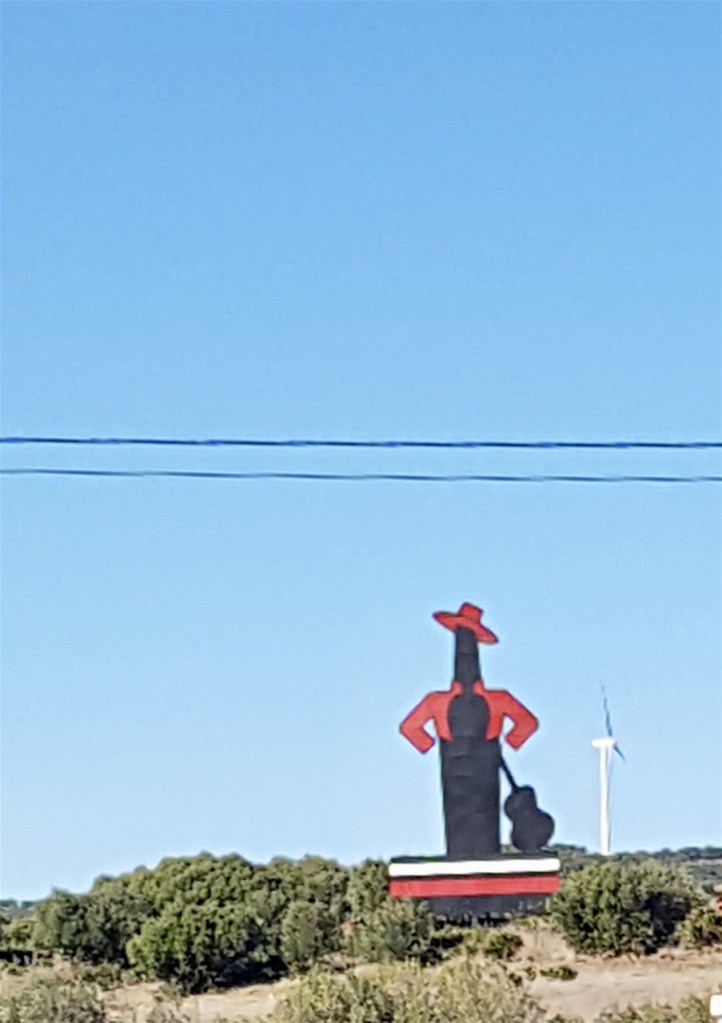
Huge road sign reminding us that Jerez, the sherry capital is not too far away and Portugal is getting closer as well

These vibrantly coloured Retinto cows are delightfully placid, despite their ferocious horns
 Marigold on Tour