
Marigold found a mask in her coat pocket, now she’s convinced her ears aren’t level. Perhaps the elastic is shorter on one side? No, it’s definitely the ears that are the problem .
Marigold Says…
G got me all worked up about turkeys going up in price and insisting they will cost as much as a new car by Christmas so in a mad moment I bought a frozen one which quite frankly looks as if it has seen better days. There was part of its leg sticking through the plastic packaging. G said it looked like frozen road kill.
There was only four in the freezer so I grabbed the biggest. It then caused a problem as I didn’t have enough room in the freezer but having emptied out a load of unidentified food we forced it in. We also got a Xmas pudding, so all is well with the world. When defrosted, if the turkey looks awful, I will go vegetarian.
G said ‘don’t buy me any socks this year’, not that I was going to. As that is apparently usually what I buy him I might surprise him and get him something different like pants. As long as he has a box of wine gums he is quite happy. Oh and liquorice. They’re the spirit of Christmas.
Have you noticed that when people are interviewed at home, they always sit there is an upright intelligent pose with worthy books in the background placed so we can all read titles and authors? I wonder if they get paid as a form of advertising. Just saying. It would be hugely refreshing if it was a messed up bookcase with dusty broken ornaments and a picture of Uncle Bert laughing like a drain in knitted trunks circa 1952. If anybody wanted to talk to me on tv I would put out Beano and Dandy Annuals, a few copies of Viz and then to throw them off the scent something by Dostoyevsky next to artistic photos of pot bellied pigs.
I said to G the roadkill damaged leg turkey is taking up valuable space in the freezer. He said by Xmas we will be able to sell it on e bay for hundreds of pounds. I asked what will we eat and he suggested we become Hunter gatherers. I told him the only thing he seems to gather in case of famine is ginger biscuits.
We have started hoarding things we imagine will go up. We have been proved right on noting price rises when shopping. Trouble is our under the bed larder is growing and it doesn’t look very attractive seeing 20 tins of marrowfat peas staring out at you. Must buy a valance. G’s store of ginger biscuits, liquorice and goodies are in his hidey hole but I know where it is.

G with sister, all dressed up. New Brighton 1950
G Says…
We were in Liverpool recently, just having a wander around in the city centre and visiting the Tate Gallery for a cultural feast. I’ve been repeatedly asked to write more about my odd childhood so I will add in a few reminiscences for the benefit of the ancient and doddery section of our readership who still remember the dark days of ration books and thinking sterilised milk was posh.
We were travelling by train, making use of the old relics free bus system which also allows us fortunate locals free travel on Merseyrail. We started the day in our local Costa. It’s very welcoming, right next to the railway station, and we invariably get VIP treatment.
Whenever we go into this particular Costa there always seems to be one particular man amongst the group of Baristas behind the counter. When ordering our ‘usual,’ no need to use specific words as they know us by now, I invariably say ‘hello, how are you? ‘ or a variant like ‘alright, mate?’ Every single time he replies, ‘living the dream, living the dream.’ It’s rather sweet, but I doubt he’s being entirely sincere. Unless he has very low expectations about what constitutes paradise.
Marigold asked how often they were asked for coffee made with oat milk as there was a sign proclaiming, ‘oat milk, no extra charge’ and he replied ‘that stuff’s disgusting so I just say we’ve run out of it.’
Marigold is particular, that’s a refined version of ‘fussy,’ about seating and we get our first choice of sofa and two armchairs. Yes, there’s only two of us, but there’s coats and a handbag that need to be housed. The other side of a trellis screen are two women, talking quite loudly. We’re not actually eavesdropping, but can hear every word. It’s a conversation we both relish. One woman is wearing a tight fitting outfit suitable for an Olympic athlete. It’s not remotely appropriate to her physique. She’s quite agitated too.
‘Did you ask him why he even wanted five hundred bricks off somebody’s demolished wall?’
Her companion is dressed from head to toe in denim. It can be a good look. Or not, as is the case today. She’s on the defensive. ‘Of course I did, I used those exact words. He said they were free.’
‘What did you say then?’
‘I said that wasn’t what I’d asked. I asked why he wanted them and he said they’ll come in handy one day. The bloke who’d knocked the wall down didn’t want them cluttering up his driveway.’
‘Now they’re cluttering up your driveway.’
‘Exactly.’
Marigold gave me a meaningful look. ‘That’s the sort of thing you would do, turn up with five hundred free bricks.’ I didn’t attempt to justify a self evident truth. I’m not a hoarder, far from it, but bricks are useful.
I do find it easy enough to refuse offers. A former neighbour phoned us the other day, asking if we wanted a wardrobe and chest of drawers they no longer needed. We didn’t. ‘Oh, that’s a shame, they’re too big to go in the car so can’t get them to the tip and it will cost 20 for the council to take them away. I think it’s 20 each item as well.’
‘Is there a charity shop that will collect them as some of them have furniture in their shops?’ Marigold enquired, helpfully.
‘No, I did ask the Roy Castle shop but they won’t take them as they’re too tatty.’
‘Tatty, eh? Are these still the same items you were wanting to fob off on us’ Marigold thought, but didn’t say. I would have! First world problems, eh?
Not seen a rag and bone man knocking about lately, he would have taken them away and may even have left a goldfish in return. My sister once saw an opportunity when the adults were otherwise engaged. She took out to the rag and bone man her best coat and the metal weights off the kitchen scales and was rewarded with a pink sugar mouse. After eating the mouse, she wasn’t great at sharing, both of us spent the next few days denying any knowledge of the missing coat and weights. On this occasion she didn’t try to blame me and my determination never to be a ‘grass’ had been well established by now. That era was far removed from the cautionary adage ‘snitches get stitches’ practised by inner city gangland culture, but amongst my contemporaries on the streets ‘telling tales’ was considered to be worse than actually committing the crime.
I used to ride on the rag and bone man’s cart after my gran moved out to Huyton. Horses and carts were common enough as apart from the rag and bone man the milkman also delivered from a cart. I remember the horses being not in the first flush of youth and I felt sorry for them. They always seemed grateful for a carrot, an apple or anything I found ‘lying about’ at home when nobody was watching.
Riding on the cart was a badge of honour. I only ever managed to cadge rides on the scrap metal cart as the milkman was very resistant to the idea of having a ‘helper.’ It was common knowledge that bottles left on an unattended cart were fair game for some of our neighbours and on the one occasion the milkman agreed to allow a boy to ‘mind the cart’ while he delivered bottles the vanishing bottle situation became much, much worse.
The coal man’s horse was huge. Hardly surprising as a full load of coal weighed many tons. Our coal order had to be carried through four other back yards, through four gates to the Anderson shelter. We seemed to get through a lot of coal, but that may be because my grandma, who was in sole charge of anything to do with household budgeting, only ever ordered the lowest grade, ie cheapest, fuel. Anthracite was said to be the best, long burning and efficient, but was expensive so our delivery comprised at least 50% Nutty Slack which was as cheap as its name suggests.
Twenty sacks, each weighing a hundredweight, added up to one ton. Counting the bags was one of my many jobs. ‘He’s a right rob dog, that coal man,’ my grandma insisted, every single time, even when he was standing right next to her. ‘Make sure he brings twenty sacks and they’re all full.’
I dutifully counted each one aloud as it arrived and was abused by the coal man for my diligence on every single occasion. No chance of ever getting a ride on the cart off him. Claiming only to be following orders would have had a similar end result to the explanations offered at the Nuremberg trials.
There was a ‘pop man’ as well who made home deliveries of Tizer, Cream Soda, Limeade and Dandelion and Burdock. Of course, he never came to our house, but the rare occasions I had the chance to drink ‘pop’ were to be savoured. Limeade was particularly brutal, highly fizzy and verging on painful when ‘swigged’ directly from the bottle, most of what was drunk ended up coming back down my nose amid much spluttering.
The Pop Man initially had a horse and cart, but expanded his business sufficiently to be able to justify having a van. This prevented pilfering, as well as opportunities to ride on the cart, but the now redundant horse turned up a few weeks later pulling a cart for a rival rag and bone man. The new one didn’t give out goldfish, which had a life expectancy measured in hours, but offered actual cash for ‘any metal apart from iron’.
My gran set me to work rummaging in the shed and the Anderson Shelter for anything that wasn’t made of iron. I cut my finger, quite badly, trying to prise a brass curtain pole out from underneath an iron bed frame in the shed. I was sent straight out, still bleeding profusely, with my booty to ‘catch the horse before he gets away’ and was given a derisory sum in return.
‘Might as well have had a goldfish,’ my gran said when I returned with a few coppers. I agreed. I didn’t expect to be given even a farthing, yes, we still had farthings then, but at least I could have cared for the goldfish in the three hours or so of life it had left. Nobody seemed very bothered about my cut finger, as long as I didn’t drip on the carpet. I was an accident prone child and a cut finger was scarcely worth bothering about. I still have the scar.

The 1950s equivalent of a Big Mac. About the same food value too.
There’s More…
My gran survived the Blitz, a bomb demolished half the street but her house was spared and she decided it was divine intervention. When she was forced to leave Liverpool as part of the slum clearance programme the Council (The Corporation) moved her out to Huyton. I much preferred our lengthy visits to Scottie Road as Huyton was a rather genteel village back then ‘ that didn’t last long ‘ and ‘playing out’ on a Recreation Ground, two swings and a roundabout, was nowhere near as much fun as scrabbling around on bomb sites back in the city.
My gran hated it too, but my mum and my Aunty Sally liked the new surroundings. Aunty Sally got a job at Huntley and Palmers biscuits factory when it opened in the mid 1950s and immediately insisted on being called Sarah, not Sally. The house was soon crammed with brightly coloured and elaborately decorated biscuit tins as the staff were allowed to take home broken biscuits and tins were ‘always useful.’
Food rationing had ended a year previously, but lingered on for another couple of years until my gran died as she refused to allow money to go on ‘luxuries’ and continued with the age of austerity on a voluntary basis. Raiding those biscuit tins for broken biscuits was an invaluable food supplement. I was terrified of my gran, even though she was a tiny woman she was ferocious and nobody in the family ever dared cross her. The same applied to all the neighbours.
When the school holidays ended and we returned to our ‘proper home’ I gorged on apples and pears, blackberries all free and available to a determined boy adept at tree climbing and impervious to bramble scratches.
They’re letting off bangers somewhere or other as I’m writing this. We’re a week away from Bonfire Night, but the firework season seems to expand every passing year. New Year’s Eve was noisier than November 5th last year, a lot noisier. Our neighbour said ‘there’s a big Halloween party in the park with fireworks and a hog roast’. For Halloween? Why? When did Halloween become a rival to Christmas? In the twenty or so years we were away from England Halloween as a commercially inspired event was one of the changes we noted most on our return. Whole fields given over to growing pumpkins, surely one of the most disappointing vegetables with little of value apart from sheer size. For those who like making pumpkin soup they’re bound to be very cheap after the 31st of October.
In my childhood we carved turnips on Halloween, not pumpkins. Much more demanding. ‘Celebrating’ Halloween developed from the Irish festival of Samhain, I think that’s the correct spelling, or ‘All Hallows Eve’, which later became known as Halloween. The idea behind carving grotesque faces into turnips or potatoes, never pumpkins back then, was to frighten away any wandering evil spirits.
The mass migrations from Ireland in the 19th century brought the legend across the Irish Sea to Liverpool, and across the Atlantic to the US. At some point it was discovered that pumpkins were easier to carve than turnips, but we’d never even seen a pumpkin in Scotland Road, or anywhere else in Liverpool, so my sister and I were given a turnip each to demonstrate our vegetable carving talents. The results were predictably pathetic.
Bobbing for apples in a bowl of (ice cold) water and attempting to bite an apple suspended on a string from the Sally Maid overhead clothes dryer, that was about it for Halloween. As for Trick or Treat with kids dressing up and going door to door, that was unknown. My grandmother would never allow anyone to answer a knock on the door after dark. ‘Nobody decent is out and about at this hour,’ she’d say. It was bad enough in the daytime. I remember the only people who ever called, a man who sold brushes and the insurance policy man collecting a monthly penny, being terrified of my grandma.
‘Dirty feet on my clean step’ was bad enough but ‘grubby mitts on my brass’ if they dared to touch the door knocker was even worse. Dermot from next door, a laid-off docker and not a particularly refined individual, used to wind up my grandma by shouting ‘get your mitts off my knockers’ in a falsetto voice. I didn’t ‘get’ the reference, but laughed anyway. Dermot was funny.
My sister and I were told to stay away from him as he had ‘filthy habits.’ Of course, my sister avoided him and I didn’t. Dermot taught me ‘proper swearing’ and often let me have a puff on his pipe.*
*That’s a pipe containing tobacco, not an indication of Dermot’s ‘filthy habits.’
Dermot got a (short lived) job on the trams; the ‘Corporation trams’ as my mother would say, everybody else I knew called them ‘Corpy Trams.’ He was on the route from The Adelphi to the Pier Head. I loved the trams, when they reached their destination and everyone got off, the seat backs swivelled for the return journey as there was no provision there for turning round. If Dermot was on duty we never had to pay. My mother’s disdain for Dermot didn’t extend to an insistence in paying the fare.
When C and A remodelled their store in the city centre, to great fanfare, Dermot told me C and A stood for coats and ‘ats. I knew it didn’t, but referred to that shop by that name for many years. My more gullible sister probably still does! The C and A name originates from the initials of its founders, Dutch brothers Clemons and August Brenninkmeyer. Easy to understand why they settled on C and A rather than Brenninkmeyer’s, but I still prefer coats and ‘ats. It vanished from the High Streets of England twenty years ago and the Church Street shop is now a branch of Next.
We always got on the tram outside The Adelphi Hotel which was regarded by everyone we knew as ‘posh’ ‘ not so much these days ‘ and my mother always whispered the name in the same respectful fashion afforded when referring to ‘the doctor.’ Marigold and I took her inside for lunch, sixty years later, and she still insisted on dressing up as if invited to Buckingham Palace.
The only other buildings worthy of such reverence were Henderson’s Department Store and India Buildings where my Uncle Fred ‘ the only member of the entire family who had a ‘white collar’ job – had an office. My Aunty Lily, his wife, always insisted he wore his wedding suit on days he went inside India Building.
No member of my family ever considered themselves worthy of entering Henderson’s. Henderson’s was always intended to be ‘up market,’ catering for the ‘merchant classes’ and had been bought out by Harrods in 1949 as an outpost of gentility in the North. When it burnt down in 1960 I was 14 and eager to experience the drama.
We were by now in Huyton, the post war slum clearance programme having decimated Scotland Road and my grandma’s old house had been long since reduced to rubble. The sky over Liverpool turned a vivid red, even though it was broad daylight. ‘Just like being back in the Blitz’, my mother said.
By the time the bus from Huyton arrived in Liverpool the magnificent store was reduced to ashes. The whole building was destroyed inside an hour and many hundreds of staff and customers had been evacuated. Eleven people died in the fire and a fireman named George Taylor attained hero status. Even now, 62 years later, I had no need to look up his name. George Taylor made every boy I knew in the city want to be a fireman. He rescued five of six people trapped on an upper storey ledge, climbing up a 100 foot long ladder and carrying them to safety one at a time, but the sixth fell to their death. I can remember the shock amongst the crowd with many referencing the irony of the fire occurring on a Wednesday afternoon, traditionally half day closing in Liverpool at the time, but Henderson’s always did things differently and stayed open all day on Wednesdays.
Henderson’s was rebuilt from the ground up and re-opened in 1962, but its days were numbered and it closed for ever after less than twenty years. My mother never went inside, even after the store changed its name to the distinctly prosaic Binn’s shortly before the end.

A tram, a Crosville bus and a section of the Overhead Railway. Not my photograph, but it perfectly encapsulates Liverpool in the 1950s.
Surely there’s not more to come? Oh yes…
If Henderson’s was off limits many of Liverpool’s original city centre shops became household names. Sadly, as we walked through the centre the stores I remember most vividly from my youth are no longer around. Blacklers was huge, spread over six floors and Christmas at Blacklers was really special. The enormous ‘Santa’ survived and is now on display in Liverpool museum , but I’m not sure what became of Blackie, the rocking horse my sister and I, along with thousands of other children, rode on at almost every visit.
We never bought anything on these ‘trips up to town,’ it was simply an opportunity for my mother to ‘look around the shops,’ of which she never seemed to tire. Britain’s first ever Woolworths opened in Liverpool and I do remember a day we actually bought something, a pair of black plimsoles, we called them pumps, intended for me, but I had a bit of a strop when I got home when I realised they kept slipping off and I couldn’t run or play football in them. I realised several years later that in our house, childrens’ clothing, shoes especially, were invariably bought with longevity in mind and buying a size or two larger than actually needed would ease the problem of outgrowing ‘perfectly good shoes.’ It was my own fault, my feet grew much faster than the rest of me and I needed size eleven shoes at the age of twelve. I’m twice the size I was then, yet my shoe size has remained the same.
My Aunty Sally, a ‘confirmed spinster’ to quote her own description of herself, often ranted at the cost of clothing and feeding children and was a great believer, like her mother, my gran, in ‘making do.’ Unable to locate footwear into which my feet could be crammed she once sent me out to play in a spectacularly ill matched pair of shoes. She told my mother, ‘I couldn’t find any shoes that matched so he’s gone out wearing a clog and a pump.’
My mother said, ‘he’s got another pair just like that somewhere or other.’ The clog and a pump saga became a family saying for the next thirty years.
Just for interest, plimsoles, or pumps, were a Liverpool invention. A ground breaking type of athletic shoe with a canvas upper and rubber sole was developed as beachwear in the 1830s by the Liverpool Rubber Company. The name Plimsoll came about because the horizontal band joining the canvas upper to the rubber sole resembled the Plimsoll line on a ship’s hull. It occurs to me that, just like the Plimsoll line on a ship, if the dividing line of the rubber sole and canvas was breached by water, the results would admittedly be less serious than a ship sinking, but the wearer would still come into unwelcome contact with water.
As a reward for passing the eleven plus my Uncle Fred, the only one in the family with much regard for education, sent me a record token. We didn’t actually possess a record player, but I don’t suppose he knew that and I had no intention of allowing a mere detail like that hold me back. I went to the record counter in ‘Woolies’ and bought as my first ever record ‘whole Lotta Shakin’ Goin’ On’ by Jerry Lee Lewis. My sister, who had also been given a record token, in the notion of ‘fairness,’ bought ‘The Ying Tong Song’ by The Goons. Yes, I thought it was an odd choice as well. We carried our precious records around with us, desperately seeking a friend with a Dansette to play them on.
We walked past the bronze statue of the Moores brothers outside the site of their former glorious past. Littlewoods, starting life as a Catalogue Store and once a serious rival to the present day Argos, was set up by two brothers, John and Cecil Moores, the founders of the Littlewoods football pools empire. At one time Littlewoods was the largest private company in Europe.
The first ever Lewis’s store, founded by David Lewis, had been a Liverpool institution, but was almost completely demolished, along with great swathes of Liverpool city centre, in The Blitz. It reopened, timed to coincide with Lewis’s Centenary, in 1956 and the statue that stood above the entrance became an immediate cause clbre. The naked male figure, officially entitled Liverpool Resurgent in tribute to the city’s rebirth after wartime devastation, was immediately renamed Dickie Lewis by (fairly) respectable locals and Nobby Lewis by the more vulgar citizens. As a meeting-up reference ‘meet me under the rude man’ was easy to understand.
I enjoyed trips to Lewis’s. There was a groundbreaking restaurant on the fifth floor, alongside a prestigious ladies hairdressing salon. I only ever ‘dined’ there once, my sister and I shared a plate of chips while my parents chomped away on plaice and chips. It must have been a special occasion as plaice was regarded as ‘posher’ than cod. It had pretensions as a restaurant, but with hindsight was not a serious rival to any of the well established dining venues in the area. It was self service, so more of a canteen than a restaurant, but to a young child this was all part of the mystique.
The best aspect of a visit to Lewis’s was travelling in the ornate lifts. One of the lift attendants, the public were never expected, or allowed, to press the lift buttons, had only one arm and was very friendly. My recollection is he was called Edgar and used to call out ‘gentlemens’ clothing’ or ‘shoes, hats and millinery’ as we reached the appropriate floor, but also on occasions said, ‘ladies underwear’ in a funny voice and when I giggled, oh come on I was only about 8 or 9, invariably added, ‘steady on there, lad’ and winked at me. My mother thought Edgar was vulgar.
All gone now, not a hint of their former glory. That iconic Lewis’s building is still there, still awaiting redevelopment, but there are ambitious plans to turn it into a 21st Century ‘hub,’ whatever that means, as part of the enlargement of its next door neighbour, Central Station, the busiest and most frequented terminal of Liverpool’s underground railway system. Littlewoods is now a branch of Primark and Blacklers is a Wetherspoons pub.
The ‘Rude Man’ meeting point was immortalised in the song ‘In My Liverpool Home’ by both The Spinners and The Scaffold. I saw The Scaffold playing ‘live’ on a couple of occasions in their early days as part of a performing revue group known as The Liverpool One Fat Lady All Electric Show.#
#One Fat Lady” is the bingo term for the number 8 and the performers mostly lived in the Liverpool 8 District, that melting pot of cultures encompassing Toxteth.
The Scaffold reformed for a ’60 years on’ concert last month at the Liverpool Everyman. I missed it and as it was just for the one night, that was that. Mike McGear, John Gorman and Roger McGough were well known in Liverpool in my teens, as was another poet, Adrien Henri who drifted in and out of the group, but I never expected them to ever have a Number One record. Lily the Pink achieved that feat in 1968. Thank U Very Much and Liverpool Lou were also Top Ten hits, but In My Liverpool Home is still the one that’s stuck around with me.
Marigold and I often went to Ma Egertons, a tiny pub between Lime Street station and The Empire theatre at weekends for the singalong sessions. There was no room to dance, but everyone danced. One New Year’s Eve we were still dancing, throats raw from singing, at three in the morning. I remember numerous verses of In My Liverpool Home being sung that night, some composed ‘in the moment.’
Roger McGough was basically a poet who could sing, after a fashion, John Gorman had a very distinctive stage persona and Mike McGear was the only one with much claim to musical ability. Their recording career involved the use of session musicians and background vocalists. I had, but have long since lost, copies of their records and among those credited as session musicians were Jack Bruce (Cream), Graham Nash (The Hollies and Crosby, Stills and Nash’) and Elton John (well, you know who he is.)
Mike McGear was an unknown outside Liverpool, but that wouldn’t have been the case if his modesty hadn’t prompted a change of name. In reality he was the younger brother of Paul McCartney. In the 1980s, after retiring from music, Mike McCartney decided to end his use of the “McGear” pseudonym and revert to using his family name.
As for In My Liverpool Home, many people know the chorus:
In my Liverpool Home, In my Liverpool Home
We speak with an accent exceedingly rare,
Meet under a statue exceedingly bare,
And if you want a Cathedral, we’ve got one to spare
In my Liverpool Home…..
The exceedingly rare accent is self explanatory, the bare statue is Dickie Lewis and as for a spare cathedral, Liverpool already had the magnificent Anglican cathedral, the largest in Britain and fifth largest in the world, but it was obvious the large Catholic sector of the population needed one as well.
The relatively new Metropolitan, (locally known as Paddy’s Wigwam) and the Anglican stand at either end of Hope Street. The Anglican Cathedral, perched on a hill overlooking the city and the Mersey is vast and impressive. It has the highest bell tower and the heaviest bells in the whole world. Thirteen bells, known as the Bartlett Bells and its giant bell, Great George, is not only bigger than Big Ben but significantly louder. The Metropolitan offers a stark alternative, a huge contrast in architectural style and has four distinctive sounding bells, referred to by locals as ‘John, Paul, George and Ringo’.
Other verses of In My Liverpool Home turn up from time to time; that night in Ma Egerton’s we must have sung a hundred of them. Here’s some I remember:
I was born in Liverpool, down by the docks
Me religion was catholic, occupation Hard-Knocks
At stealing from lorries I was adept,
And under old overcoats each night I slept
Way back in the forties the world it went mad
Mister Hitler threw at us everything that he had
When the smoke and dust had all cleared from the air
“Thank God” said me auld fella, “The Pier Head’s still there”
When I grew up I met Bridget McGann
she said “You’re not much but I’m needin a man”
“Well I want sixteen kids and an ‘ouse out in Speke”
Well the spirit was willing but the flesh it was weak.
As for some of the others, they tend towards the ribald and that elusive barrier where banter becomes an insult. Typical is this commentary on life in Kirkby, admittedly it’s a very tough place.
There’s a place called Kirkby where the kids all wear clogs
Where there’s six millon kids and ten million dogs
Kids play tick with hatchets and I’ll tell you no lie
a man’s not a real man if he has more than one eye.
We chatted to a man selling ‘knock off gear,’ the description was his own, and although we didn’t buy any of his watches or perfume he was evangelical on the subject of the city of Liverpool. He told us to avoid the Pier Head as there was a protest march taking place.
‘What’s the protest about?’ Marigold asked.
‘Dunno, love and I doubt most of ’em there know either. Any excuse these days.’
He then started to reel off facts, some of which we knew and a couple we didn’t. This man should be working as a city guide, not selling knock off gear in the back streets. Shanghai is twinned with Liverpool, I knew that, but I hadn’t know the Chinese city had donated the impressively carved Imperial Arch marking the entrance to Chinatown to Liverpool. Our unofficial guide insisted he had stood next to the Liver Birds perched on the Liver Building when he was a scaffolder.
‘Bet you don’t know their names,’ he said.
‘Bella and Bertie,’ Marigold replied.
He looked disappointed, but muttered, ‘they’re eighteen foot tall’ in response. Wisely, Marigold didn’t say, ‘I knew that.’ Not that she did know it.
I checked later, they are indeed 18 feet in height with a 32 foot wingspan.

Again, not one of my own photos, but this was Blacklers store at Christmas. Magical.
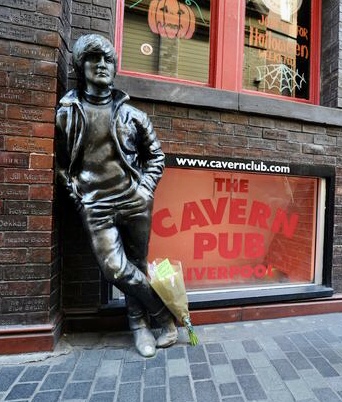
John Winston Lennon statue near the site of the original Cavern Club.

The Rude Man.

Oh, you wanted a closer view…
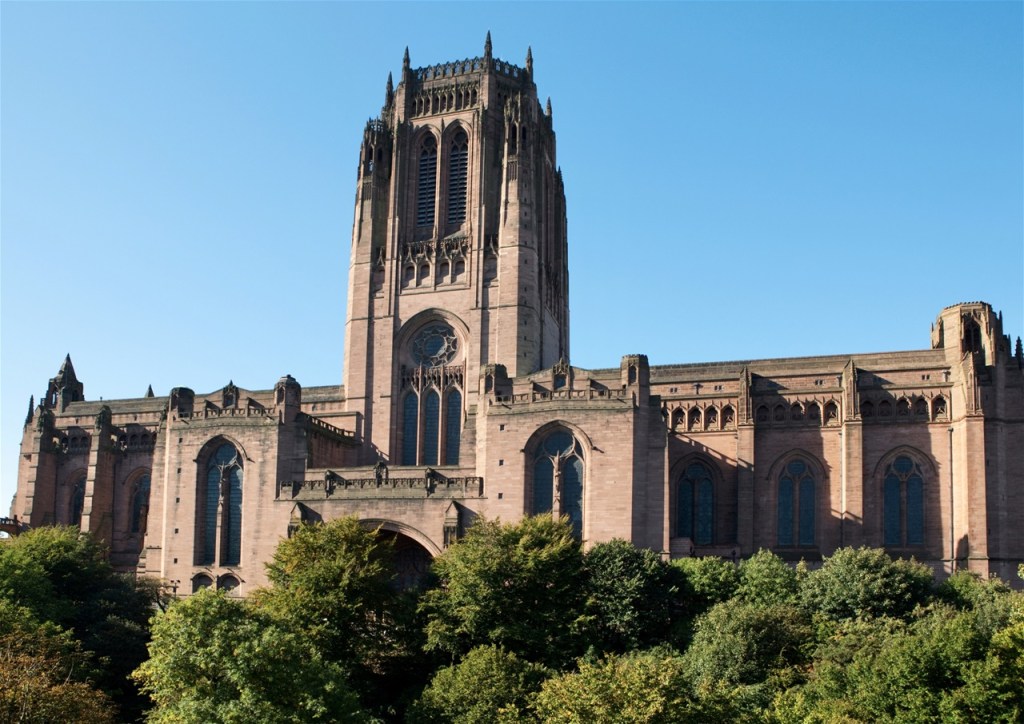
The original cathedral

The ‘spare’ – Paddy’s Wigwam
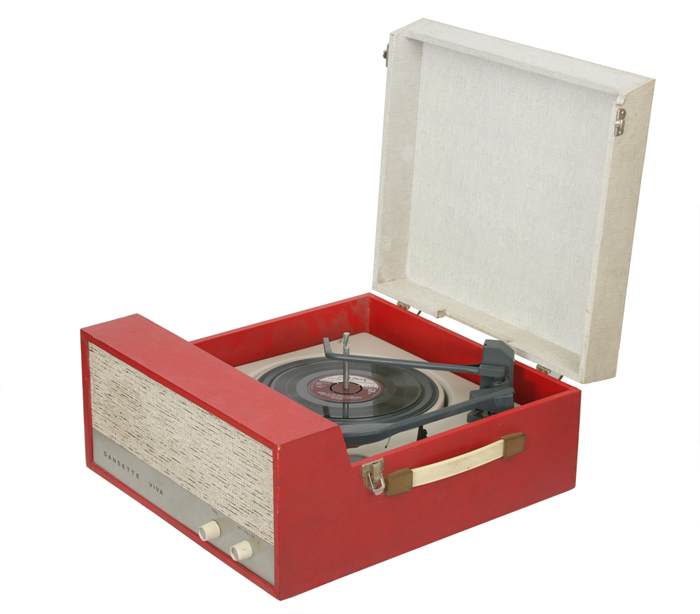
The ubiquitous 1950s Dansette record player. Lust object for an entire generation

The ultimate symbol of Liverpool, the Liver Building
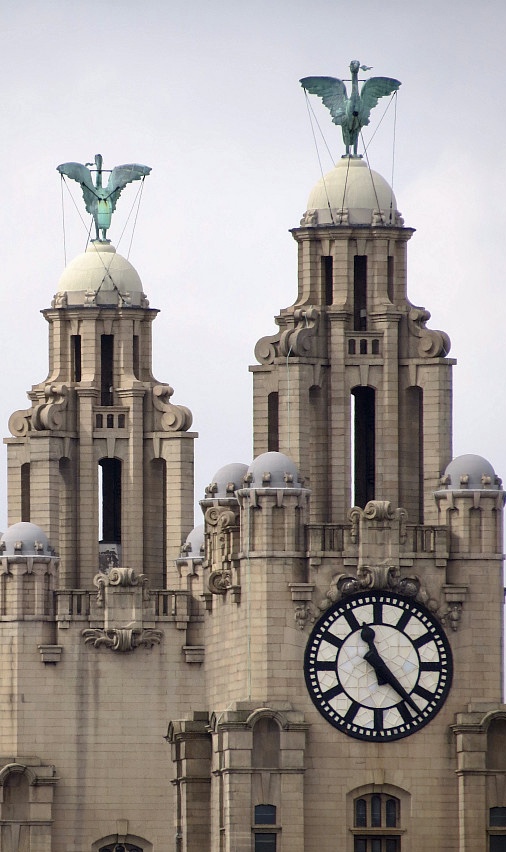
Bella and Bertie.

Here’s a modern day Liver Bird. Marigold has no actual claim to that title, but I thought you would appreciate a change from boring old buildings
 Marigold on Tour