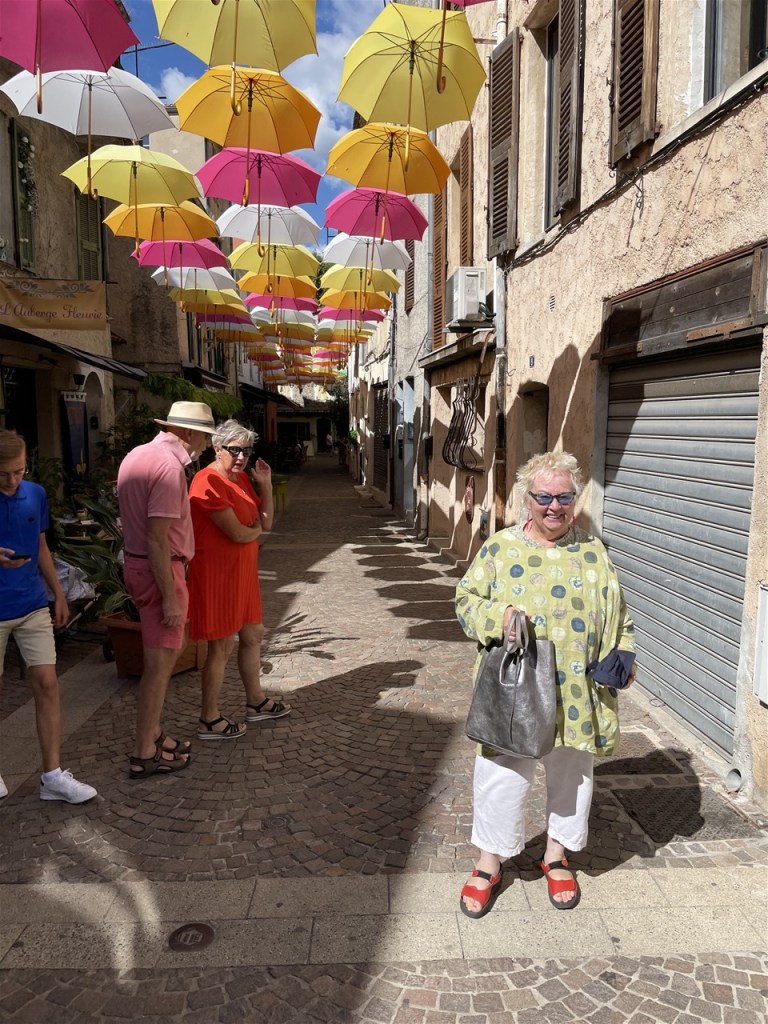
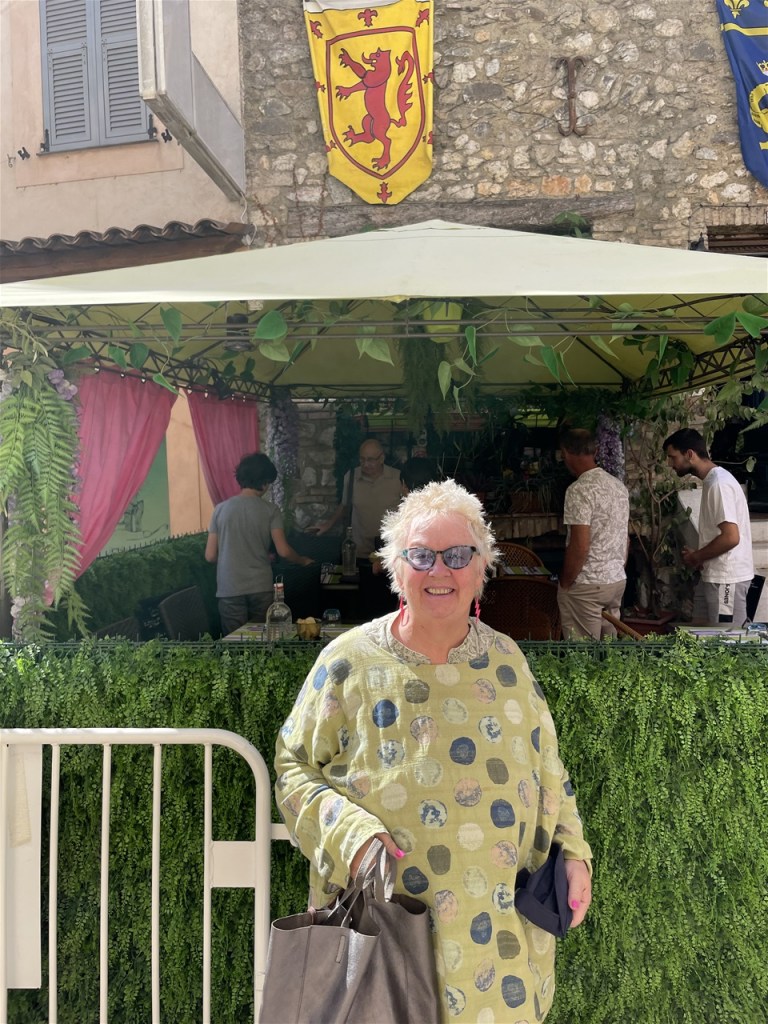
Celeb spotting tourists saying, ‘is that Marigold?’
G Says…
No input from Marigold this time. She’s claiming travel weariness as an excuse. She’s also struggling with the time difference. It’s an hour later in Europe than in U.K. Only an hour, but Marigold insists her body clock and/or biorhythms are in disarray. I suspect this is merely a ruse to avoid me asking if she has written anything for the blog lately. I’m not medically qualified and must therefore accept the biorhythm disruption as fact. I know you will join me in wishing her a swift recovery.
We’ve moved on and are now in full locust eating territory, the glorious Cote d’Azur. I’ll pick out two very special places from the many we have visited over the last few days: a sumptuous palace housing the works of a true genius and a perched village inland which never fails to stir our senses.
We love visiting stylish Cannes, have explored the colourful back streets of Nice on many occasions and Antibes was where we had our first introduction to this area, many, many years ago on a coach trip ‘ no cheap flights back then and our car often struggled to get to the end of the road so that ruled out a road trip. That had been a dirt cheap camping holiday, no frills was an understatement, but marked the start of a love affair with the Mediterranean coast of France that remains as strong now as it ever did.
These days we have a better car in which to explore , but it seems everyone else has had the same idea. Traffic on the coastal strip formed a congested unbroken ribbon of metal and persuaded us to give those glorious places a miss this time. With one exception.
The blame lay with a French woman and her Labrador. We had been chatting away in a mixture of French and English while enjoying a coffee outside a patisserie and all had gone well until our companion decided we needed to know all about her nephew’s genius.’
There were photographs aplenty on her phone, but a dozen photos of a squinting ten year old boy with a floppy fringe were just the start. ‘He’s a genius, so advanced, it is amazing,’ she said, fervently. ‘There seems no limit to what he can achieve.’ She gazed wistfully into her coffee cup, imagining the gilded future of the boy and by association his extended family.
Of course, such claims are not unusual. It’s common enough to acclaim the achievements and qualities of those of tender years, but when his artistic brilliance was compared to that of a young Picasso I tuned out and switched my attention to her dog about whom no one would ever be declaiming any particular virtue.
I’ve come across a fair number of ‘child prodigies’ where the passage of time has brought a decidedly lower level of attainment. Being just like most of your peers is not a step down, merely the normalisation of growing up.
‘For those to whom much is given, much is required.’
Luke 12. Verse 48
Expectations on those perceived to be ‘gifted’ are often overwhelming. I was at school with a boy whose parents made the term ‘pushy’ seem woefully inadequate. We weren’t friends, as such, but owing to the school’s archaic seating plan and its unbreakable rule of Alphabetical Order we sat next to each other through the last two years of 6th Form torture.
Being identified as (possible) candidates for Scholarships may have been a boost to the ego for some, but came with the downside of relentless pressure. Cavendish ‘ first names were never used at my school ‘ experienced a home life far removed from mine. In his world failure was not to be contemplated, anything other than excellence brought forth parental disapproval, anger and yet more pressure to succeed.
My own parents were both disinterested and uninterested in the small matter of my further education; being of the opinion a child should be at work, doing a proper job, on attaining the age of sixteen and it took a great deal of pressure from the school to allow me to even start an A level course.
Two very diverse attitudes to the pursuit of excellence. Cavendish (Cav) was bright enough, no question, but in such rarified company it was inconceivable that he could dominate in the manner his parents demanded. Stressed out and beaten down he eventually failed Oxford Entrance and all his A Levels. We were all shocked, nobody expected it and I never saw him again after the results were announced.
I met an old friend recently who told me Cav died of a heroin overdose in his early 20s after living on the streets for several years. That relentless pressure to achieve had taken its toll.
Even those for whom high achievement appears inevitable can ‘hit the wall’ as we elite marathon runners* say.
*’we elite marathon runners?’ – spurious claim.
‘When Alexander saw the breadth of his domain, he wept for there were no more worlds to conquer’ is a much quoted remark concerning Alexander the Great. There’s little actual basis for the attribution of this quotation to Alexander, but as Alexander was born in 356 BC and died, or was assassinated, at the age of 32 the quote’s viability must be considered dubious.
On his death Alexander ruled over two million square miles of territory spanning three continents. Not a bad achievement, but his early life had been an unrelenting procession towards winning and maintaining an Empire. Aristotle was recruited as a tutor, and every aspect of his childhood was geared towards serving one end purpose.
Ascending to the Throne at the age of twenty, from then on it was all glory. Exactly as planned. Becoming ruler of most of the known world inside a decade, it’s perhaps understandable he may have thought, ‘now what?’
Recently, Magnus Carlsen, the five-time World Chess Champion, relinquished his title as he announced that he will not defend the title he has held since 2013. Carlsen, considered by many as the greatest player to play the game, had simply lost interest in being Champion. His peak rating of 2882 is the highest in history. He also holds the record for the longest unbeaten streak at the elite level in classical chess.
A chess prodigy, Carlsen was a Grandmaster at an age when most boys are still struggling to keep their shirts tucked in and by the age of 19, was ranked No. 1 in the FIDE world rankings, the youngest person ever to do this. As with Alexander the Great, what next? Been there, done that. Now what?
Youthful prodigies, those blessed with remarkable talents at a young age, often rush to greatness and then hit the metaphorical wall. Mozart was an accomplished harpsichord player by the time he was three years old, wrote a symphony when he was 8 and an opera at age 12. Six hundred compositions are his legacy, but he died when he was 35.
Another young genius, Vincent Van Gogh killed himself at age 37. There seems an inevitability to peaking so young, achieving greatness at an early age. Burnout is the price so many have paid.
What about my all-time favourite child prodigy, the one I have pursued around Europe, usually inadvertently, in search of examples of his work? There are over 22,000 of them, prominently displayed in the art galleries and museums of Europe. Take a bow, Pablo.
I’m no expert on art. In fact I know very little about it and my own talents extend only to a pass at O Level. As that oft used cliche has it: I know what I like. Picasso, for reasons I can’t fully explain has fascinated me virtually since childhood. I don’t claim to like or fully appreciate all of his vast output, but I recognise talent when I see it and as for the man himself, he was certainly larger than life.
An inspirational figure, a notorious womaniser and philander with as many reasons to deplore as to admire in his life, he bestrode the art world in a manner unmatched since the Da Vinci era.
I recall the derision amongst those declaiming ‘that’s not art’ as Picasso extended the scope of what was scornfully called ‘modern art.’ Those people probably didn’t like The Beatles either.
Pablo Picasso once said, ‘I want to live like a poor man, only with lots of money.’ Having it all, then – possessing great wealth and yet retaining bucketfuls of street cred. Not a bad idea.
Picasso was born in Malaga in 1881. His full name was Pablo Diego Jos Francisco de Paula Juan Nepomuceno Crispn Crispiniano Mara Remedios de la Santsima Trinidad Ruiz. At the age of ten he adopted his mother’s surname of Picasso.
As the son of a well known painter, Pablo Picasso had a brush in his hand from an early age and could draw before he could talk. Picasso produced an astonishing oil painting when he was 9 years old and by the age of 12 his skills far surpassed those of his father. The poor man simply gave up and supposedly never held a paintbrush again.
Genius, does it come about through nature or nurture? Does true genius require a ‘push?’ Picasso obviously had pushy, but supportive, parents. In his words, ‘When I was a child my mother said to me, ‘If you become a soldier, you’ll be a general. If you become a monk you’ll end up as the pope. Instead, I became a painter and wound up as Picasso.’ His mother would have been proud.
We have visited the largest permanent Picasso collections, in Paris and Barcelona, also in Malaga, his birthplace. Our favourite Picasso haunts were a tiny seaside town, Valloures in South-East France and Cologne in Germany where the collection amounts to 864 works of art spanning 80 years of relentless output.
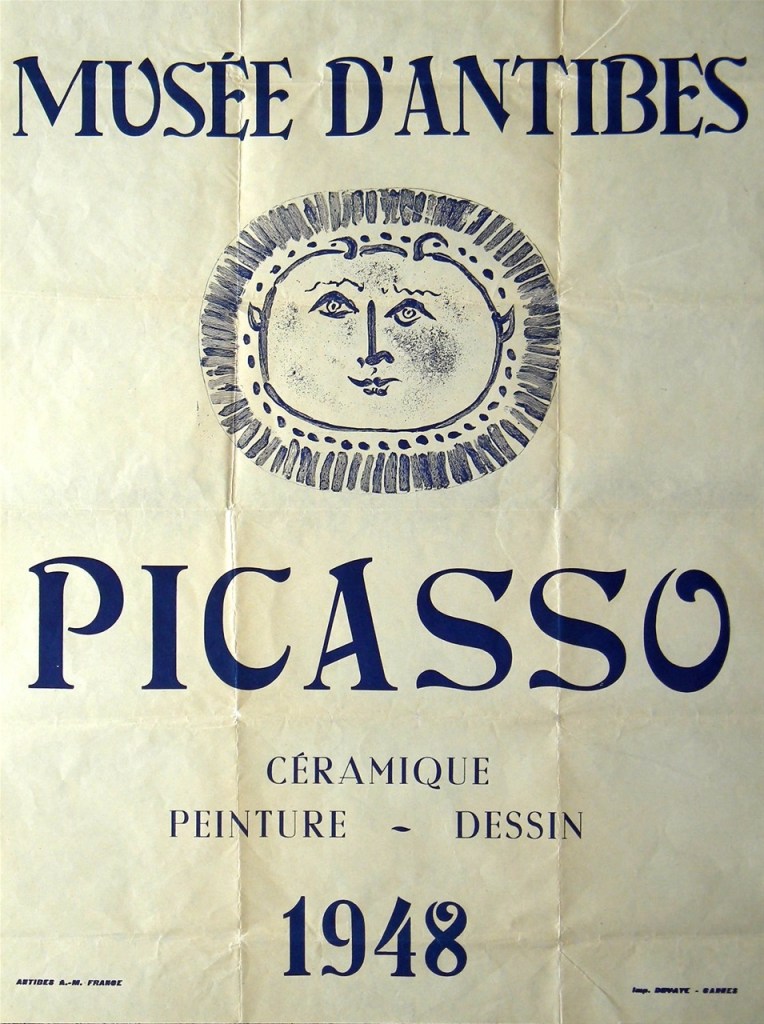
As for the chateau in Antibes, which we have visited on a half a dozen occasions, surely there isn’t a finer building in which to display great art anywhere. We couldn’t imagine being ‘on the doorstep’ and not paying a visit so it was time to brave the chaotic traffic of Antibes and visit the stunningly situated Picasso museum.
Picasso took up residence there in 1946, the year of my birth, and produced a new painting or drawing every day which he gave to the chateau on condition the public would be allowed admittance to view them. His remarkable work ethic was even more remarkable when taking the presence of his latest lover, Francoise Gilot, into consideration. Francoise was aged 22 at the time and Picasso a sprightly 65 so I imagine the distractions were many.
Creating artistic masterpieces over eight decades may detract somewhat from the ‘child prodigy’ aspect, but, as with the artist Salvatore Dali and the films of Woody Allen, my favourites were the early works. Picasso was astonishingly prolific in his dotage, but I have seen examples of the works he dashed off and sold to clamouring buyers when he was an octogenarian; they’re far from impressive. The Picasso name alone gave them value. A reputation formed many decades in the past. Well over half a century in his case.
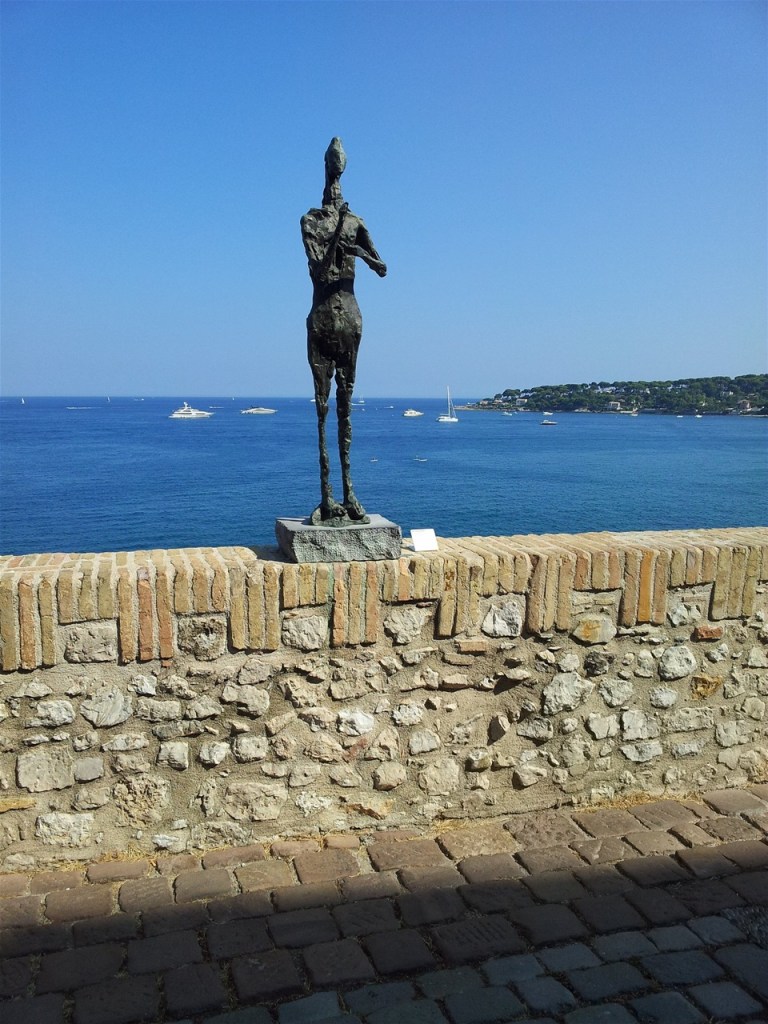
We arrived at what was once Chateau Grimaldi, that family dominated this area for many years, in its stunning site right on the sea wall. Picasso only spent six months living here full time here but seems to have enjoyed the views so much he donated a number of paintings and drawings to the chateau and returned to work there on a regular basis. It’s been a permanent museum since his death and there are now several hundred examples of Picasso’s prodigious output on display.
We didn’t go inside. Instead we walked around the terrace, admiring the sea and the many statues. There were hordes of people milling around and Marigold wisely affirmed it was too nice a day to spend an hour or two indoors with herds of tourists.*

A very early Picasso, he painted this at the age of seven.
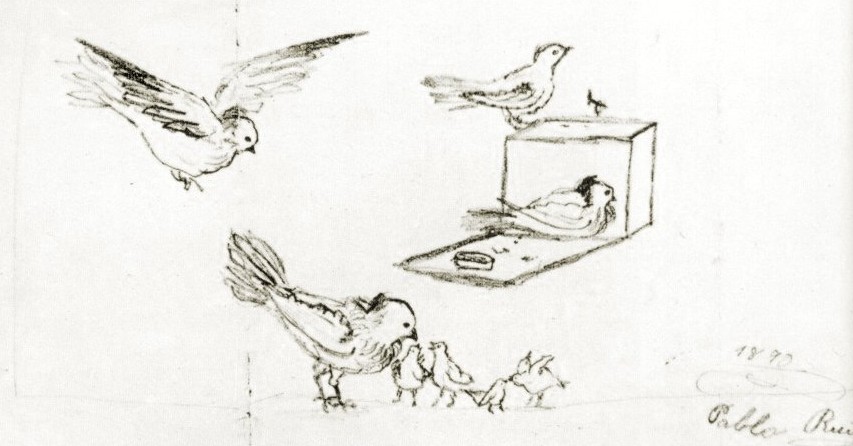
Again, aged seven, a ten minute sketch.
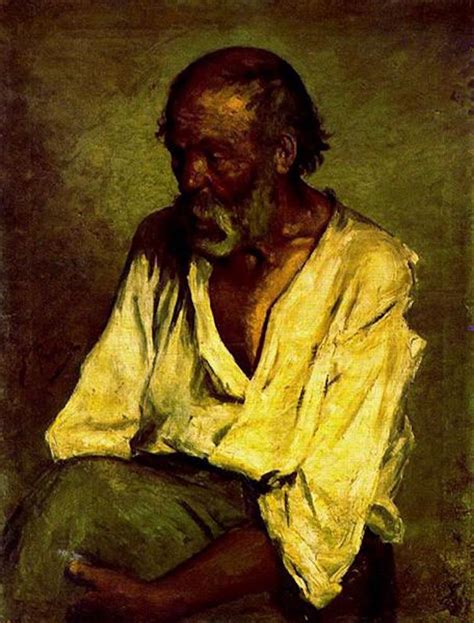
This was the painting by the young Picasso that persuaded his father to put away his brushes and never paint again.
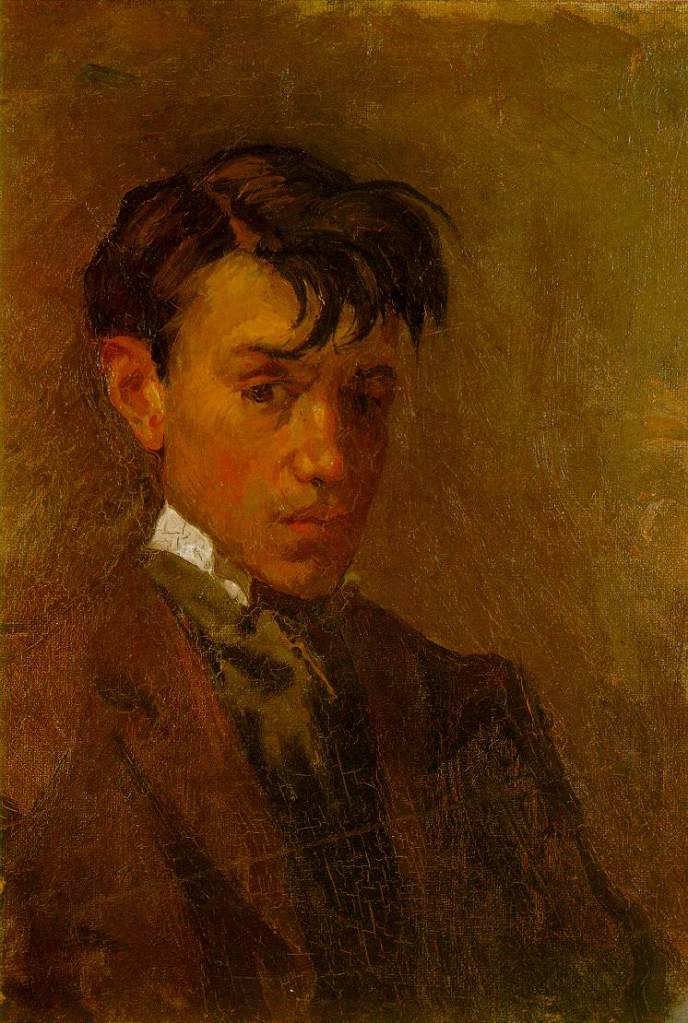
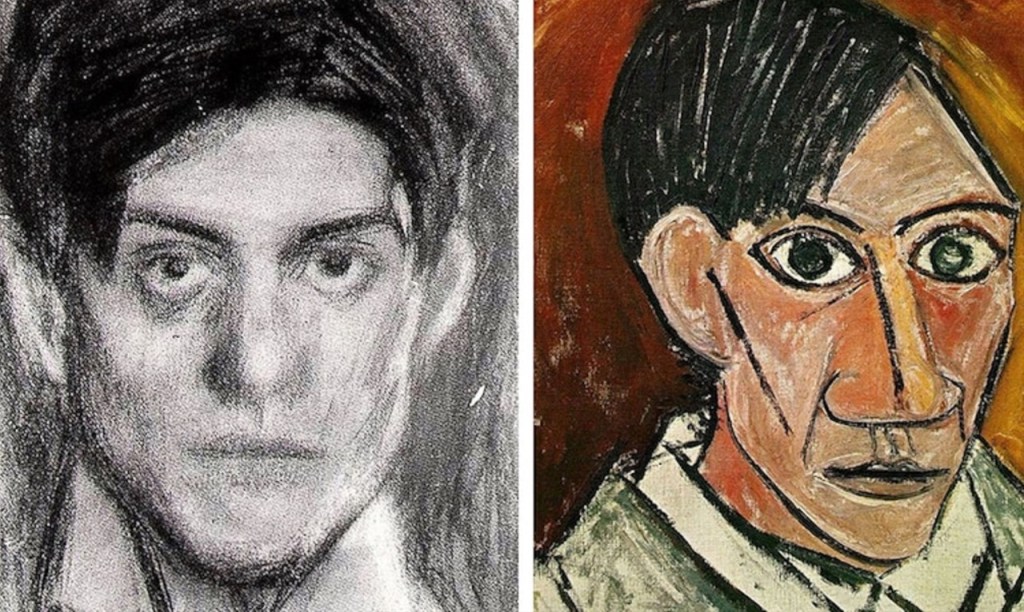
This self portrait, Picasso a teenager by now, was to be recreated several times, in different styles.
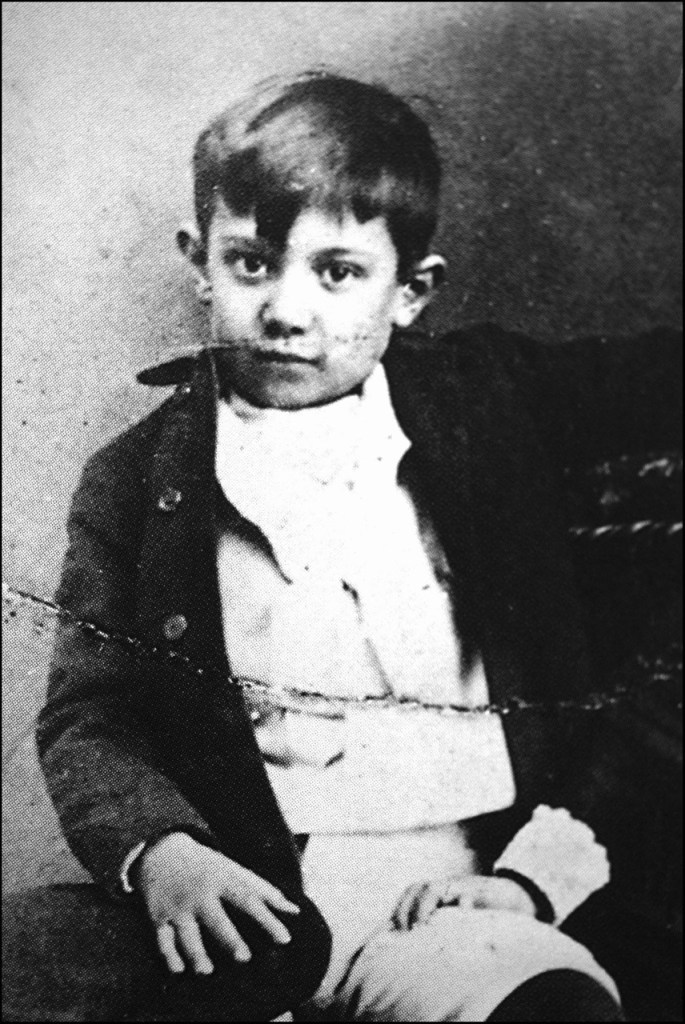
An early photo of Picasso.
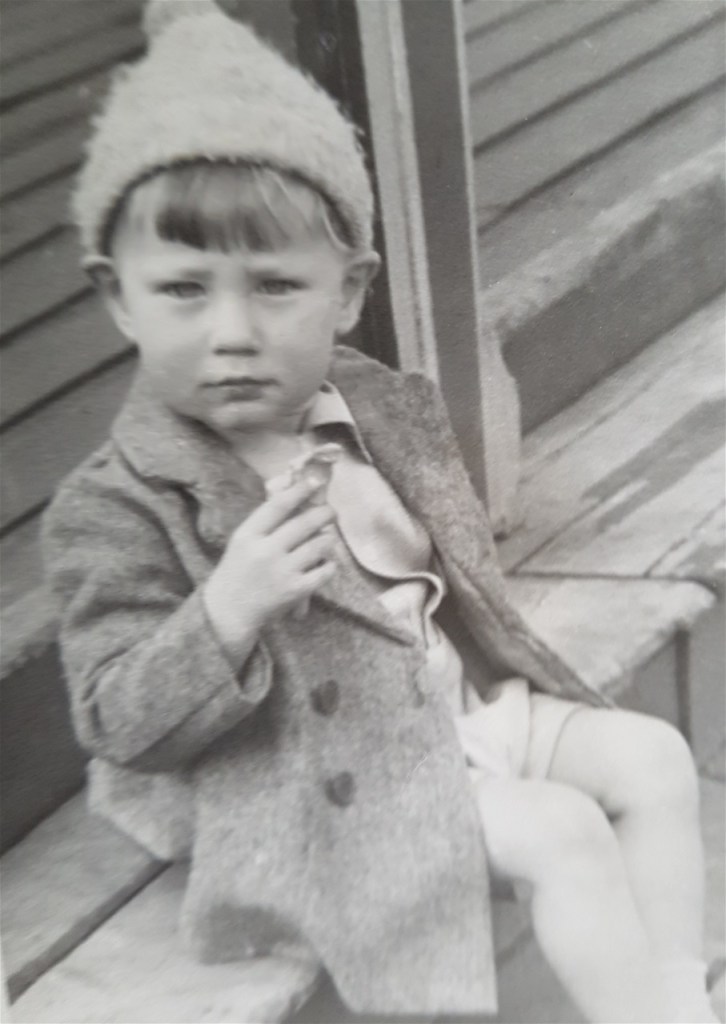
A photograph of me, just a couple of years younger. The resemblance is staggering. Marigold disagrees but she’s intrigued by me wearing a girl’s coat. It was a hand me down from my cousin. She was five years older and her clothes were handed down intended for my sister. How I got this one I can’t recall. .
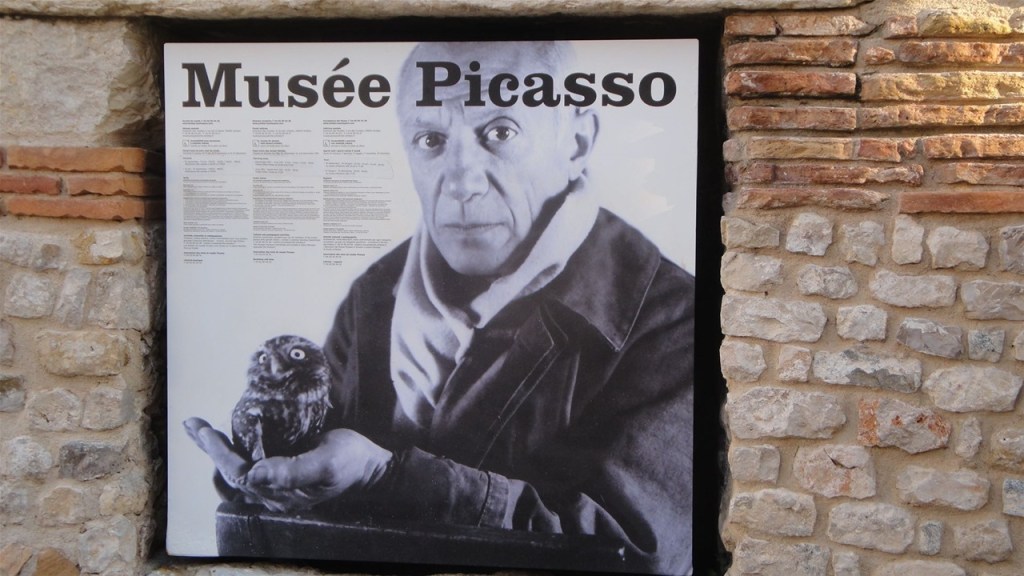
Off to Paradise now
Decision made we set off again, inland this time, towards a tiny hill village that has become one of the most visited places in France yet remains much as it did when we first went there well over 40 years ago.
St Paul de Vence, invariably referred to as just ‘St Paul’ by locals, was a hilltop village like many others in the region until the arrival of ‘celebs’ from art and entertainment started patronising a restaurant, La Colomb D’or.’
Picasso, yes him again, was among the first arrivals and he attracted Post Impressionist artists such as Dufy, Signac and many others who turned up to talk about art and dine on the terrace. Many of these artists were no stranger to the state of impoverishment and came to an arrangement whereby they donated a painting in lieu of paying the bar bill.
A system I have often tried out, without success.A system I have often tried out, without success.
The restaurant owner, Paul Roux, got the best of the bargain as hanging on his restaurant walls are numerous priceless paintings. We have viewed the paintings and admired the views from the terrace, but the price of a meal or accommodation at La Colomb D’or is far beyond our reach.
It wasn’t just artists who found this place irresistible. The noted American writer James Baldwin came to live in Saint Paul de Vence in 1970 and spent the last 17 years of his life there. Baldwin’s guest list for holiday visitors was remarkable and he enticed many artistic legends to make the trip up the hill to his home.
From photographs on display we identified Ray Charles, Harry Belafonte, Sidney Poitier, Nina Simone, Josephine Baker, Bing Crosby, Miles Davis, Greta Garbo, Sophia Loren and Catherine Deneuve to his villa as well as Yves Montand and Simone Signoret whose steamy romance began over cocktails at La Colomb D’or. As far as I know they all paid their bar bills.
Our visit had an inauspicious start. Parking isn’t easy, but I knew a secret location of which I had high hopes. Sadly, my secret location wasn’t secret any more, but we persisted and finally got lucky when a very fat man driving a very small classic Peugeot 205 ‘ how he got in and out was a mystery ‘ drove off in a cloud of blue smoke thereby vacating a parking space.
We walked into the village centre, past the statue of Lucky, a life size horse created from 3,000 horseshoes representing the total number of inhabitants of St Paul. The walls of the ancient village centre itself contain no more than 300 residents, but they are cursed/privileged to see well over two and a half million tourists walk past their doors every year.
The city walls date back to 1538 and compress the centre into a maze of narrow streets and alleys. A man seated outside a caf, he wore espadrilles on his feet and was smoking Gauloises cigarettes so we knew he was French, told us the townspeople had clubbed together to buy the encircling walls a hundred years ago as they had been threatened with demolition.
This sounded so unlikely I had to research his claim and it turned out to be true. Never doubt a Frenchman smoking Gauloises cigarettes.
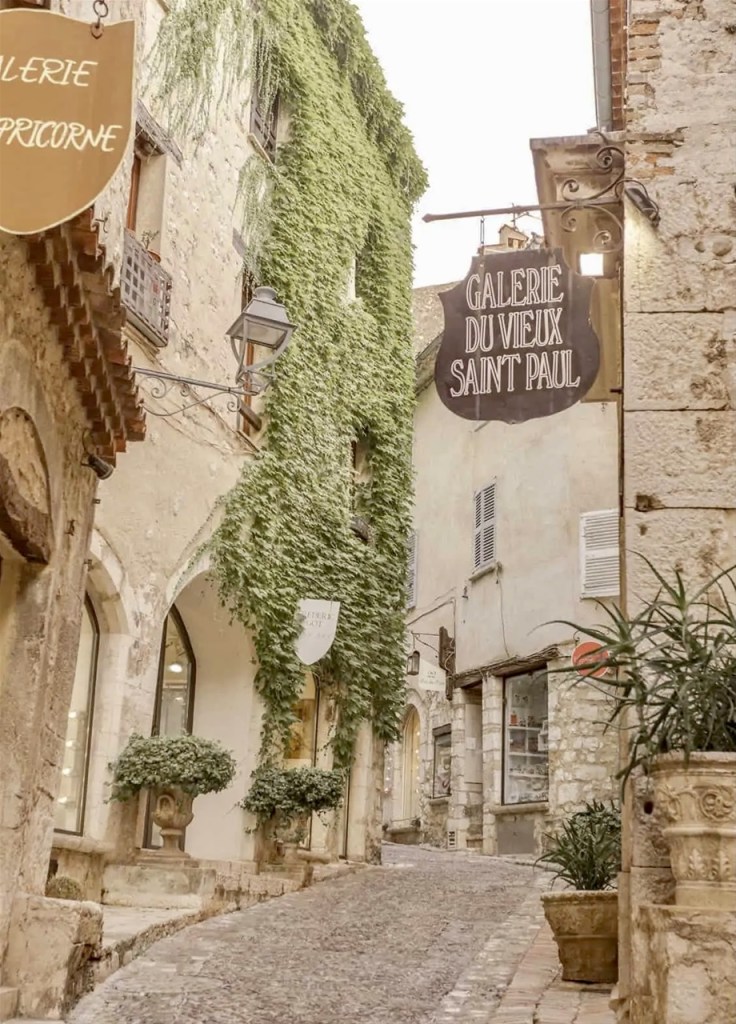
We wandered around, marvelling at every turn at the artwork displayed in niches, the proliferation of art galleries and the bizarre dress sense of our fellow wanderers. Marigold likes to apportion ownership of people to countries. Italians are dapper, Germans tend to be overdressed for the climate and Brits are just unmistakeable – Europe’s scruffiest and worst dressed travellers by some degree.
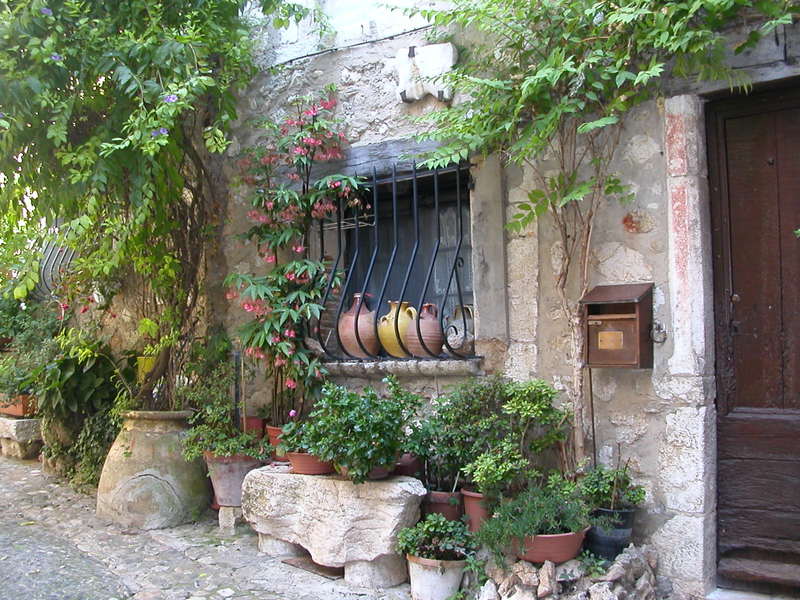
This is a magical little village. Even allowing for the vast numbers of tourists it’s easy to find a calm little oasis here and there. A tinkling water fountain with cats dozing in the shade, old men playing ptanque on a patch of bare earth or young girls chattering animatedly under overhanging orange trees, we could have stayed here all day.
We couldn’t live here, it has far too many visitors, but after an absence of several years it was gratifying to find very little has changed.
Long may that continue.
Onwards now, destination the Luberon. Hurrah.

Lucky welcoming us to St Paul.
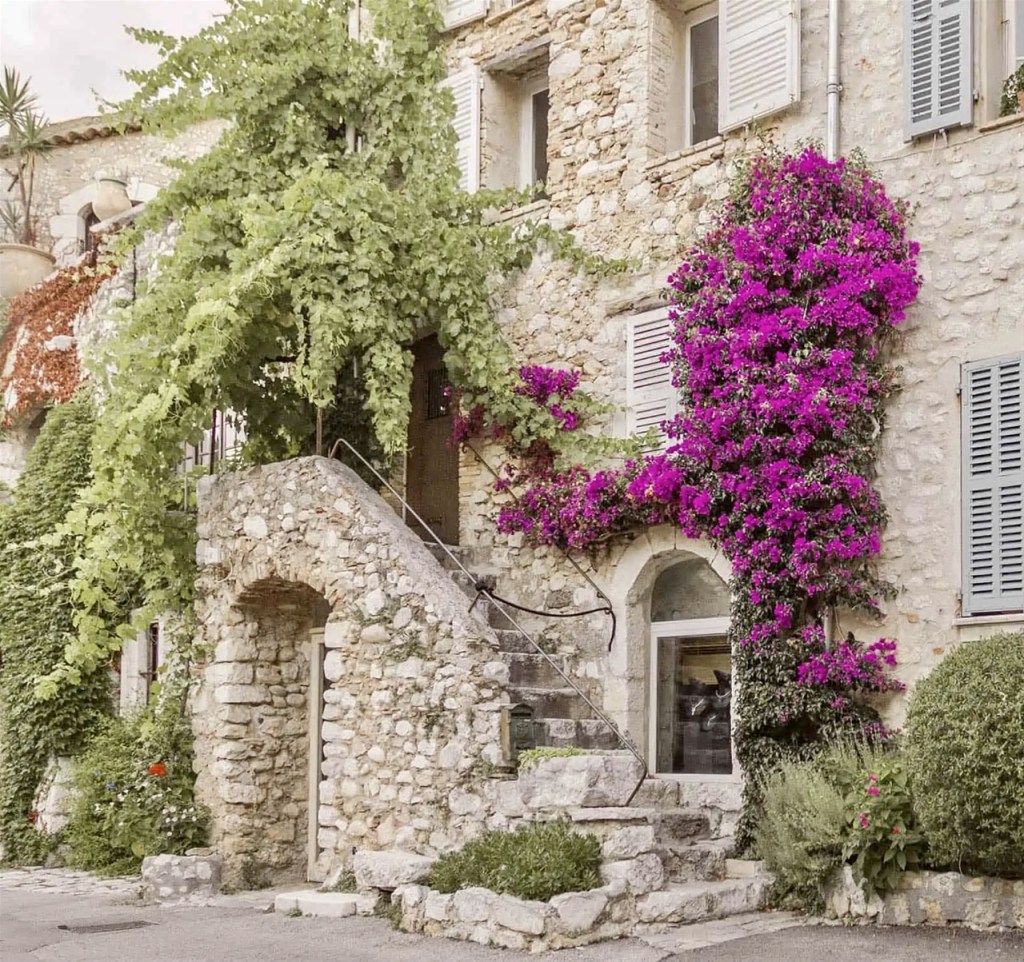
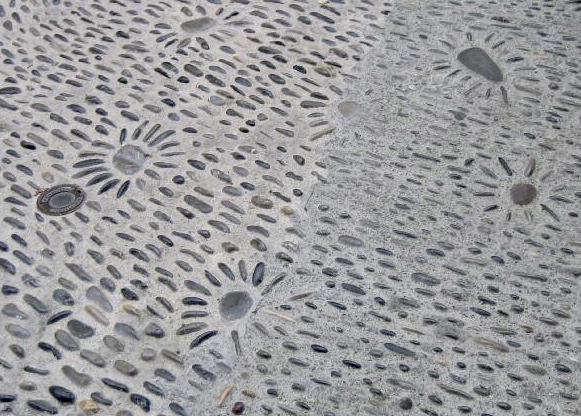
Even the pavements are beautiful
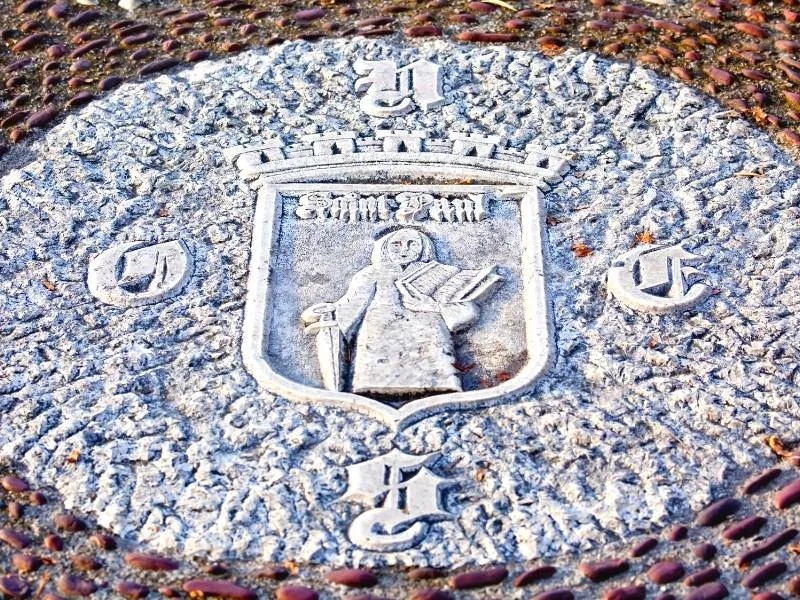
A simple crest, tucked away.

Statues everywhere.
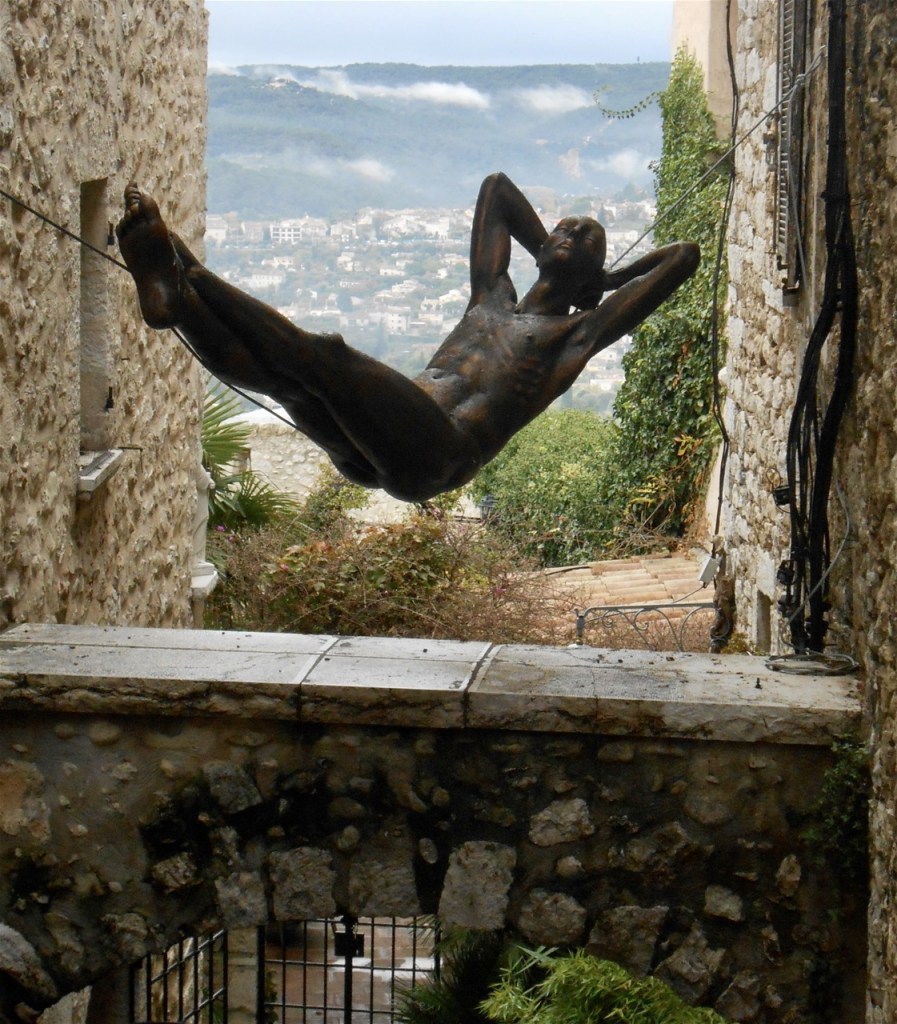
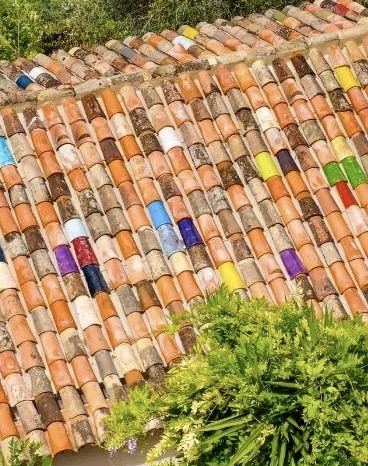
Even the roofs are beautiful
 Marigold on Tour